Search LEMIX Products
Hot melt extrusion (HME) is the process of applying heat and pressure to melt a polymer and forcing it through an orifice in a continuous process. HME is well-known, developed to produce polymer products of uniform shape and density, and its industrial application dates back to the 1930s1. It is one of the most widely applied processing technologies in the plastic, rubber, and food industries and is used to prepare more than half of all plastic products including bags, films, sheets, tubes, fibers, foams, and pipes2.
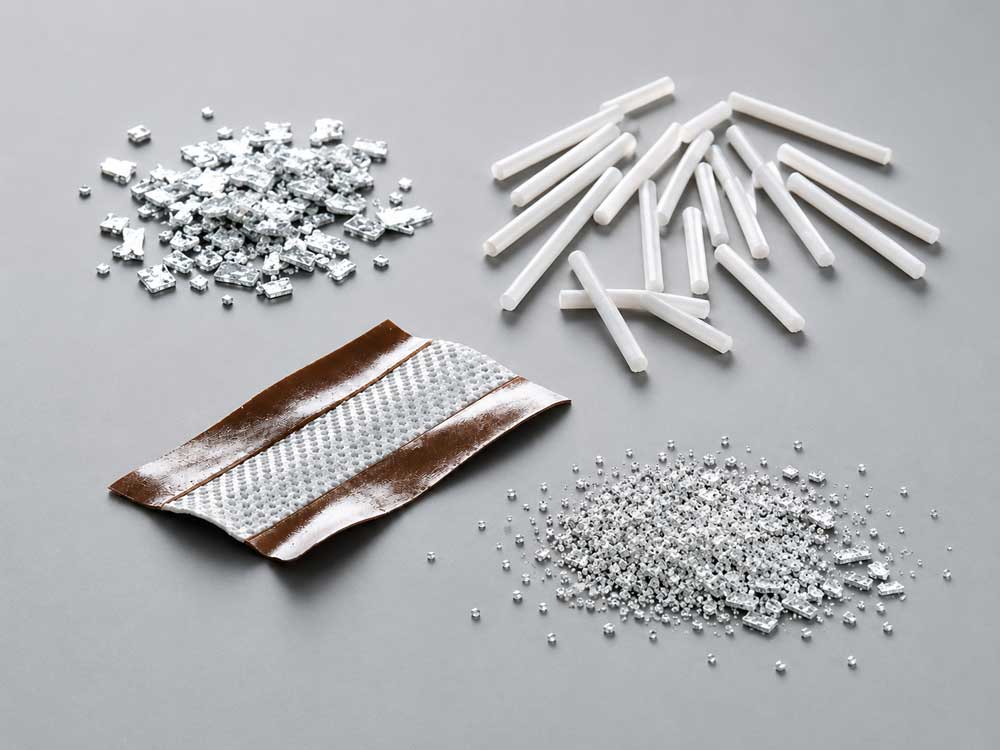
HME has more recently been applied to the healthcare industry where it is used to manufacture medical devices and mix active pharmaceutical ingredients (APIs) with polymers3. HME is used to enhance the API’s bioavailability or prepare precursors for thermoplastic drug-eluting devices, such as subcutaneous and intraocular implants and intravaginal rings. This technical brief discusses the equipment and principles of HME with an emphasis on its use in the pharmaceutical industry.
The entire hot-melt extrusion process revolves around four major goals: thermal stability + uniform mixing + amorphous stability + impurity control.
All requirements are constrained layer by layer:
Matching the raw materials with the hot-processing window is the foundation;
Segmented temperture control, screw shearing, and vacuum devolatilization are the core controllable parameters;
Rapid quenching post-treatment ensures the stability of the amorphous product;
A closed, low-humidity environment, inert gas protection, explosion-proof cleaning are the production guarantees;
PAT (Process Analytical Technology) online monitoring and GMP (Good Manufacturing Practice) full-life-cycle verification enable process control and reproducibility.
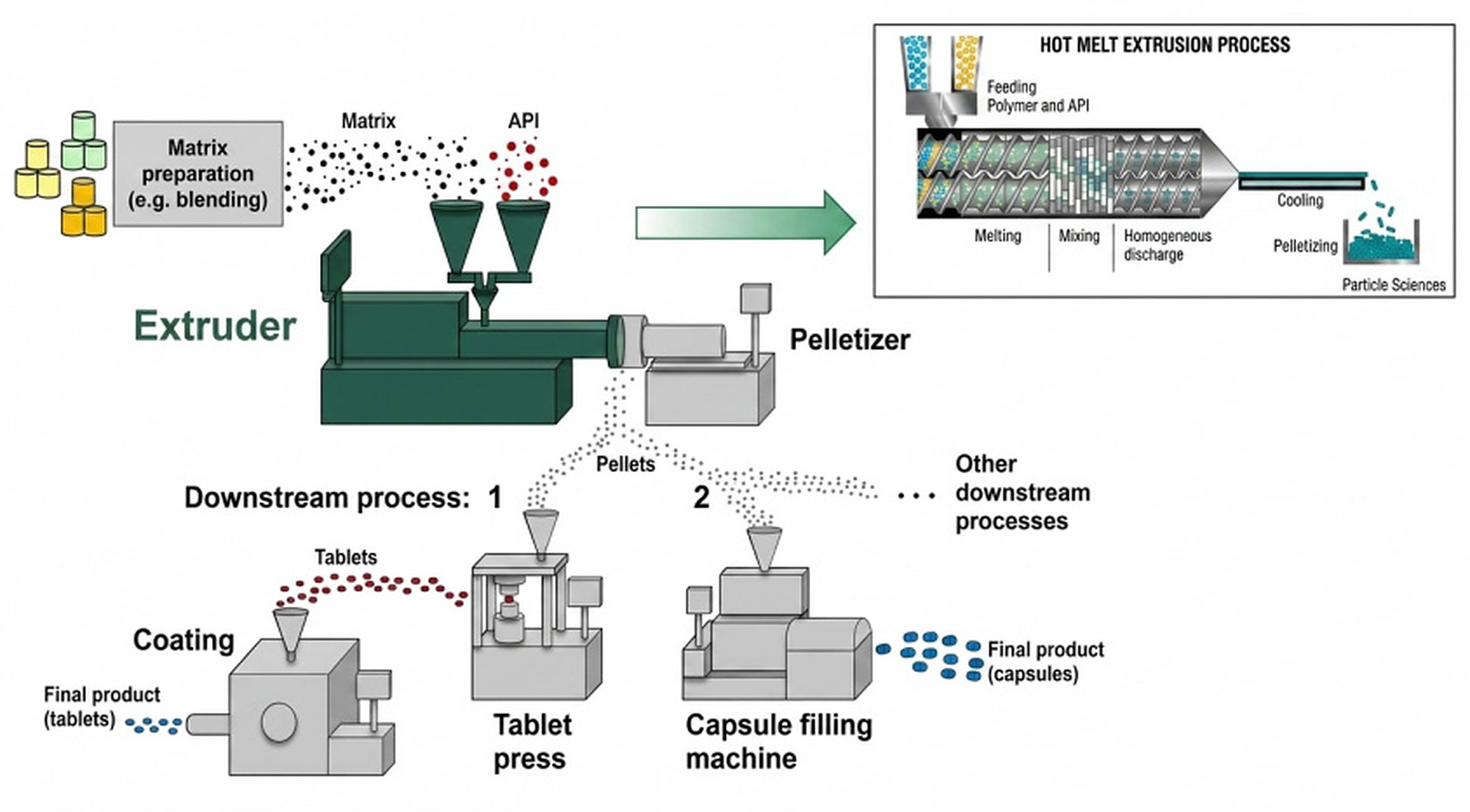
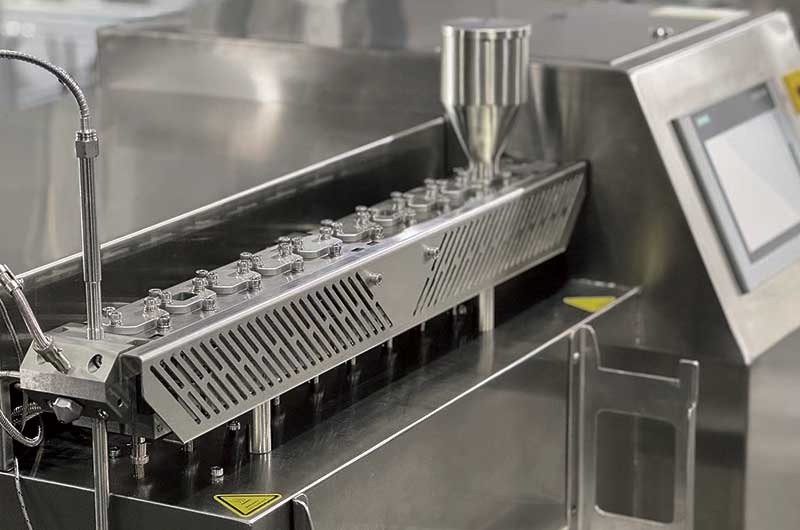
The specially designed high-volume, high-torque screw structure enables melting and mixing at lower temperatures and lower shear rates, significantly reducing frictional heat generation.
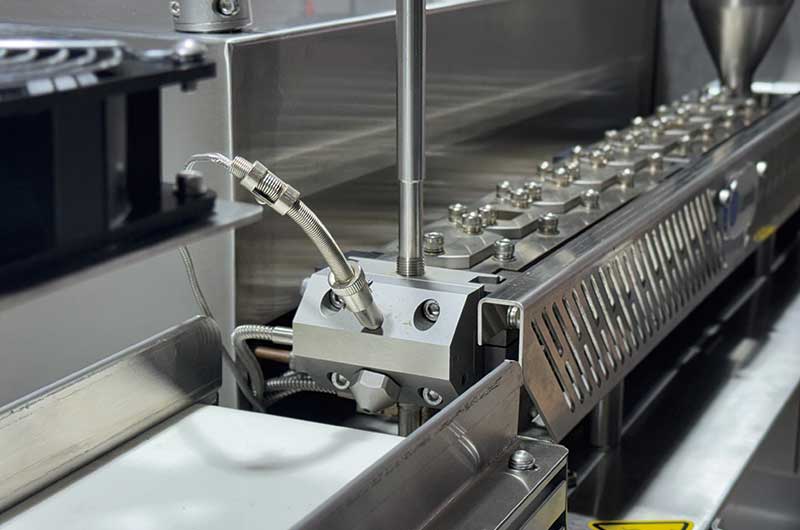
Combined with independently controlled multi-zone temperature regulation and a temperature control accuracy of ±1°C, the system is well suited for heat-sensitive, oxidation-sensitive, and chirally unstable APIs. This helps control drug degradation and limit the formation of process-related impurities.
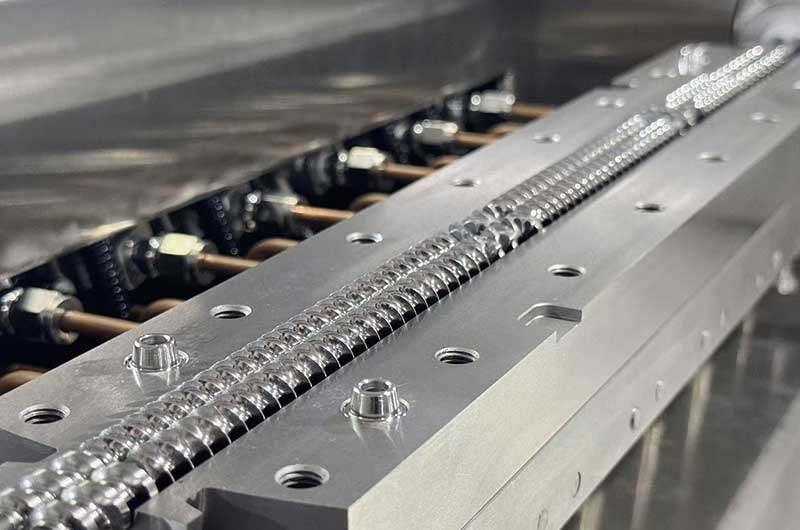
The modular screw configuration uses mixing elements arranged at multiple angles together with a fully intermeshing, self-cleaning structure. This design minimizes material retention and eliminates potential dead zones.
It enables highly uniform dispersion at the molecular level and supports excellent content uniformity. The system also helps suppress drug crystallization, ensuring consistent dissolution performance and long-term stability of amorphous solid dispersions.
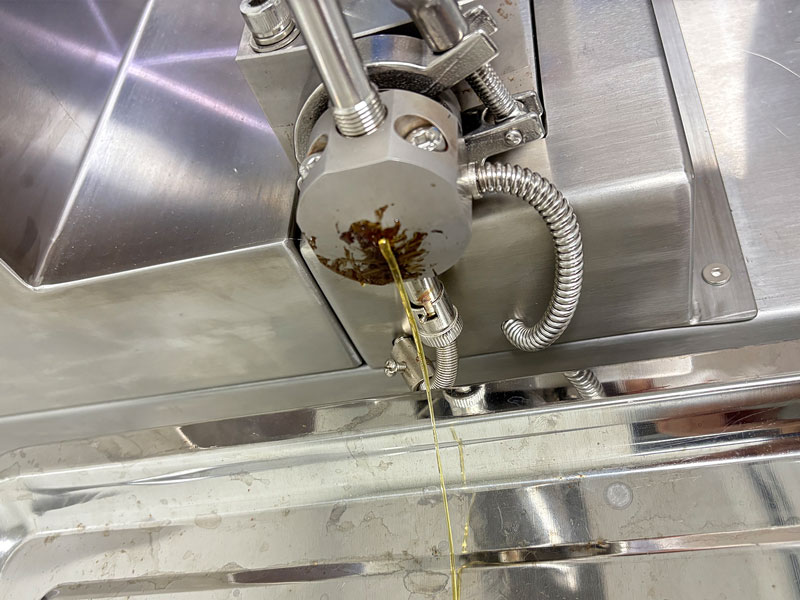
A dedicated large-pitch vacuum section is combined with a multistage high-vacuum system to increase the contact area between the material and the vacuum environment.
This configuration efficiently removes moisture, residual solvents, and low-molecular-weight impurities. It helps prevent bubbles, internal voids, and excessive residual solvent levels in extruded strands, resulting in dense and uniform finished products.
The system is equipped with a high-precision loss-in-weight feeding system that helps prevent material stratification and segregation.
Production parameters remain stable during extended operation, while uniform material residence time supports strong batch-to-batch consistency. This reduces process fluctuations, product variation, and production rejection rates.
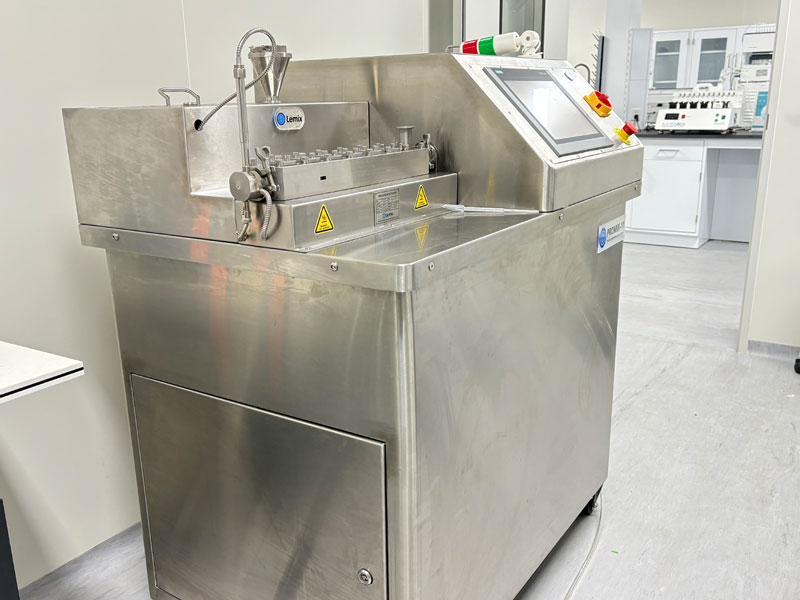
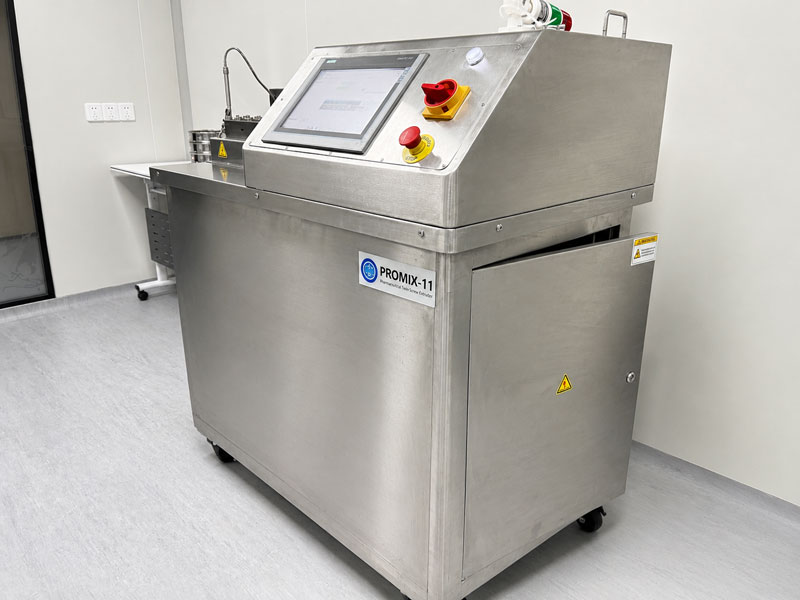
The equipment range covers small-volume research machines, pilot-scale systems, and commercial production lines.
Core process parameters, including shear rate, fill level, and specific mechanical energy, can be transferred directly across different equipment scales. This enables smooth progression from laboratory trials to pilot production and commercial manufacturing without major process discontinuities.
It reduces the need for repeated parameter development and helps address common scale-up risks such as process failure and unexpected product quality changes.
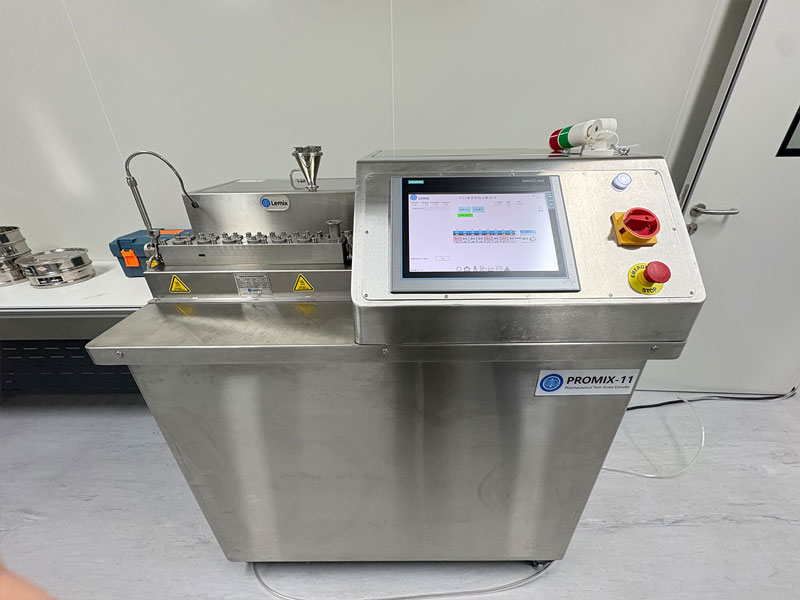
The entire machine features a hygienic, pharmaceutical-grade design that supports efficient cleaning and reduces the risk of cross-contamination.
The control system meets the data integrity requirements of 21 CFR Part 11 and provides native support for PAT online monitoring. The equipment can therefore support formulation registration, process validation, regulatory documentation, and continuous pharmaceutical production.