
Search LEMIX Products
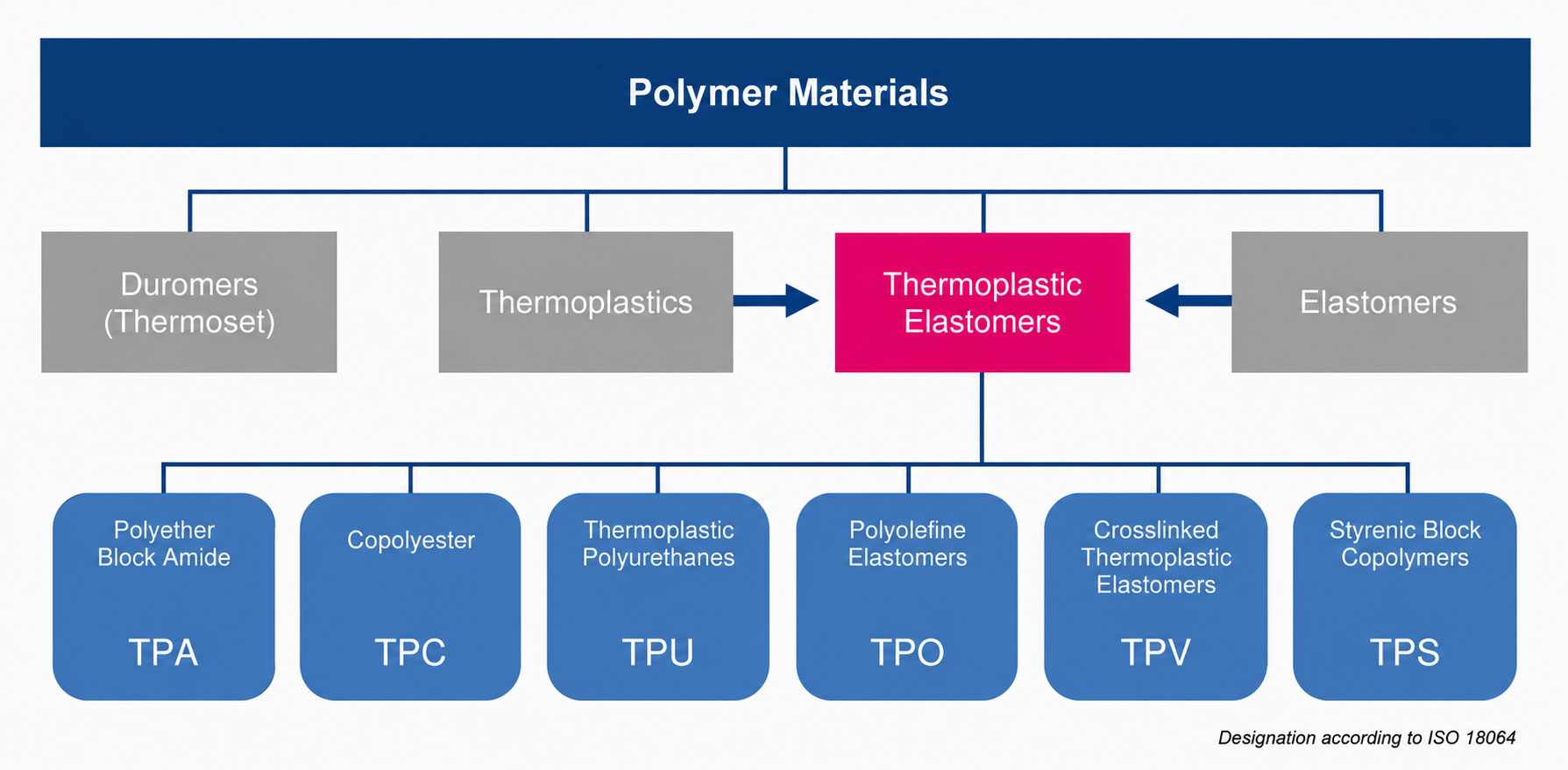
Thermoplastic elastomers (TPEs) are indispensable materials for processors, product developers and designers. These materials feature the dynamic processability of thermoplastics as well as the softness and elasticity of elastomers.
Various grades of TPEs and their modified formulations deliver a wide range of material properties, enabling cost-effective processing for applications across diverse industries.
TPEs can reinforce products and deliver distinctive performance characteristics. In addition, they offer a full spectrum of technical functionalities comparable to conventional elastomers.
Adopting TPEs not only improves product performance but also brings economic benefits to processors.
In view of their processing and performance attributes, TPEs represent a unique material category positioned between thermoplastics and elastomers. They constitute an independent class of materials.
Generally speaking, there is a clear distinction between TPEs produced via polycondensation reactions (such as TPA, TPU and TPC) and TPE blends (such as TPS and TPV). Reactor-made TPEs are single-component polymers, whereas TPE blends are composite materials formulated by mixing multiple different polymers.
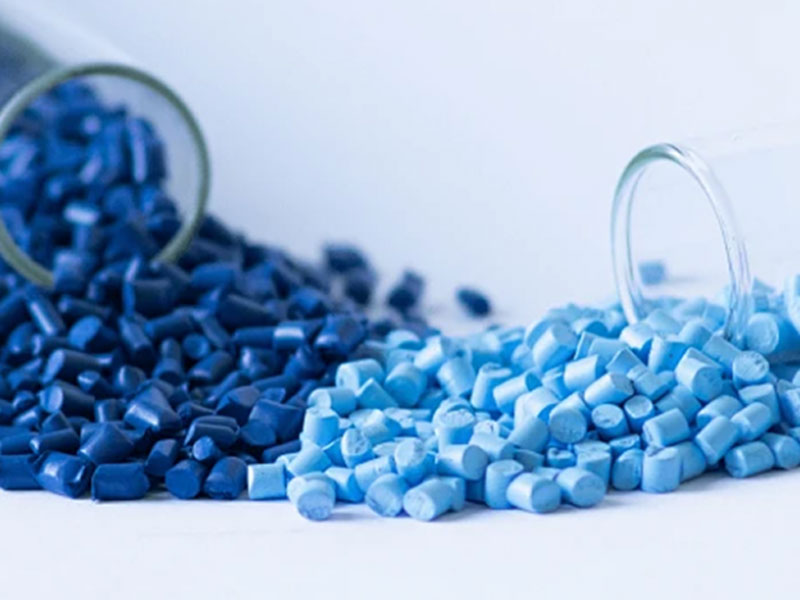
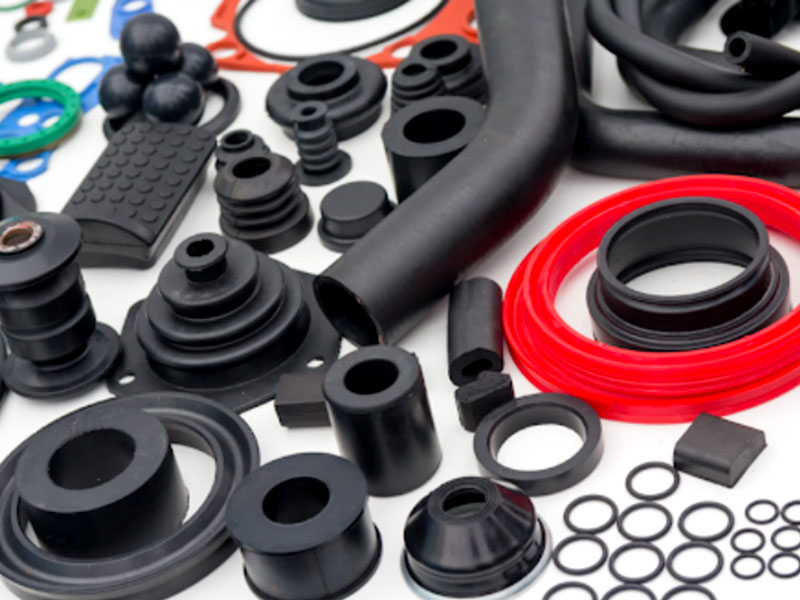


The core of compounding thermoplastic elastomers (TPE/TPR) lies in ensuring uniform dispersion of all components (base resin, elastomer, softening oil and additives) while preventing material degradation. Its key process requirements are as follows:
Temperature Control
The compounding temperature is generally maintained between 80°C and 225°C. Parameters shall be strictly set according to specific substrates (e.g., SEBS, SBS, TPV). The maximum processing temperature limit is normally no higher than 250°C to avoid thermal degradation of polymers.
Equipment Selection
Twin-screw extruders or compounding kneader are preferred. Twin-screw extruders deliver outstanding shearing and compounding performance to enable continuous production;
Feeding and Compatibility
Materials with different polarities require matching compatibilizers. When processing oil (plasticizer) is incorporated, full absorption by the resin must be guaranteed to prevent bleed-out or slippage during compounding.
Drying Treatment
Hygroscopic raw materials shall be dried prior to compounding (e.g., drying at 80°C for 2–4 hours) to eliminate bubbles formed by water vaporization under high temperatures.
Venting Requirements
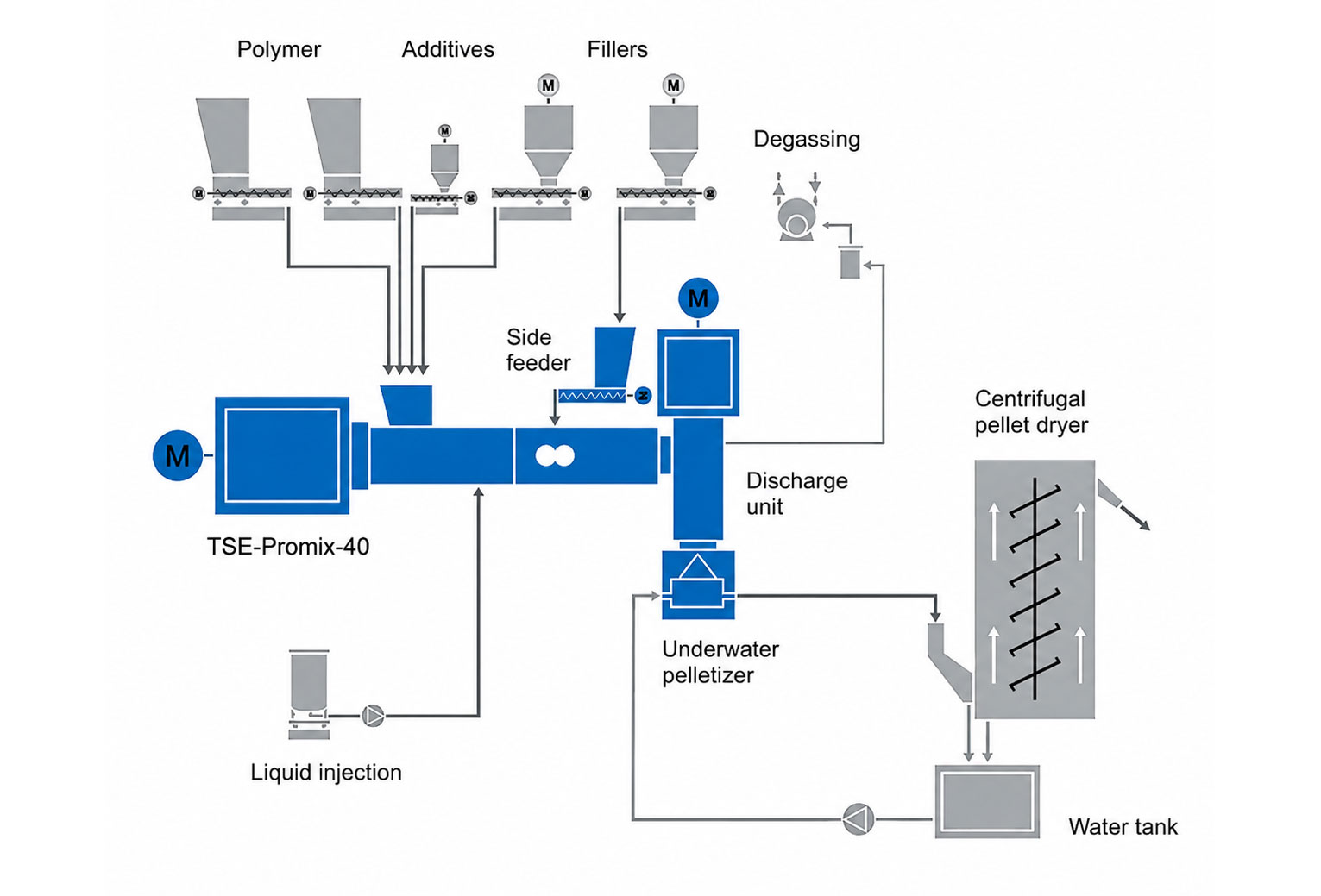
Compounding equipment shall be equipped with an efficient vacuum pumping system to remove volatiles and low-molecular-weight substances, so as to secure the physical properties and surface appearance of finished products.
High Dispersion and High Shearing Capacity: The reverse speed differential at meshing positions generates extremely strong shear force, which easily breaks up agglomerated additives. It enables perfect microscale dispersion of base resins (e.g., SEBS/SBS), polymeric oils and inorganic fillers.
Excellent Self-Cleaning and Discharging Performance: The two screws intermesh with each other. Materials accumulated on the screw surface during operation are forcibly scraped off by the adjacent screw, preventing thermal degradation caused by prolonged local residence of materials.
Flexible Modular Block Design: Screws and barrels adopt a building-block modular structure. Processors can freely combine functional sections including conveying, melting, shearing and venting according to TPE formulations.
Multi-Point Feeding and Powerful Venting Function: The barrel supports segmented multi-point feeding. Resins can be melted in the front section, processing oil injected via liquid metering pumps in the middle section, and glass fiber or flame retardants added in the rear section. Multiple vacuum vent ports are equipped to efficiently remove moisture and volatiles.
Continuous Production and High Efficiency: In contrast to the batch-type production of internal mixers, twin-screw extruders realize fully continuous operations from feeding, melting, compounding and venting to pelletizing, greatly boosting production efficiency and batch consistency.