
Search LEMIX Products
Raw materials for shoes and shoe soles (including foamable PVC-P)
Extrusion raw materials for profiles and pipes (including medical-grade applications)
Injection molding grade PVC materials
PVC films and flooring
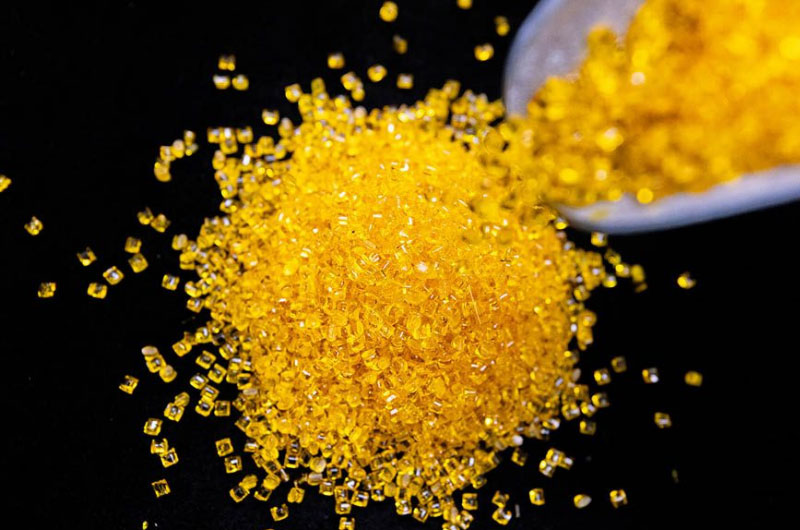
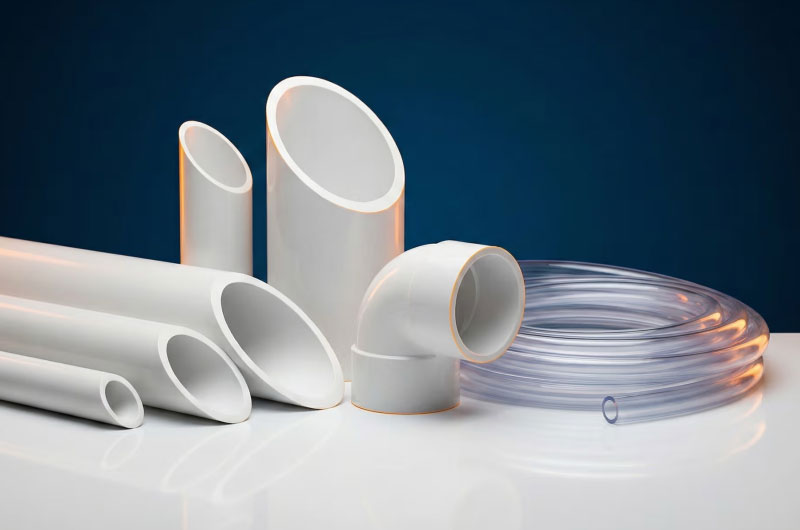
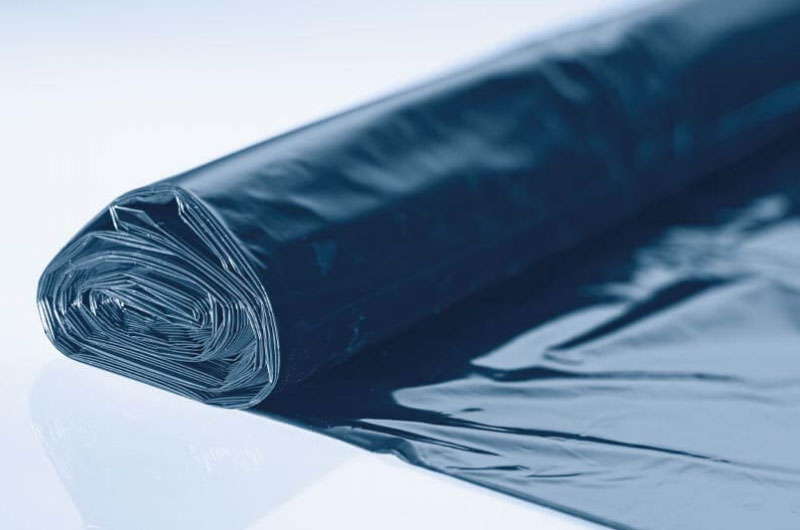
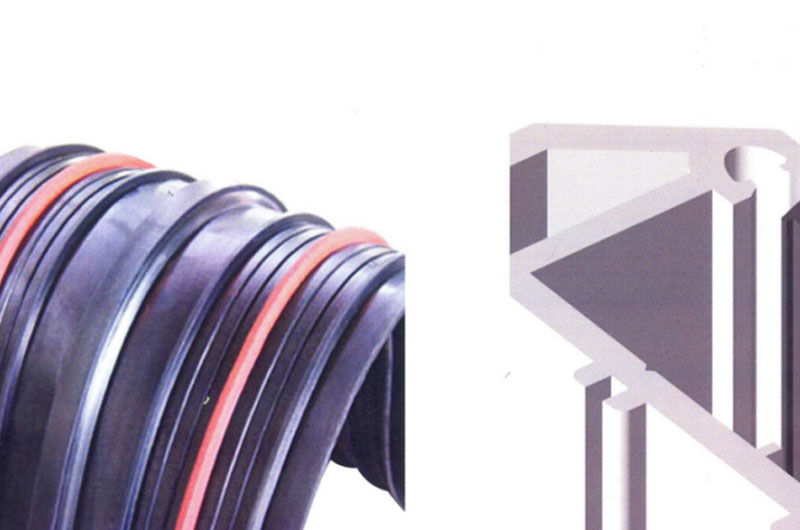
The core of soft PVC compounding lies in the precise control of "dry mixing" and "plasticization". The resin must be preheated to 75 - 85°C, and then additives are added in stages and kneaded at a high speed at 100 - 120°C to ensure that the plasticizer is completely absorbed by the resin. Subsequently, the mixture is cooled to prevent caking. In the mixing system, the plasticizer and other components such as stabilizers, additives, fillers, reinforcing materials, and flame retardants are absorbed by the porous PVC particles and undergo systematic gelling, dispersion, and distribution mixing, and finally agglomeration - all processes comply with clear temperature limit requirements.
During the mixing process, additional performance requirements can be achieved by alloying other polymers with PVC. Relevant examples include mixing TPU (thermoplastic polyurethane elastomer) with flexible PVC to improve abrasion resistance, oil resistance, and flame retardancy. The blend of PVC and nitrile rubber can improve low - temperature flexibility and chemical resistance. Mixing PVC with nitrile rubber or TPU can enhance the hot - melt adhesive strength for medical applications, as well as abrasion resistance and durability. PVC/EVA can reduce the volatility of the plasticizer and improve chemical resistance, while PVC/CPE can improve compression set and low - temperature flexibility.
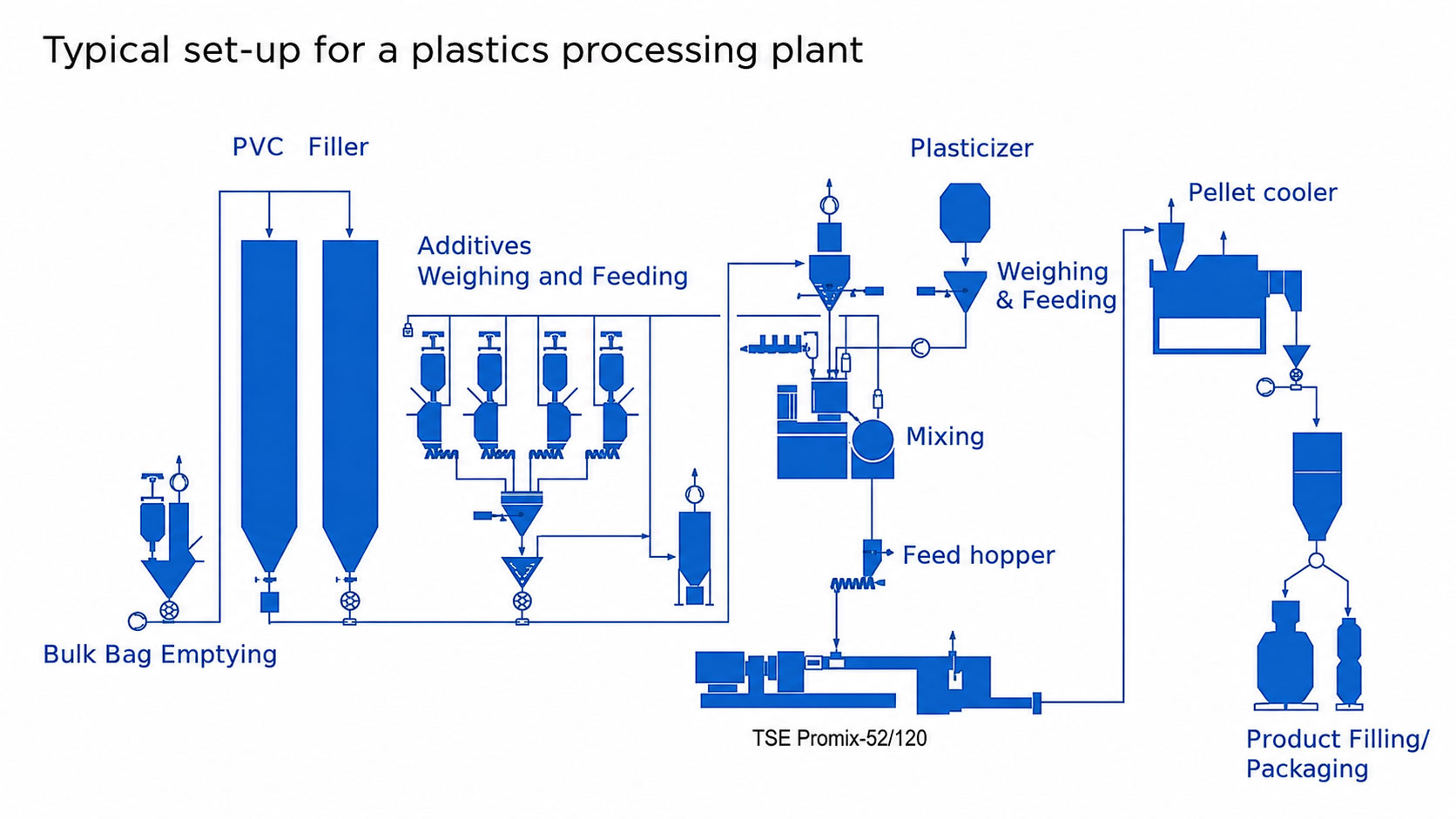
Pre-mixing: Cold & hot mixing to fully absorb plasticizers, cool material below 45°C to prevent caking and blooming; liquid metering feeding for high-plasticizer formulations.
Screw configuration: Co-rotating parallel twin-screw with low-shear modular elements, equipped with 2–3 stages of vacuum venting; wear & corrosion resistant barrel.
Temperature control: Low-temperature overall processing, melt temperature capped at 175°C; independent zone temperature control to avoid PVC degradation and plasticizer volatilization.
Production parameters: Medium-low screw speed to limit shear heat; high vacuum to remove moisture and small molecular volatiles; underwater/water ring pelletizing to stop soft pellets sticking together.
Formula matching: Balanced internal & external lubricants and matched stabilizers; side feeding of foaming agent for foamable PVC-P.
Superior mixing performance: Even dispersion for high-plasticizer and high-filler systems, no oil spots or blooming, consistent texture and transparency of finished products.
Stable conveying: Positive intermeshed conveying avoids slipping of high-oil powder, minimal batch fluctuation of output and hardness.
Excellent thermal stability: Short material residence time and precise temperature control reduce yellowing and black specks, ideal for medical-grade and transparent PVC.
Efficient devolatilization: Multi-stage vacuum thoroughly removes moisture and volatiles, eliminating pinholes and bubbles in pipes & films, delivering fine uniform cells for foam materials.
Easy material switching: Self-cleaning screw design without dead accumulation zones, faster purging for color/formula changes with less waste.
Multi-purpose flexibility: Adjustable screw combinations cover all flexible PVC grades including medical pellets, film, shoe-grade PVC-P, flooring and cable compounds.
High production capacity: Much higher throughput than single-screw extruders with identical size, high yield rate and lower overall production cost.