
Search LEMIX Products
Learn the differences between lab scale and pilot scale twin screw extruders and discover which equipment is better for material development and scale-up.
Category:Extruder Technology & Selection
Author:LEMIX Admin
Date:2026-09-28
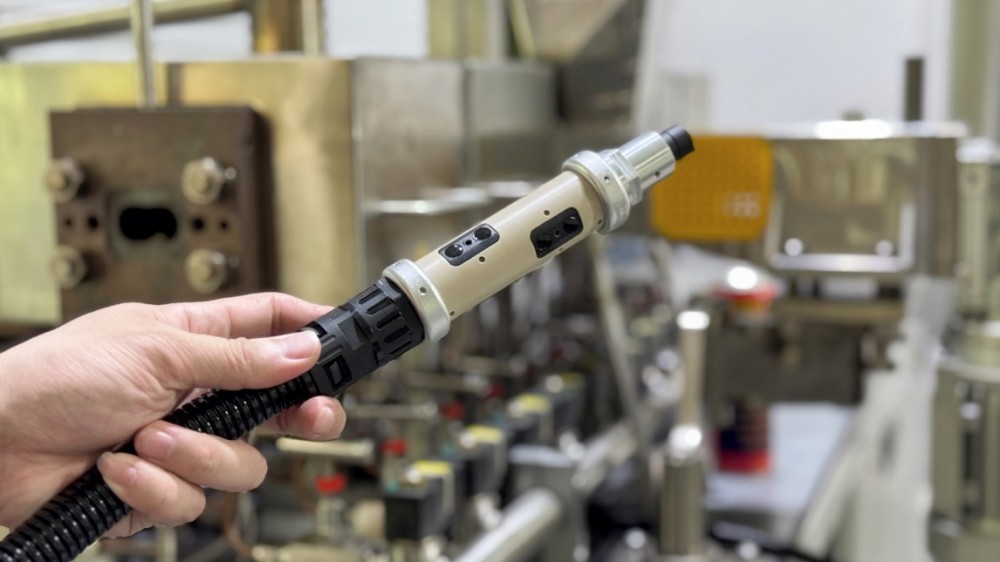
A lab scale Twin Screw Extruder is better for early formulation research, while a pilot scale twin screw extruder is better for process validation and scale-up before commercial production.
Material development requires more than creating a successful formulation in the laboratory. Manufacturers must also prove that the material can be processed consistently when moving toward larger production.
Twin screw extrusion plays an important role in developing:
Polymer compounds
Pharmaceutical formulations
Battery materials
Food and plant-based proteins
Powder coatings
Advanced functional materials
During development, two commonly used equipment types are:
Lab scale twin screw extruders
Pilot scale twin screw extruders
Although both systems use the same extrusion principles, they serve different purposes.
The key difference is not simply machine size. It is the development stage, processing objectives, and information required before commercial production.
A lab scale twin screw extruder is designed for research, formulation testing, and early-stage material development.
It allows engineers and researchers to evaluate:
Material behavior
Processing conditions
Screw configuration
Mixing performance
Formula feasibility
Typical applications include:
New polymer formulation development
Additive testing
Small-scale pharmaceutical studies
Material screening
The main advantage of laboratory equipment is flexibility. Researchers can test multiple formulations using smaller amounts of material before investing in larger production systems.
A pilot scale twin screw extruder is designed to bridge the gap between laboratory research and commercial manufacturing.
It provides a larger processing environment closer to industrial production.
Pilot systems are used for:
Process verification
Scale-up studies
Production parameter optimization
Customer sample preparation
A pilot extruder helps manufacturers understand whether a formulation developed in the laboratory can maintain performance under more realistic production conditions.
The main differences include processing capacity, development purpose, and scale-up capability.
| Comparison | Lab Scale Twin Screw Extruder | Pilot Scale Twin Screw Extruder |
|---|---|---|
| Main purpose | Research and formulation testing | Process validation and scale-up |
| Material consumption | Very small amount | Medium-scale production |
| Development stage | Early research | Pre-commercial development |
| Output capacity | Lower | Higher |
| Process similarity to production | Limited | Closer to industrial conditions |
| Sample production | Research samples | Larger validation samples |
Both systems are important, but they solve different development challenges.
A laboratory twin screw extruder is suitable when the main goal is understanding material behavior.
Common situations include:
When developing a new compound, researchers need to test:
Polymer compatibility
Additive effects
Processing temperature
Mixing performance
A lab extruder allows rapid experimentation with minimal material consumption.
Multiple formulations can be compared quickly before selecting the best option for further development.
Engineers can study how materials respond to:
Screw speed changes
Temperature adjustments
Screw element arrangements
Lab equipment provides valuable data during the discovery stage.
A pilot scale extruder becomes important when moving from research toward commercial application.
It is suitable for:
A formulation that works in a laboratory environment may behave differently at larger production levels.
Pilot equipment helps verify:
Output stability
Mixing performance
Residence time
Product consistency
Many industries require larger samples for:
Application testing
Customer approval
Performance evaluation
Pilot systems can produce enough material for realistic testing.
Manufacturers can optimize:
Screw configuration
Feeding method
Temperature profile
Operating parameters
before investing in full production equipment.
The answer depends on the development stage.
A lab scale twin screw extruder provides better results for:
Initial research
Formula comparison
Material screening
Small experiments
A pilot scale twin screw extruder provides better results for:
Production simulation
Process validation
Scale-up confirmation
Commercial preparation
In many development projects, both systems are used sequentially:
Lab scale → Pilot scale → Commercial production
This approach reduces development risks and improves the chance of successful scale-up.
Scale-up is one of the biggest challenges in material development.
A formulation that performs well on laboratory equipment may face issues when transferred to larger machines.
Potential differences include:
Different residence time
Different heat transfer conditions
Different shear environment
Different material flow behavior
Pilot scale extrusion provides more realistic processing conditions and helps identify potential production problems earlier.
Both lab and pilot systems use modular screw elements, but configuration goals may differ.
Focuses on:
Understanding material behavior
Testing different mixing strategies
Comparing processing conditions
Focuses on:
Reproducing production conditions
Optimizing throughput
Confirming long-term stability
A successful development process requires adjusting screw configuration according to the equipment scale and material requirements.
Different industries use both systems for different purposes.
Lab systems help evaluate:
API-polymer compatibility
Formulation performance
Pilot systems help validate:
Production conditions
Scale-up feasibility
Lab systems support new material development.
Pilot systems support commercial compound optimization.
Lab systems help test formulations.
Pilot systems help evaluate production stability.
Lab systems support recipe development.
Pilot systems help prepare products for market testing.
In most cases, a laboratory extruder cannot fully replace a pilot system.
A lab machine provides valuable development information but cannot completely reproduce commercial processing conditions.
Without pilot validation, manufacturers may face challenges such as:
Unexpected production behavior
Output limitations
Quality variation
Process instability
Pilot extrusion provides an important step between research and industrial manufacturing.
The selection depends on several factors.
Choose lab scale equipment for:
Research
Screening
Early experiments
Choose pilot scale equipment for:
Scale-up
Validation
Sample production
For expensive materials, laboratory systems reduce consumption during early testing.
If commercial production is planned, pilot validation provides more reliable process data.
Manufacturers should consider whether the equipment will support future development needs.
Material development is a gradual process.
Laboratory extrusion helps answer:
Can the material be processed?
What formulation works best?
What parameters are required?
Pilot extrusion helps answer:
Can the process be repeated at larger scale?
Is production quality stable?
Is commercial manufacturing achievable?
LEMIX provides laboratory, pilot, and production-scale twin screw extrusion solutions designed for material research, process validation, and industrial scale-up.
Choosing the right development stage equipment helps manufacturers reduce risks and accelerate successful commercialization.