
Search LEMIX Products
Learn how a twin screw extruder works, covering feeding, melting, mixing, venting, pressure control, applications, and LEMIX extrusion solutions.
Category:Extruder Technology & Selection
Author:LEMIX Admin
Date:2026-06-13
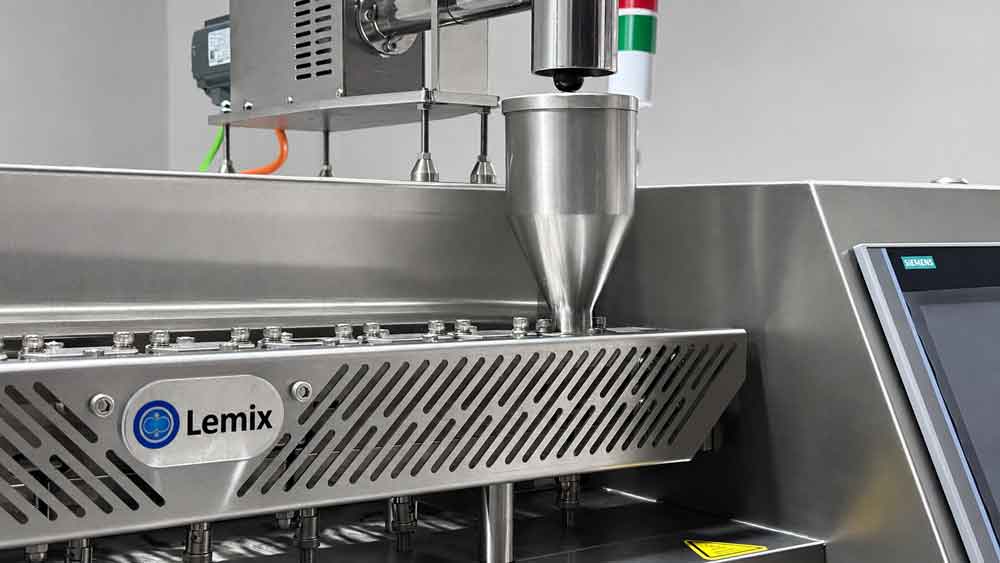
A Twin Screw Extruder is a continuous processing machine used to mix, melt, disperse, vent, pressurize, and shape materials in one controlled production line. It is widely used for plastic modification, masterbatch, PVC granulation, cable compounds, bio-based materials, recycling, engineering plastics, food materials, and pharmaceutical hot melt extrusion.
Different from simple conveying equipment, a twin screw extruder controls material behavior through screw geometry, barrel temperature, torque, residence time, feeding accuracy, and downstream configuration. When these factors are matched correctly, the machine can produce stable pellets, sheets, granules, or extrudates with consistent quality.
For manufacturers, understanding how a twin screw extruder works is useful for selecting the right model, building a suitable screw combination, reducing material defects, and keeping production stable during long running hours.
A complete twin screw extrusion system usually includes feeding units, a gearbox, twin screws, segmented barrels, heating and cooling zones, sensors, venting sections, die head, pelletizing or shaping equipment, and an HMI control system.
The feeding system introduces resin, powder, additives, fillers, pigments, or active ingredients into the barrel at a controlled rate. Stable feeding is important because material fluctuation can directly affect torque, pressure, color consistency, output, and final pellet quality.
The gearbox transfers power to the two screws and keeps them rotating at the required speed. In high-output processing, the gearbox must handle high torque and reverse axial force. A strong drive system helps the extruder run safely under demanding formulas such as highly filled compounds, cable materials, or engineering plastics.
The screws are the core processing parts. A modular screw system can combine conveying elements, kneading elements, mixing sections, and reverse elements according to material properties. This allows the same twin screw extruder to process different formulas by adjusting shear intensity, mixing length, pressure building, and residence time.
The barrel provides the closed processing space. Segmented barrel design allows feeding, melting, side feeding, venting, vacuum degassing, and discharge sections to be arranged based on the process. Heating and cooling control keeps the material within the proper temperature window and helps avoid overheating, poor melting, or degradation.
The extrusion process starts at the feeding zone. Materials enter the screws through the hopper or feeder and are carried forward by the rotating screw flights. At this stage, the material is not fully melted, so the main task is stable conveying and initial compression.
As the material moves forward, heat from the barrel and shear from the screws begin to soften and melt the polymer. The melting process must be controlled carefully. If the temperature is too low, the material may not be fully plasticized. If the temperature is too high, heat-sensitive materials may discolor, degrade, or release unwanted volatiles.
After melting, the material enters the mixing section. Kneading blocks and mixing elements create shear and folding action inside the barrel. This helps pigments, fillers, additives, fibers, or active ingredients disperse into the base material. For color masterbatch, this stage affects color uniformity. For engineering plastics, it affects filler dispersion and mechanical performance. For pharmaceutical hot melt extrusion, it supports uniform dispersion of APIs and carriers.
The venting section removes moisture, air, and volatile substances from the melt. Vacuum degassing is especially important for recycled materials, hygroscopic polymers, filled compounds, and processes where bubbles or odor must be reduced. Good venting improves pellet appearance, melt stability, and downstream processing quality.
Near the discharge end, the screws build pressure and push the material through the die. The material can then be shaped, cooled, cut, pelletized, or transferred to downstream equipment. The final result depends on stable screw speed, torque, melt temperature, die pressure, and cooling performance.
| Processing Stage | Main Function | Common Quality Concern |
|---|---|---|
| Feeding | Controls material ratio and flow | Output fluctuation, unstable formula |
| Melting | Softens and plasticizes material | Poor melting, overheating, degradation |
| Mixing | Disperses fillers, pigments, additives | Color spots, weak dispersion, gels |
| Venting | Removes moisture and volatiles | Bubbles, odor, surface defects |
| Pressurizing | Builds melt pressure before die | Unstable extrusion, pressure fluctuation |
| Cooling and Cutting | Forms final pellets or products | Uneven pellet size, cutting defects |
A twin screw extruder is not only judged by motor power or output. The screw and barrel design often decide whether the material can be processed smoothly.
Conveying elements move material forward and maintain stable filling. Kneading elements increase shear and improve dispersion. Reverse elements can increase residence time and mixing intensity, but they also raise pressure and torque. For heat-sensitive materials, the screw combination should avoid excessive shear. For highly filled compounds, stronger conveying and mixing ability may be needed to prevent poor dispersion or unstable feeding.
The barrel can be customized with openings, inserts, side feeding ports, venting ports, and cooling channels. This is important for formulas that require staged feeding, fiber addition, powder feeding, or vacuum treatment. A well-matched barrel layout can improve material flow and reduce process risk.
LEMIX twin screw extruders use modular screw and barrel systems, allowing screw material and screw combinations to be customized according to formulas. This is useful for plastic modification, PVC compounds, XLPE cable compounds, thermoplastic elastomers, bio-plastic compounds, pharmaceutical extrusion, and other production needs.
During extrusion, temperature control is not just about heating the material. It is about keeping the material in a stable process window. Some materials need strong heating to melt fully, while others need efficient cooling to prevent degradation.
Torque shows how much resistance the screws are experiencing. If torque rises abnormally, it may indicate overfeeding, low temperature, poor melting, excessive filler loading, or screw/barrel wear. Pressure changes can also show whether the die, screen, or downstream section is stable.
Modern twin screw extruders use sensors and HMI systems to monitor operating data. For GMP and pharmaceutical applications, process data, recipe management, batch records, audit trails, and traceable operation are especially important. This makes the extrusion process easier to validate and repeat.
LEMIX provides PROMIX twin screw extruder models for laboratory testing, pilot production, and industrial processing. The range includes small R&D models and larger output machines for continuous production.
| Model | Screw Diameter | L/D | Max Screw Speed | Output Range |
|---|---|---|---|---|
| PROMIX-11 | 11 mm | 40:1 | 1000 rpm | 0.2–2.5 kg/h |
| PROMIX-16 | 16 mm | 40:1 | 1000 rpm | 0.5–20 kg/h |
| PROMIX-26S | 25.7 mm | 40:1 | 900 rpm | 50–200 kg/h |
| PROMIX-32S | 31.8 mm | 40:1 | 900 rpm | 60–250 kg/h |
| PROMIX-40S | 40.3 mm | 40:1 | 900 rpm | 80–300 kg/h |
| PROMIX-50S | 50.3 mm | 40:1 | 900 rpm | 100–350 kg/h |
Small models are suitable for research, formulation testing, material development, and pharmaceutical trials. Larger models are suitable for stable production where output, torque capacity, cooling efficiency, and long-term operating reliability matter more.
Twin screw extrusion is widely used in polymer compounding. Base resins can be mixed with colorants, flame retardants, glass fibers, mineral fillers, impact modifiers, or processing aids. This makes the equipment suitable for engineering plastics, color masterbatch, filler masterbatch, TPE, TPR, PVC compounds, and cable compounds.
In recycling granulation, the extruder melts and homogenizes recycled plastics while venting moisture and volatiles. With proper filtration, degassing, and pelletizing, recycled materials can be processed into reusable pellets for downstream manufacturing.
In pharmaceutical hot melt extrusion, active ingredients, polymers, and excipients are processed under controlled temperature and pressure. The process can support solid dispersion, granulation, lipid extrusion, transdermal preparations, implantable preparations, and pharmaceutical 3D printing materials.
In food and plant-based protein processing, twin screw extrusion can combine mixing, shearing, heating, and shaping in a continuous process. This makes it suitable for certain high-moisture or structured material applications.
Stable extrusion does not only depend on the main machine. Pellet inspection, barrel condition, screw cleaning, and cooling channel maintenance also affect final quality.
An in-Line Plastic Pellet Inspection system can monitor pellets continuously and detect issues such as burnt material, gels, color deviation, size problems, cutting defects, and cross contamination. For cable compounds and high-value materials, even a small contaminated pellet may cause serious product failure.
Barrel wear also changes the process. When the inner bore becomes worn, material leakage, unstable pressure, poor mixing, and lower output may occur. LEMIX PROMAC-S uses 360° rotating laser inspection with ±0.01 mm accuracy to measure barrel wear, diameter changes, and inner surface condition. This helps factories plan maintenance before quality problems become serious.
Regular screw cleaning, barrel inspection, cooling channel cleaning, and Spare Parts replacement help keep the twin screw extruder running with stable torque, stable output, and predictable product quality.
A twin screw extruder works by combining controlled feeding, melting, mixing, venting, pressurizing, and shaping in one continuous process. Its value comes from process flexibility, modular screw design, accurate temperature control, and the ability to handle many different materials and formulas.
For factories that process plastic compounds, cable materials, engineering plastics, pharmaceutical formulations, recycled materials, or bio-based compounds, the right twin screw extrusion system can improve product consistency, reduce defects, and support long-term production efficiency.
LEMIX provides twin screw extruders, GMP extrusion systems, precision spare parts, pellet inspection solutions, and Extruder Maintenance Devices. For model selection, screw configuration, output planning, or maintenance support, contact LEMIX with your material type, target output, formula characteristics, and downstream process requirements.