
Search LEMIX Products
Learn how battery materials are mixed and compounded with twin screw extrusion, including feeding, mixing, screw design, moisture control, scale-up, and process optimization.
Category:Materials & Applications
Author:LEMIX Admin
Date:2026-09-02
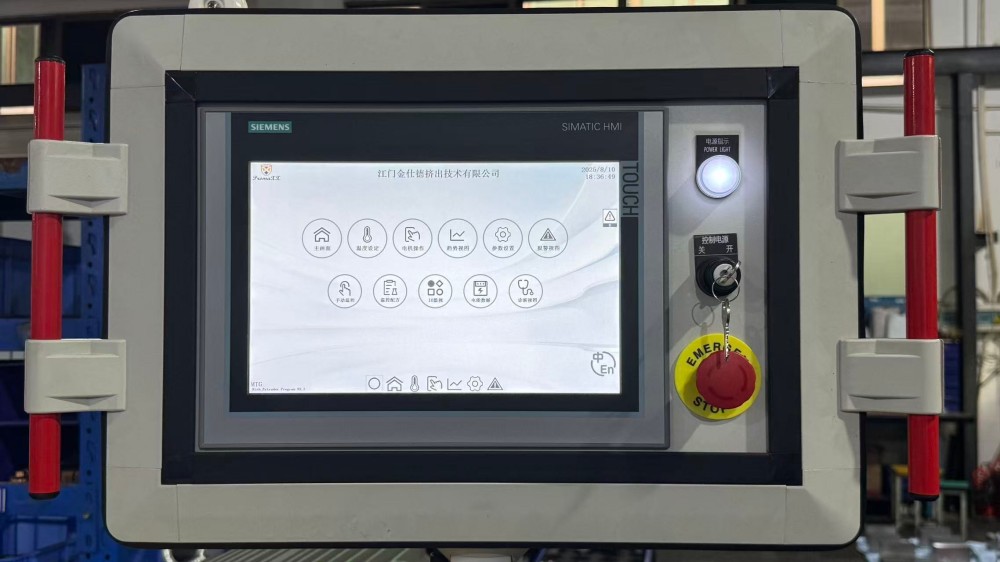
Battery materials are mixed and compounded with twin screw extrusion by combining active materials, conductive additives, binders, and functional components under controlled feeding, mixing, temperature, and residence time conditions to achieve uniform dispersion and stable material performance.
Battery material compounding involves combining different functional components to create electrode materials or advanced battery-related compounds.
Common materials include:
Active electrode materials
Conductive carbon materials
Polymer binders
Functional additives
Ceramic materials
Composite components
For lithium-ion battery applications, electrode materials often require precise control of:
Particle dispersion
Binder distribution
Conductive network formation
Moisture control
Material consistency
The quality of material mixing directly influences:
Electrical conductivity
Mechanical stability
Electrode performance
Production consistency
Twin screw extrusion provides a continuous processing method for achieving controlled mixing and dispersion.
Twin screw extruders are suitable for battery material processing because they provide strong mixing capability, accurate process control, and flexible screw configuration.
Battery materials often have strict processing requirements:
Uniform additive distribution
Stable composition
Low contamination risk
Controlled shear energy
Precise moisture management
Twin screw extrusion offers advantages including:
Continuous operation
High mixing efficiency
Adjustable residence time
Vacuum degassing capability
Accurate feeding control
The equipment can be configured according to different battery material systems and processing requirements.
The battery material compounding process usually includes material feeding, mixing, dispersion, degassing, and discharge.
The typical process includes:
Raw material preparation
Powder feeding
Binder or additive introduction
Mixing and dispersion
Moisture and volatile removal
Melt or compound stabilization
Extrusion discharge
Pelletizing or further processing
Each stage affects the final material structure.
A stable process requires control of:
Feeding accuracy
Mixing intensity
Temperature
Residence time
Screw configuration
Vacuum conditions
Feeding accuracy is critical because battery formulations often contain multiple components with precise ratios.
Small variations in material feeding may affect:
Conductive performance
Active material distribution
Electrode consistency
Final battery performance
Common feeding challenges include:
Powder flow instability
Low bulk density materials
Fine particle handling difficulties
Additive distribution variation
Important feeding factors include:
Feeder accuracy
Material preparation
Particle characteristics
Moisture level
Feed rate stability
A stable feeding system helps maintain consistent material composition during continuous processing.
Mixing is one of the most important stages in battery material compounding.
The purpose of mixing is to achieve:
Uniform distribution of active materials
Good conductive additive dispersion
Stable binder interaction
Consistent material structure
Poor mixing may result in:
Uneven conductivity
Material agglomeration
Reduced electrochemical performance
Batch variation
Twin screw extrusion provides intensive but controllable mixing through:
Intermeshing screws
Kneading elements
Adjustable screw configuration
Controlled shear energy
Screw configuration determines how materials move and interact inside the extruder.
Different screw elements influence:
Conveying performance
Mixing intensity
Residence time
Dispersion efficiency
Pressure development
Common screw elements include:
| Screw Element | Main Function |
|---|---|
| Conveying elements | Transport materials |
| Kneading blocks | Improve mixing and dispersion |
| Mixing elements | Enhance component distribution |
| Reverse elements | Increase filling and residence time |
| Degassing elements | Remove volatile components |
For battery materials, screw design must balance:
Sufficient mixing
Controlled shear
Material protection
Stable temperature
Excessive shear may damage sensitive materials, while insufficient mixing may create poor dispersion.
LEMIX provides modular screw elements that allow optimization for different material processing requirements.
Internal link:
Shear provides mechanical energy that helps disperse materials during extrusion.
Controlled shear can improve:
Particle distribution
Conductive additive dispersion
Binder mixing
Material uniformity
However, excessive shear may cause:
Temperature increase
Particle damage
Material structure changes
Higher energy consumption
The correct shear level depends on:
Material type
Particle characteristics
Formulation design
Required performance
The objective is to achieve uniform dispersion without damaging functional materials.
Temperature control is important because battery materials may have sensitive processing requirements.
Temperature affects:
Binder behavior
Material viscosity
Mixing performance
Component stability
If temperature is too high:
Material degradation may occur
Binder properties may change
Product consistency may decrease
If temperature is too low:
Mixing efficiency may decrease
Material distribution may become unstable
A suitable temperature profile helps maintain stable processing conditions.
Moisture control is critical in battery material processing because water contamination can affect material performance.
Excess moisture may cause:
Material instability
Poor dispersion
Reduced processing consistency
Quality variation
Vacuum degassing systems help remove:
Moisture
Trapped air
Volatile components
Effective degassing improves material stability and supports consistent production.
Internal link:
Residence time determines how long battery materials remain inside the extrusion system.
It affects:
Mixing duration
Thermal exposure
Shear history
Material stability
A suitable residence time allows:
Complete mixing
Stable dispersion
Effective degassing
Excessive residence time may cause:
Material degradation
Increased temperature exposure
Reduced consistency
Short residence time may result in:
Poor mixing
Insufficient dispersion
Uneven material properties
Residence time should be optimized together with screw speed, feed rate, and screw configuration.
Screw speed affects material movement, mixing intensity, and residence time.
Increasing screw speed may:
Increase throughput
Increase mixing intensity
Reduce residence time
Reducing screw speed may:
Increase residence time
Change mixing behavior
Reduce production capacity
The correct screw speed depends on:
Material characteristics
Output requirements
Mixing requirements
Thermal sensitivity
Stable screw speed helps maintain consistent material quality.
Twin screw extrusion provides continuous processing compared with many traditional batch mixing methods.
| Feature | Twin Screw Extrusion | Batch Mixing |
|---|---|---|
| Processing mode | Continuous | Batch |
| Process control | Real-time adjustment | Batch monitoring |
| Mixing consistency | Stable continuous mixing | Depends on batch conditions |
| Scale-up | Easier parameter transfer | Requires additional validation |
| Production efficiency | Suitable for continuous manufacturing | Limited by batch cycles |
The choice depends on material requirements, production goals, and quality standards.
Battery material development often begins with laboratory testing before moving to pilot and production systems.
Scale-up evaluation includes:
Formulation verification
Screw configuration adjustment
Feeding stability testing
Mixing performance evaluation
Process parameter optimization
Important scale-up parameters include:
| Parameter | Importance |
|---|---|
| Torque | Indicates processing load |
| Temperature | Controls material stability |
| Residence time | Controls processing exposure |
| Output | Determines production capability |
| Dispersion quality | Affects material performance |
LEMIX provides laboratory, pilot, and production twin screw extrusion systems to support material development and scale-up.
Internal links:
Common quality problems are usually related to feeding, mixing, temperature, or moisture control.
| Problem | Possible Cause |
|---|---|
| Uneven dispersion | Insufficient mixing |
| Material agglomeration | Poor screw configuration |
| Output variation | Feeding instability |
| Quality fluctuation | Process parameter changes |
| Moisture-related issues | Poor degassing |
| Thermal damage | Excessive temperature |
Continuous process monitoring helps identify problems before they affect production.
Improving battery material processing requires control of the complete extrusion system.
Important improvement areas include:
Accurate feeding
Optimized screw design
Stable temperature control
Effective degassing
Proper residence time
Regular equipment maintenance
The best process is not based on maximum mixing intensity. It depends on achieving the correct balance between dispersion, material protection, and production stability.
LEMIX provides twin screw extrusion solutions for advanced material processing, including battery-related compound development and production applications.
Solutions include:
| Requirement | LEMIX Support |
|---|---|
| Material research | Laboratory twin screw extruders |
| Process development | Pilot extrusion systems |
| Production compounding | Twin screw extrusion systems |
| Screw optimization | Modular screw elements |
| Process stability | Temperature and vacuum control |
| Equipment maintenance | Cleaning and inspection solutions |
Relevant pages:
Battery materials are mixed and compounded with twin screw extrusion by controlling feeding, mixing, shear, temperature, residence time, and degassing conditions.
The main challenge is achieving uniform dispersion while protecting sensitive materials and maintaining stable production conditions.
With optimized screw configuration, accurate feeding, and reliable process control, twin screw extrusion provides an effective solution for developing consistent battery material compounds.