
Search LEMIX Products
Learn which twin screw extruder specifications matter most, including torque, screw design, output, and processing capabilities for different applications.
Category:Extruder Technology & Selection
Author:LEMIX Admin
Date:2026-09-16
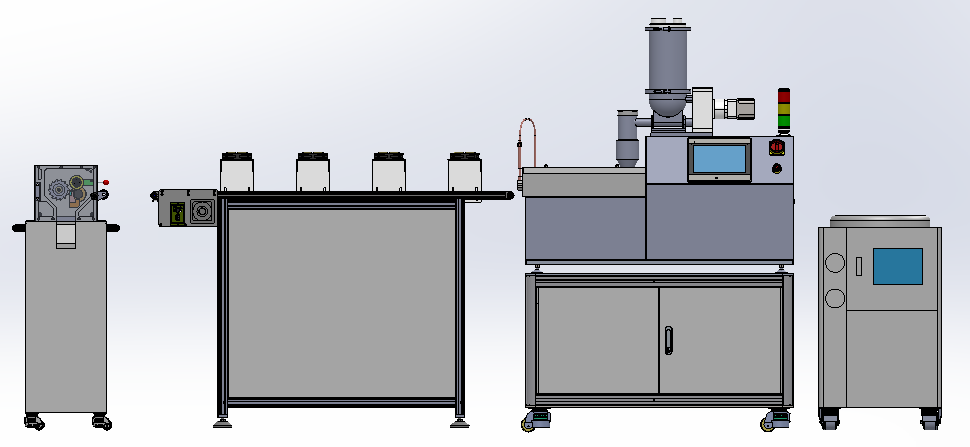
The most important specifications when comparing Twin Screw Extruders include screw diameter, torque, output capacity, screw configuration, processing temperature, and application requirements.
Selecting a twin screw extruder is not only about comparing machine size or production capacity. Different applications require different combinations of mechanical performance, processing flexibility, and control accuracy.
A twin screw extruder designed for polymer compounding may have very different requirements from equipment used for:
Pharmaceutical hot melt extrusion
Powder coating production
Battery material processing
Plant-based protein extrusion
Advanced engineering plastics
The right specifications determine how effectively the machine can perform:
Material conveying
Melting
Mixing
Dispersion
Degassing
Continuous production
For manufacturers comparing extrusion equipment, understanding key specifications helps avoid selecting a machine that cannot meet actual processing requirements.
There is no single specification that determines overall performance. Twin screw extruder selection requires evaluating multiple technical factors together.
The most important specifications usually include:
Screw diameter
Screw length-to-diameter ratio (L/D)
Torque capability
Motor power
Output capacity
Screw speed range
Screw configuration
Temperature control capability
Feeding system
Application compatibility
Each specification affects different aspects of extrusion performance.
Screw diameter is one of the basic specifications used to classify twin screw extruders.
It directly influences:
Processing volume
Maximum output
Material residence capacity
Equipment size
Larger screw diameters generally provide higher production capacity, making them suitable for industrial manufacturing.
Smaller screw diameters are often preferred for:
Laboratory research
Formula development
Small-batch testing
However, screw diameter should not be considered alone. A larger machine does not always provide better results if the material requires precise low-output processing.
The correct screw diameter depends on the relationship between:
Required production capacity
Material characteristics
Development stage
Processing objectives
The L/D ratio describes the relationship between screw length and screw diameter.
It affects how much processing space is available inside the extruder.
A longer L/D ratio generally provides more processing zones, allowing:
Better mixing
Longer residence time
More effective degassing
More complex processing steps
A shorter L/D ratio may be suitable for simpler applications that require less processing complexity.
For advanced materials, pharmaceutical formulations, and highly filled compounds, a suitable L/D ratio helps provide better control over the extrusion process.
Torque capability is a critical specification, especially for demanding applications.
Torque determines how much mechanical force the extruder can apply during processing.
Higher torque capability helps process materials such as:
High-viscosity polymers
Filled compounds
Engineering plastics
Battery materials
Insufficient torque may cause:
Unstable operation
Reduced output
Poor mixing performance
Motor overload
When comparing twin screw extruders, torque should be evaluated together with screw speed and motor power to understand the actual processing capability.
Motor power determines the energy available for material processing.
It influences:
Maximum processing load
Screw rotation capability
Mixing intensity
Production efficiency
However, higher motor power does not automatically mean better performance.
The ideal power level depends on:
Material properties
Required output
Screw design
Processing temperature
A properly matched motor and screw system provides efficient energy usage while maintaining stable extrusion conditions.
Output capacity indicates how much material the extruder can process within a specific time.
Manufacturers should compare output based on actual application requirements rather than only maximum rated capacity.
Important factors include:
Material type
Formulation
Screw configuration
Operating conditions
For example:
Laboratory extrusion focuses on process development
Pilot extrusion focuses on scale-up validation
Production extrusion focuses on continuous manufacturing efficiency
Choosing an oversized machine may increase investment costs, while choosing insufficient capacity may limit future production growth.
Screw speed affects:
Shear intensity
Mixing efficiency
Residence time
Output stability
Higher screw speeds can improve throughput but may also increase:
Mechanical heat generation
Material stress
Risk of degradation
Lower screw speeds may provide gentler processing but reduce production efficiency.
The optimal screw speed depends on the material and desired product properties.
Screw configuration is one of the most application-specific specifications.
A twin screw extruder uses modular screw elements to create different processing zones.
Common screw functions include:
Used for stable material transportation.
Used for melting, mixing, and dispersion.
Used to increase residence time and mixing intensity.
Used for removing moisture and volatile components.
The correct screw configuration depends on the material being processed.
A screw design suitable for powder coatings may not be suitable for pharmaceutical hot melt extrusion or battery materials.
Temperature control directly affects material quality and process stability.
Important factors include:
Heating zone quantity
Cooling capability
Temperature accuracy
Melt temperature monitoring
Different materials have different processing windows.
For example:
Pharmaceutical materials may require precise temperature control to prevent API degradation
Engineering plastics may require high-temperature stability
Food applications may require controlled thermal processing
A reliable temperature system helps maintain consistent product performance.
The feeding system determines how accurately raw materials enter the extrusion process.
Important feeding specifications include:
Feeding accuracy
Material compatibility
Single or multiple component feeding capability
Powder handling performance
Stable feeding improves:
Product consistency
Mixing quality
Process repeatability
For complex formulations, such as pharmaceutical compounds or functional materials, accurate feeding is essential.
A practical comparison should focus on application requirements rather than individual numbers.
Manufacturers should evaluate:
| Specification | Why It Matters |
|---|---|
| Screw diameter | Determines processing volume and output range |
| L/D ratio | Influences mixing and residence time |
| Torque | Determines processing capability for difficult materials |
| Motor power | Supports mechanical processing requirements |
| Screw speed | Affects shear and throughput |
| Screw configuration | Controls conveying, mixing, and degassing |
| Temperature control | Maintains stable material processing |
| Feeding system | Ensures formulation accuracy |
A complete evaluation provides a clearer understanding of whether an extruder matches the intended application.
Different industries require different priorities.
Important specifications include:
High torque capability
Flexible screw configuration
Strong mixing performance
Important specifications include:
Precise temperature control
Accurate feeding
Repeatable process monitoring
Important specifications include:
Efficient dispersion
Stable temperature control
Suitable screw arrangement
Important specifications include:
High torque
Precise feeding
Wear-resistant components
The best twin screw extruder is the one that matches the specific processing challenge.
A twin screw extruder is a long-term production investment. Choosing equipment based only on basic specifications may result in performance limitations later.
Professional evaluation considers:
Material characteristics
Production goals
Scale-up requirements
Maintenance expectations
Future application expansion
LEMIX provides laboratory, pilot, and industrial twin screw extrusion solutions with customized configurations for different material processing applications.
Comparing specifications correctly helps manufacturers select equipment that delivers stable performance, reliable production, and long-term value.