
Search LEMIX Products
Learn the differences between laboratory and industrial twin screw extruders and discover which equipment fits different material research and production stages.
Category:Extruder Technology & Selection
Author:LEMIX Admin
Date:2026-09-30
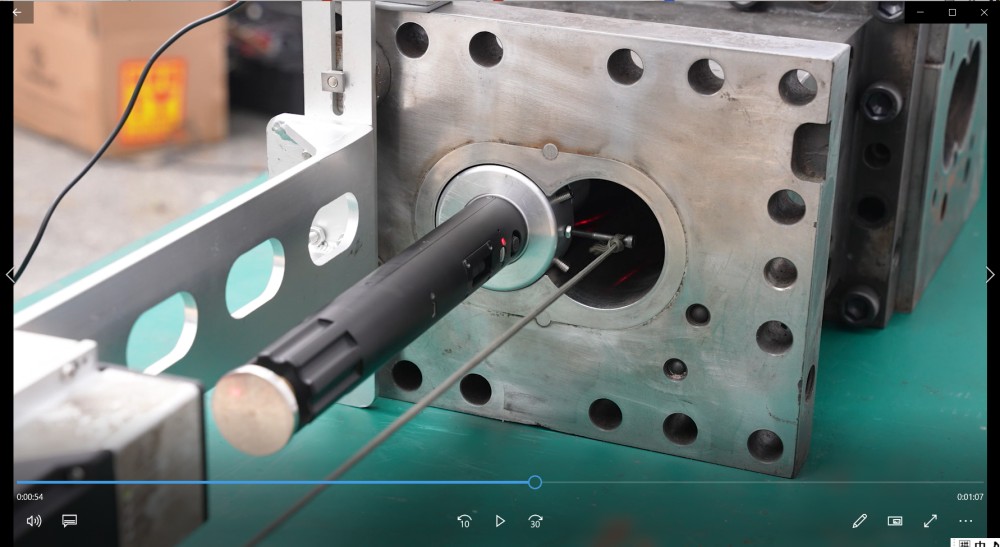
A laboratory Twin Screw Extruder fits early-stage research and formulation testing, while an industrial twin screw extruder is designed for large-scale production and commercial manufacturing.
Choosing the correct twin screw extruder depends largely on the development stage of the material or product.
A machine suitable for laboratory research may not meet industrial production requirements, while a production-scale extruder may be unnecessary during early formulation development.
Twin screw extrusion is used across many industries, including:
Polymer compounding
Pharmaceutical hot melt extrusion
Battery materials
Powder coatings
Food extrusion
Advanced functional materials
At different research stages, manufacturers need different capabilities:
Small material consumption for experiments
Flexible process adjustment
Reliable scale-up data
Stable commercial production
Understanding the difference between laboratory and industrial twin screw extruders helps manufacturers select equipment that matches their development goals.
A laboratory twin screw extruder is designed for research, development, and small-scale material testing.
It allows engineers and researchers to study how materials behave under different extrusion conditions.
Common laboratory applications include:
New polymer formulation development
Additive evaluation
Material compatibility testing
Process parameter studies
Small sample preparation
The main advantage of laboratory equipment is flexibility.
Researchers can quickly test:
Different formulations
Screw configurations
Temperature conditions
Processing parameters
while using a relatively small amount of material.
An industrial twin screw extruder is designed for continuous commercial manufacturing.
It focuses on:
High production capacity
Long operating periods
Stable product quality
Manufacturing efficiency
Industrial systems are used when a material process has already been validated and requires reliable large-scale output.
Typical applications include:
Engineering plastic production
Large-scale compounding
Commercial recycling operations
Battery material manufacturing
Industrial powder coating production
The main purpose of industrial equipment is consistent production rather than experimental flexibility.
The key differences are related to scale, purpose, and operating requirements.
| Comparison | Laboratory Twin Screw Extruder | Industrial Twin Screw Extruder |
|---|---|---|
| Main purpose | Research and development | Commercial manufacturing |
| Material consumption | Low | High |
| Output capacity | Small scale | Large scale |
| Development stage | Early research | Production stage |
| Process flexibility | Very high | Optimized for stability |
| Operating time | Short tests | Continuous operation |
Both systems use the same extrusion principles, but they support different stages of product development.
A laboratory extruder is suitable when the main objective is understanding material behavior.
During early research, manufacturers need to determine:
Whether materials can be processed
How additives affect performance
What processing conditions are suitable
Laboratory extrusion allows rapid testing with minimal material usage.
Researchers can compare different formulations and identify the most effective combination before moving to larger equipment.
Laboratory systems help evaluate the influence of:
Screw speed
Temperature profile
Mixing intensity
Residence time
This information provides the foundation for later scale-up.
Industrial equipment becomes necessary when the material process reaches commercial manufacturing.
It is suitable for:
Industrial extruders provide the capacity needed for continuous manufacturing.
Commercial customers require consistent material properties over long production cycles.
Industries requiring large quantities of compounds need equipment designed for:
Higher throughput
Longer operation
Efficient energy use
Scale-up is one of the biggest challenges in material development.
A formulation that works in laboratory testing may behave differently during industrial production because of:
Different heat transfer conditions
Different material flow behavior
Different residence time
Different mechanical energy input
Laboratory extrusion provides initial processing knowledge.
Industrial extrusion requires additional validation to ensure:
Stable output
Consistent quality
Long-term operation
Many successful projects follow the path:
Laboratory Development → Pilot Validation → Industrial Production
Both systems use modular screw elements, but the design priorities are different.
Focuses on:
Testing different processing methods
Understanding material behavior
Comparing formulations
Flexibility is often more important than maximum output.
Focuses on:
Production efficiency
Long-term stability
Consistent quality
The screw design is usually optimized based on results from earlier development stages.
Process control requirements increase significantly when moving toward production.
Laboratory systems focus on collecting development information, such as:
Material response
Processing window
Mixing performance
Industrial systems require continuous monitoring of:
Temperature
Pressure
Torque
Feeding stability
Output consistency
The goal changes from understanding the process to controlling the process.
Different industries may use both laboratory and industrial systems.
Laboratory systems help evaluate:
API-polymer compatibility
Formulation performance
Industrial systems support:
Commercial production
Consistent drug manufacturing
Laboratory systems help develop new materials.
Industrial systems manufacture engineering compounds at scale.
Laboratory systems test formulations.
Industrial systems provide stable production capacity.
Laboratory systems optimize recipes.
Industrial systems support market production.
A laboratory extruder cannot replace an industrial production system.
Laboratory equipment is designed for:
Research
Testing
Development
Industrial equipment is designed for:
Continuous operation
Large output
Commercial supply
Using laboratory equipment for production may result in:
Limited capacity
Lower efficiency
Inability to meet market demand
The two systems serve different purposes in the product development process.
The correct choice depends on the current research stage.
Developing new materials
Testing formulations
Studying processing behavior
Using expensive materials
Commercial production is required
Large output is needed
Long-term operation is planned
For projects moving from research to production, pilot-scale validation is often an important intermediate step.
Selecting the right extrusion equipment helps manufacturers avoid unnecessary costs and development delays.
Laboratory twin screw extruders provide:
Faster experimentation
Lower material consumption
Better formulation understanding
Industrial twin screw extruders provide:
Reliable production
High output capability
Long-term manufacturing stability
LEMIX provides laboratory, pilot, and industrial twin screw extrusion solutions designed for different material development stages.
Choosing the correct equipment allows manufacturers to move from research concepts to successful commercial production more efficiently.