Search LEMIX Products
Learn how Hot Melt Extrusion supports pharmaceutical manufacturing by combining APIs with polymers, improving bioavailability, enabling continuous processing, QbD control, twin screw mixing, shorter residence time, and flexible dosage development.
Category:Pharmaceutical Extrusion Technology
Author:LEMIX Admin
Date:2026-08-08
Hot Melt Extrusion is a manufacturing technology that was first used in the plastics industry in the early 1930s. It was originally developed to produce polymer products in different shapes and densities for use in a wide range of plastic goods, including bags, foams, films, sheets, and pipes. The technology was later adopted by the food industry and is now attracting increasing attention in the pharmaceutical sector. Today, approximately half of the plastic products on the market are manufactured using Hot Melt Extrusion. In this process, heat and shear are applied to force a molten polymer through a die, producing a new material known as an extrudate.
Hot Melt Extrusion has attracted growing interest from the pharmaceutical industry and academia because it enables the continuous manufacture of a variety of dosage forms. In recent years, the technology has been used in pharmaceutical applications to create new medical devices and medicines. It can be used to manufacture devices and materials for drug-delivery systems or to combine an active pharmaceutical ingredient (API) with a polymer. This can improve the bioavailability of the API while also masking its bitter taste.
Another advantage is the ability to integrate process analytical technology and apply a Quality by Design (QbD) approach to continuous process control. Hot Melt Extrusion is therefore considered compatible with the U.S. FDA’s expectations for continuous manufacturing, including process design, analysis, and quality control.
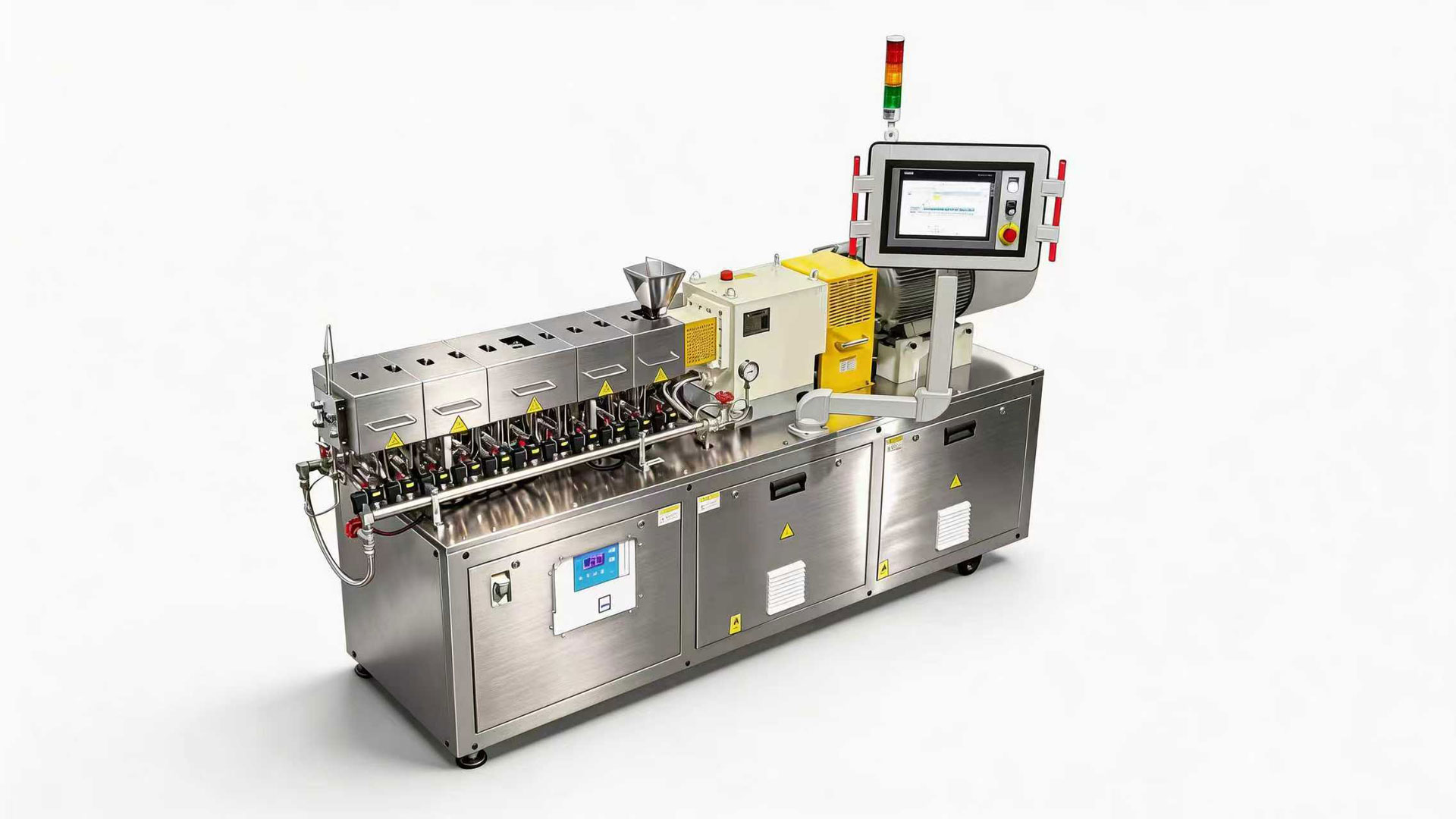
At the heart of the Hot Melt Extrusion process is an extruder. It consists of a series of barrel sections containing one or two rotating screws that convey the material through the barrel. An extruder has four main components:
Feed inlet: Introduces material into the barrel. Material may be placed in a hopper fitted to the inlet or supplied continuously by one or more feeders.
Processing section: Consists of the barrel and screws. The screws convey the material through the barrel and mix it as required.
Die: Shapes the material as it exits the extruder.
Downstream equipment: Cools, cuts, and/or collects the extruded product.
There are two main types of extruder: the Single Screw Extruder and the Twin Screw Extruder.
A Single Screw Extruder contains one rotating screw inside a stationary barrel divided into feed, compression, and metering zones. A Single Screw Extruder (SSE) is primarily used to melt a polymer and form it into a continuous shape.
A Twin Screw Extruder is a more advanced system equipped with two screws that may rotate in the same direction or in opposite directions. A Twin Screw Extruder (TSE) is used to melt polymers and mix them with other ingredients, such as active pharmaceutical ingredients (APIs) and additives. It can also be used for devolatilization.
An important characteristic of an extrusion screw is its length-to-diameter ratio (L/D), which is typically between 20:1 and 40:1. Extruders used in commercial GMP facilities commonly have screw diameters of 18–30 mm, while those used for continuous large-scale production are generally larger and often reach 50 mm.
Compared with a Single Screw Extruder, a Twin Screw Extruder offers several advantages in industrial applications, including easier material feeding, a lower tendency to overheat, greater process flexibility, and better control of operating parameters. Key advantages include:
Two parallel screws allow individual extrusion zones to use different configurations and operating conditions. As a result, various types of Twin Screw Extruder are available, with different operating mechanisms suited to different applications.
In a Single Screw Extruder, increasing the screw speed generates heat, which may damage temperature-sensitive drugs. In a Twin Screw Extruder, heat is externally controlled and is independent of screw speed. This reduced tendency to overheat is particularly beneficial for thermally sensitive drugs and for minimizing residence time.
A Twin Screw Extruder melts material faster than a Single Screw Extruder, reducing the time that material remains inside the extruder. A typical laboratory extrusion run lasts only 5–10 minutes, while residence time in large-scale production can be less than one minute.
In an intermeshing, co-rotating Twin Screw Extruder, the flight of one screw wipes the root of the other. This self-wiping action promotes complete material discharge and reduces waste at the end of a batch.
Process parameters can be controlled easily and continuously to achieve the required extrusion rate or mixing function. Dies can also be changed readily to produce different extrudate diameters, allowing the same equipment to process a wide range of formulations.
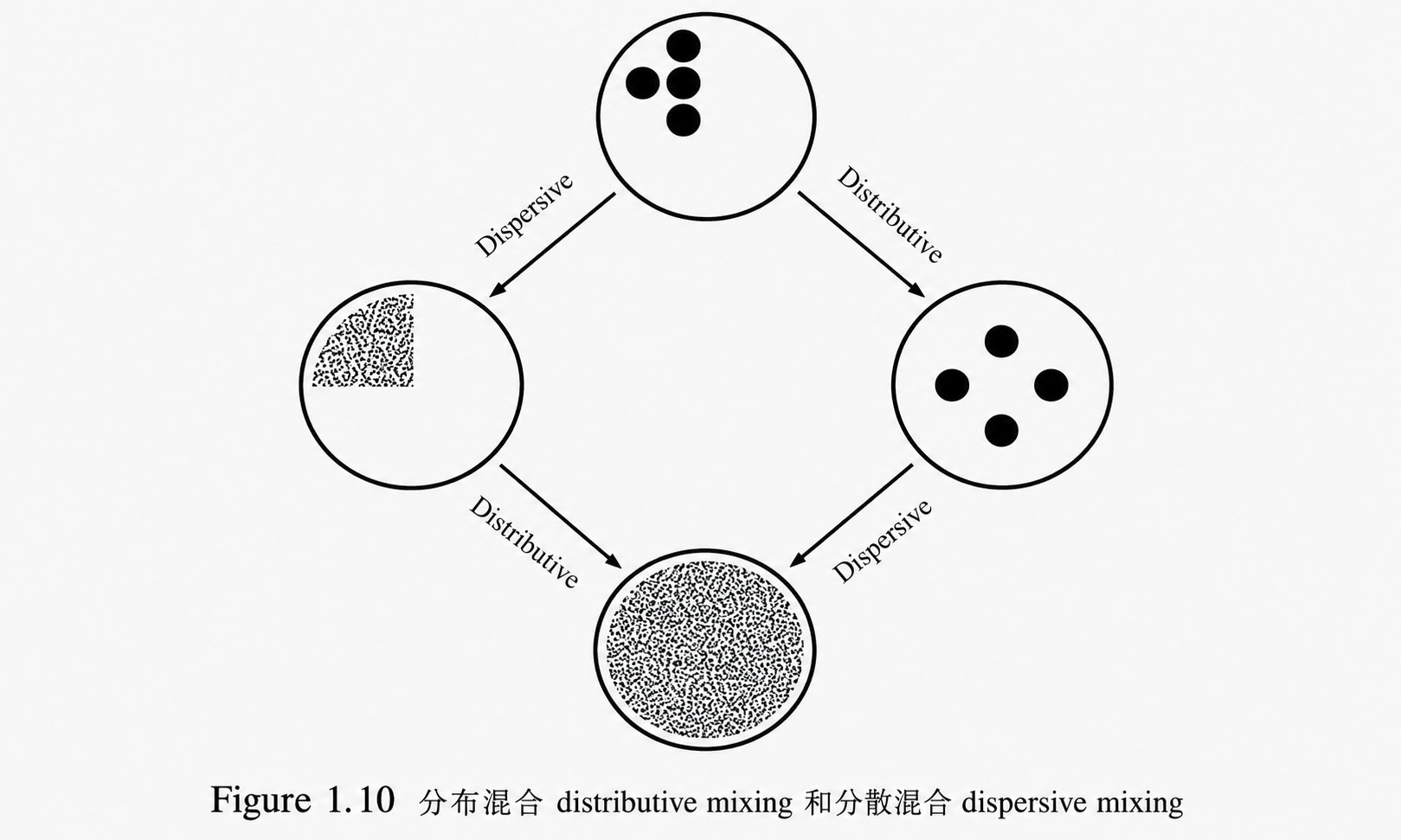
The intermeshing, co-rotating screws in a Twin Screw Extruder provide enhanced mixing. Two types of mixing can be achieved: distributive mixing and dispersive mixing.
Distributive mixing blends materials uniformly while limiting degradation, which is useful when processing APIs that are sensitive to heat or shear. Dispersive mixing, by contrast, breaks solid material into finer particles and helps combine two or more APIs with a carrier.