
Search LEMIX Products
Learn how to choose a lab scale twin screw extruder by material type, sample volume, torque, temperature control, feeding, venting, downstream setup, and scale-up needs.
Category:Extruder Technology & Selection
Author:LEMIX Admin
Date:2026-07-28
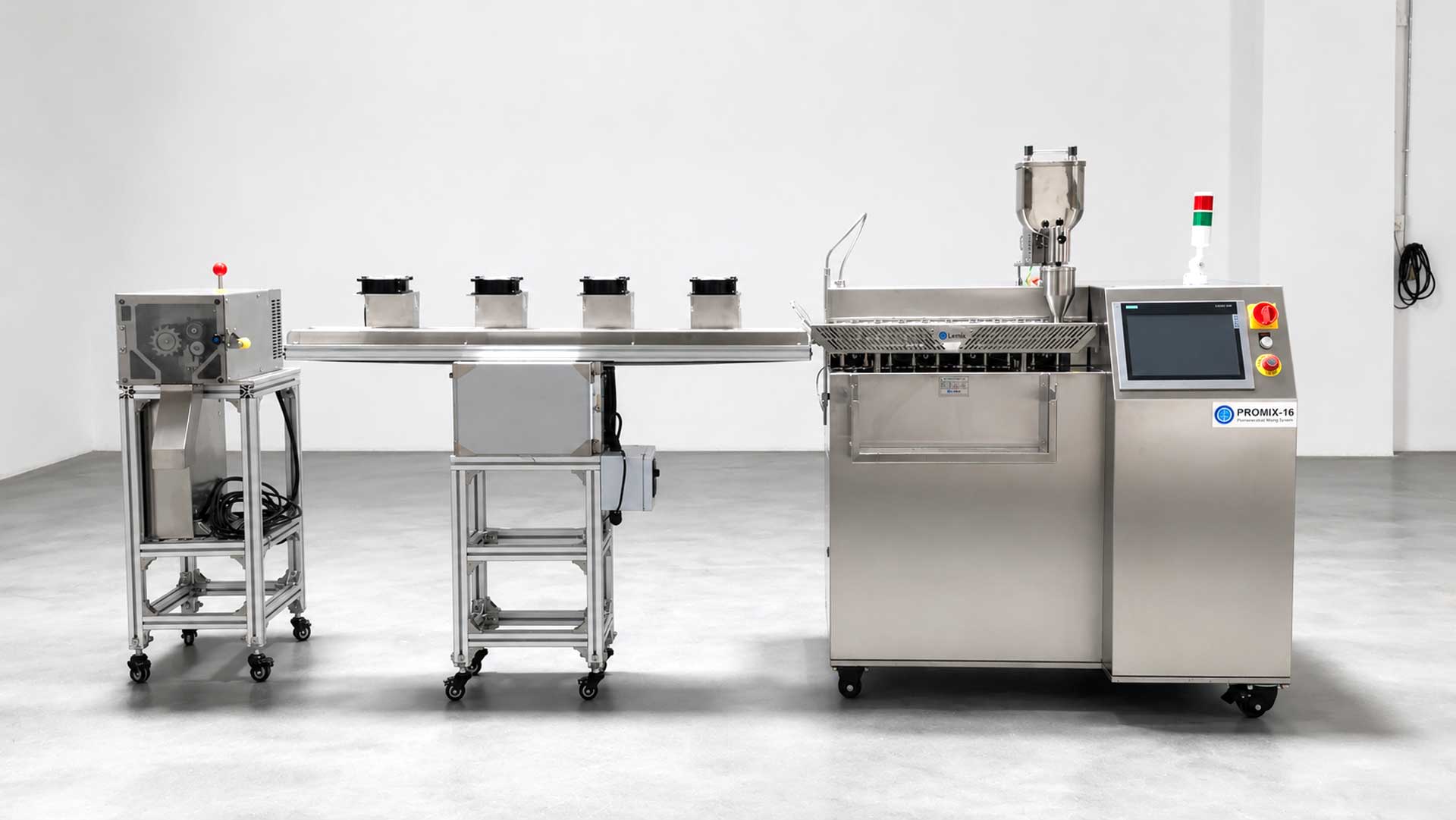
Choose a lab scale Twin Screw Extruder by matching the material type, trial purpose, sample volume, screw diameter, L/D ratio, torque, temperature range, feeding method, venting need, downstream setup, control system, and future scale-up plan.
A lab scale twin screw extruder is used for small-batch material testing, formulation development, process trials, and scale-up research before pilot or production investment.
It is commonly used for plastic compounding, rubber and elastomer testing, masterbatch development, filler dispersion, biodegradable materials, engineering plastics, pharmaceutical hot melt extrusion, and small trial production. Compared with a production extruder, a lab machine uses less raw material and allows engineers to test more formulas with lower cost and lower risk.
For research teams, the machine should provide repeatable process data. For factories, it should help confirm whether a new material, additive, pigment, filler, or screw design can work before moving to a larger production line.
LEMIX provides 11mm and 16mm lab type twin screw extruders for R&D and trial applications. These models are suitable for pharmaceutical extrusion, rubber and plastics compounding, research, development, and testing.
Internal link: Lab Type Twin Screw Extruder
Before choosing a lab scale twin screw extruder, the first step is to confirm the real trial purpose. A machine for simple polymer blending may not need the same torque, screw design, or feeding system as a machine for high-filler compounds, glass fiber reinforcement, TPU, PVC, PEEK, battery materials, or pharmaceutical HME.
The following questions should be answered before model selection:
What materials will be tested?
Is the material powder, pellet, flake, liquid, fiber, or mixed form?
Is the goal compounding, dispersion, devolatilization, reaction, granulation, sheet, strand, film, or hot melt extrusion?
How much sample material is available for each trial?
What output range is needed?
Is future scale-up required?
Is vacuum venting needed?
Are side feeding or liquid feeding required?
What downstream equipment is needed after extrusion?
What process data must be recorded?
A clear application list helps avoid overbuying or underbuying. A machine that is too small may not give stable data. A machine that is too large may waste expensive trial material.
Screw diameter affects sample consumption, output range, residence time, torque demand, and scale-up value. Smaller screw diameters are better when the raw material is expensive or limited. Larger lab machines are better when the trial must produce enough pellets, samples, or downstream products for testing.
For early-stage formulation screening, an 11mm lab extruder is often suitable because it needs less material and supports fast trials. For larger trial batches, more stable compounding runs, or closer pilot simulation, a 16mm machine may be more practical.
The choice should not be based only on output. It should also consider how much material is needed for physical testing, color testing, mechanical testing, dissolution testing, customer sampling, or downstream molding.
A good lab extruder should be small enough to save material and large enough to produce meaningful test results.
L/D ratio means screw length compared with screw diameter. It affects residence time, melting, mixing, venting, and pressure building.
A longer L/D gives more processing space. This can help when the formula needs staged feeding, strong dispersion, devolatilization, or a longer mixing path. But a longer screw also increases material residence time and may not be ideal for heat-sensitive materials.
A shorter L/D may reduce residence time and material hold-up, but it may not provide enough length for complex compounding. For lab trials, the L/D should match the process purpose, not only the machine size.
When choosing a lab scale twin screw extruder, the buyer should confirm whether the screw length supports feeding, melting, mixing, vacuum venting, and discharge in the correct sequence.
Torque shows how much mechanical strength the extruder can apply to the material. It is important for high-viscosity polymers, high-filler compounds, engineering plastics, glass fiber reinforcement, flame retardant systems, and materials that need strong mixing.
Low torque may cause overload, unstable screw speed, poor dispersion, and incomplete melting. Excessively high torque may increase machine cost without real benefit if the material is easy to process.
Torque should be selected according to the most difficult material in the trial plan. If the lab will test only soft polymers, standard torque may be enough. If the lab will test reinforced plastics, high-temperature polymers, high filler loading, or sticky elastomers, a stronger drive system is safer.
A stable torque margin also improves repeatability. This is important because lab data is often used to guide pilot or production process design.
Temperature control is critical because lab trials are often used to study the processing window of a material. The machine should support stable heating, effective cooling, and independent zone control.
Different materials need different thermal conditions. TPU and TPE need controlled heat to avoid degradation. PVC needs careful temperature balance to avoid decomposition. PEEK and other high-performance polymers need higher temperature capability. Pharmaceutical hot melt extrusion may require tight temperature accuracy to protect API stability.
The temperature system should be checked by these points:
| Selection Point | Why It Matters |
|---|---|
| Maximum temperature | Must match the highest-temperature material |
| Number of zones | Supports staged melting and mixing |
| Cooling response | Helps control heat-sensitive formulas |
| Temperature accuracy | Improves repeatability between trials |
| Die temperature control | Helps stabilize strand or sample shape |
A lab extruder should not only reach the target temperature. It should hold the temperature steadily during small-batch operation.
A lab scale twin screw extruder should use a modular screw design. This allows the screw configuration to be changed for different materials and trial goals.
Conveying elements move material forward. Kneading elements improve mixing and dispersion. Reverse elements can increase residence time and pressure. Special elements may be used for fiber addition, liquid injection, venting, or reactive extrusion.
The screw design should match the material behavior:
| Material or Goal | Screw Design Focus |
|---|---|
| Color masterbatch | Strong pigment dispersion |
| Filler compound | Filler wetting and distribution |
| Glass fiber compound | Fiber protection and controlled shear |
| TPU/TPE | Stable melting and low degradation risk |
| PVC compound | Gentle fusion and heat control |
| Pharmaceutical HME | Uniform drug-polymer mixing |
| Recycled plastic | Degassing and melt homogenization |
A flexible screw system gives the lab more value because one machine can test many formulas instead of being limited to one process.
Side feeding and liquid feeding are necessary when all ingredients should not enter from the main hopper.
Some fillers, fibers, flame retardants, and heat-sensitive additives perform better when added after the polymer starts melting. Some oils, plasticizers, or liquid additives need controlled injection after the melt has formed. This can improve feeding stability, reduce dust, protect additives, and improve dispersion.
For TPE and TPU compounds, liquid oil feeding may be important. For glass fiber compounds, side feeding helps reduce fiber breakage. For pharmaceutical HME, accurate feeding is important for content uniformity. For reactive extrusion, feeding position can affect reaction time and stability.
A lab extruder should be selected with enough feeding ports and upgrade space if the research plan may include complex formulations.
Vacuum venting is needed when the material contains moisture, residual solvent, trapped air, monomer, odor, or volatile components. It is also useful when bubbles, voids, strand breakage, or poor pellet appearance are likely.
In lab trials, vacuum venting helps researchers understand whether a formula needs degassing before scale-up. If the lab machine has no venting option, the result may not represent real production conditions for moisture-sensitive or volatile-containing materials.
Vacuum venting is often important for:
TPU and moisture-sensitive elastomers
Recycled plastics
Filled compounds
Pharmaceutical hot melt extrusion
Reactive extrusion
Materials with residual solvents or low-molecular volatiles
The vent section should be placed after enough melting and mixing, so the melt can release gases without flooding the vent port.
A lab scale twin screw extruder is not only the main machine. The downstream system decides what kind of sample can be produced.
The common downstream options include strand pelletizing, water cooling, air cooling, sheet die, film die, filament line, hot face cutting, underwater cutting, and sample collection systems. The correct choice depends on the final test purpose.
For compounding trials, strand pelletizing is common. For 3D printing materials, filament control is needed. For sheet or film testing, a flat die and cooling roll may be needed. For pharmaceutical HME, cooling, cutting, calendaring, or pellet collection should match the dosage form or intermediate product.
The lab line should be selected as a complete process, not only as an extruder.
The control system is very important for lab work because trial data must be repeatable. A good control system should record temperature, screw speed, torque, pressure, feed rate, vacuum level, and alarm history.
Data logging helps compare formulas and find process windows. Recipe storage helps repeat successful trials. HMI control makes operation easier. Pressure and torque monitoring help identify overload, poor melting, feeding instability, or material changes.
For pharmaceutical and high-value material research, data traceability is even more important. The system should support stable parameter control and clear trial records.
A lab extruder without reliable data can still make samples, but it may not provide enough evidence for scale-up or quality review.
Scale-up should be considered from the beginning. A lab scale twin screw extruder should produce data that can guide pilot or production equipment.
Useful scale-up data includes screw speed, feed rate, torque, melt pressure, temperature profile, residence time, specific mechanical energy, vacuum condition, and final product quality. The lab screw design should also have a clear relationship with larger machines.
The goal is not to copy every number directly. The goal is to understand how the material responds to heat, shear, mixing, venting, and residence time. This helps reduce trial-and-error during pilot production.
A good supplier should help interpret lab trial data and recommend a larger machine based on material behavior, output target, and process risk.
The most common mistake is choosing a lab extruder only by price or screw diameter. A lower-price machine may become expensive if it cannot process the target material, record useful data, support future formulas, or match scale-up needs.
Other common mistakes include:
Ignoring the most difficult material in the trial plan
Choosing too large a machine for limited sample material
Choosing too small a machine for meaningful testing
Not checking torque capability
Not confirming temperature range
Not planning side feeding or liquid feeding
Not matching the downstream system
Ignoring cleaning and screw changeover time
Not asking about Spare Parts and technical support
Treating lab output as the only selection standard
A lab extruder should be selected for research value, repeatability, flexibility, and future scale-up support.
To choose the right lab scale twin screw extruder, the supplier should receive clear technical information.
| Information | Example |
|---|---|
| Material type | PP, TPU, PVC, PLA, PEEK, API-polymer blend |
| Material form | Powder, pellet, flake, liquid, fiber |
| Trial purpose | Compounding, granulation, HME, masterbatch, recycling |
| Sample availability | 200 g, 1 kg, 5 kg, 20 kg per trial |
| Target output | Small screening or continuous trial |
| Temperature range | Normal polymer or high-temperature material |
| Feeding needs | Main feeding, side feeding, liquid injection |
| Venting needs | Atmospheric venting or vacuum degassing |
| Downstream need | Pellets, strand, sheet, film, filament |
| Scale-up target | Lab only, pilot, or production transfer |
The more complete the information is, the more accurate the equipment selection will be.
LEMIX Lab Type Twin Screw Extruder is designed for R&D and trial applications. The 11mm and 16mm models are suitable for pharmaceutical industry trials, rubber and plastics compounding, research, development, and testing.
For laboratories and material development teams, these compact machines help reduce raw material consumption while supporting practical extrusion trials. They can be used to study formula behavior, process windows, melting, mixing, dispersion, venting, and small-batch sample preparation.
LEMIX also provides twin screw extruders, hot melt extruders, screw elements, barrels, shafts, gearboxes, screw cleaning equipment, screw disassembly equipment, cooling system cleaners, and barrel wear inspection devices. This product range helps users build a more complete extrusion research and maintenance workflow.
Internal link: Lab Type Twin Screw Extruder
A lab scale twin screw extruder should be chosen by application, material behavior, sample volume, screw diameter, L/D ratio, torque, temperature control, feeding method, venting need, downstream system, data recording, and scale-up plan.
For early formula screening, a smaller lab extruder can save material and speed up testing. For larger development trials, a higher-capability lab machine can provide more stable data and better scale-up value.
LEMIX 11mm and 16mm lab type twin screw extruders support R&D, trial production, pharmaceutical extrusion, and rubber and plastics testing. The right model should help the lab produce reliable samples, repeatable process data, and useful information for future pilot or production extrusion.