
Search LEMIX Products
Learn how recycled plastics are compounded and pelletized with twin screw extrusion through advanced mixing, degassing, and continuous processing technology.
Category:Materials & Applications
Author:LEMIX Admin
Date:2026-09-22
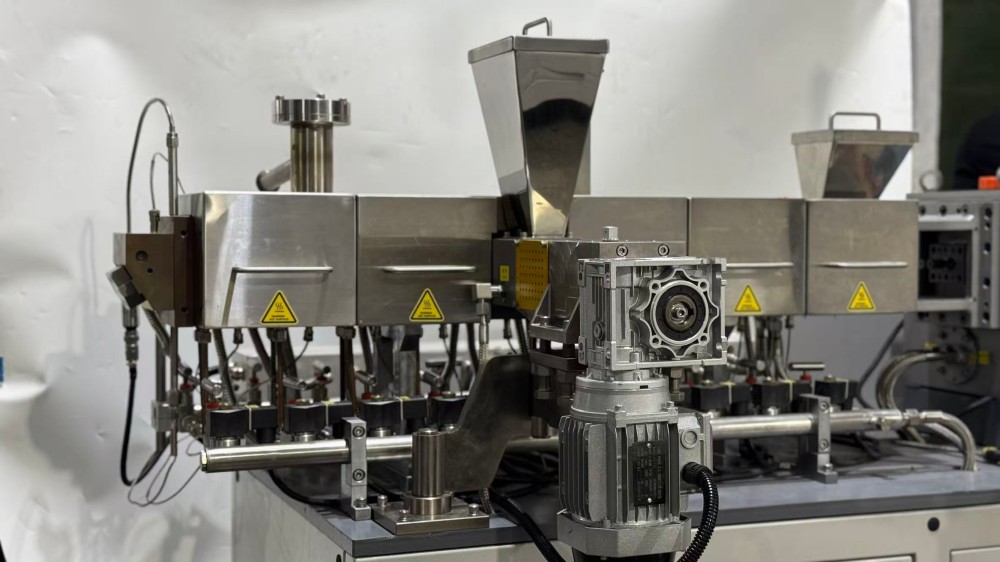
Recycled plastics are compounded and pelletized with twin screw extrusion through controlled feeding, melting, mixing, filtration, and pelletizing to produce consistent recycled materials.
Recycling plastics into high-quality raw materials requires more than simply melting used plastic. Recycled materials often contain variations in composition, contamination, moisture, and degradation levels that must be controlled before reuse.
Twin screw extrusion plays a critical role by combining multiple processing functions into one continuous system, including:
Material melting
Additive mixing
Contaminant dispersion
Degassing
Homogenization
Pellet formation
For recycled plastic manufacturers, the extrusion process determines whether recycled materials can achieve stable quality for applications such as packaging, automotive components, consumer products, and engineering plastics.
A well-designed twin screw extrusion system helps transform inconsistent recycled inputs into reliable pelletized materials.
A typical recycled plastic processing line includes several important stages.
Recycled plastics usually enter the production process as:
Flakes
Pellets
Regrind materials
Mixed plastic waste
Before extrusion, materials may require:
Sorting
Washing
Drying
Size reduction
Stable feeding is essential because recycled materials often have different shapes, densities, and flow characteristics.
Accurate feeding helps maintain consistent formulation and improves extrusion stability.
During compounding, the Twin Screw Extruder melts and mixes recycled plastics with additional materials to improve performance.
Common additions include:
Stabilizers
Reinforcing fibers
Impact modifiers
Color additives
Processing aids
The intermeshing screw design provides efficient mixing through:
Distributive mixing
Dispersive mixing
Controlled shear
This helps create a more uniform recycled compound with improved physical properties.
Recycled plastics often contain moisture, volatile substances, or residual contaminants from previous applications.
During extrusion, these substances may create:
Bubbles
Voids
Surface defects
Poor mechanical properties
Twin screw extrusion systems often use vacuum degassing sections to remove unwanted gases during processing.
Effective degassing helps improve:
Pellet quality
Material stability
Processing consistency
This is especially important when recycled plastics are used for higher-value applications.
Contamination control is one of the biggest challenges in plastic recycling.
Possible contaminants include:
Paper residues
Organic materials
Other polymers
Dust
Metal particles
A recycled plastic extrusion system may include filtration equipment to remove unwanted particles before pelletizing.
Combined with effective mixing and process control, filtration improves the consistency of recycled pellets.
After the recycled plastic compound is processed inside the twin screw extruder, it exits through a die and enters the pelletizing stage.
Common pelletizing methods include:
The molten polymer is formed into strands, cooled, and cut into pellets.
Advantages include:
Simple operation
Easy maintenance
Wide material compatibility
The molten material is cut directly into pellets under controlled cooling conditions.
Advantages include:
Better automation
Higher production efficiency
More consistent pellet size
The appropriate pelletizing method depends on:
Material properties
Production capacity
Final application requirements
Recycled plastic processing involves several technical challenges.
Recycled inputs may differ significantly between batches.
Solutions include:
Better sorting
Controlled feeding
Advanced compounding strategies
Repeated heating cycles can reduce polymer performance.
Manufacturers may add:
Stabilizers
Reinforcement materials
Processing modifiers
Insufficient drying or degassing may reduce pellet quality.
Proper drying and vacuum venting help maintain stable production.
Foreign materials can affect final product performance.
Filtration and quality monitoring are important parts of the process.
Twin screw extrusion provides several advantages compared with simpler extrusion systems.
The intermeshing screw design provides efficient mixing of recycled polymers and additives.
Modular screw elements allow manufacturers to optimize:
Conveying
Mixing
Degassing
Pressure building
Operators can adjust:
Screw speed
Temperature profile
Feeding rate
Torque conditions
Twin screw extrusion supports stable large-scale recycling operations.
Producing high-quality recycled pellets requires controlling the complete extrusion process.
Important improvement methods include:
Better sorting and cleaning reduce contamination risks.
Consistent feeding helps maintain formulation accuracy.
The screw design should match:
Polymer type
Contamination level
Required mixing intensity
Excessive heat can accelerate polymer degradation.
Tracking:
Torque
Pressure
Temperature
Output stability
helps identify process changes early.
Twin screw extrusion is used for various recycled plastic materials, including:
Commonly recycled for automotive parts, containers, and industrial products.
Used in packaging and consumer product applications.
Requires careful moisture control and processing management.
Materials such as ABS, PC, and PA may require advanced compounding strategies.
Each polymer type requires different processing conditions and screw designs.
The correct extrusion system depends on recycled material characteristics and production goals.
Important considerations include:
Production-scale recycling requires equipment designed for continuous operation and stable capacity.
More complex waste streams may require stronger mixing and filtration capabilities.
Higher-value applications may require better:
Degassing
Filtration
Process monitoring
A customized screw configuration helps balance:
Material handling
Mixing efficiency
Energy consumption
The demand for recycled plastics continues to increase as industries focus on sustainable manufacturing and circular economy solutions.
Twin screw extrusion supports this development by enabling:
Efficient plastic compounding
Stable pellet production
Improved recycled material performance
Flexible processing of different polymers
LEMIX provides twin screw extrusion solutions for polymer recycling and compounding applications, helping manufacturers convert recycled plastics into reliable production materials.
Advanced extrusion technology makes recycled plastics more suitable for demanding industrial applications.