
Search LEMIX Products
Compare PROMIX-16 and PROMIX-26 twin screw extruders to understand which model provides better scale-up capability for material development and production validation.
Category:Extruder Technology & Selection
Author:LEMIX Admin
Date:2026-10-02
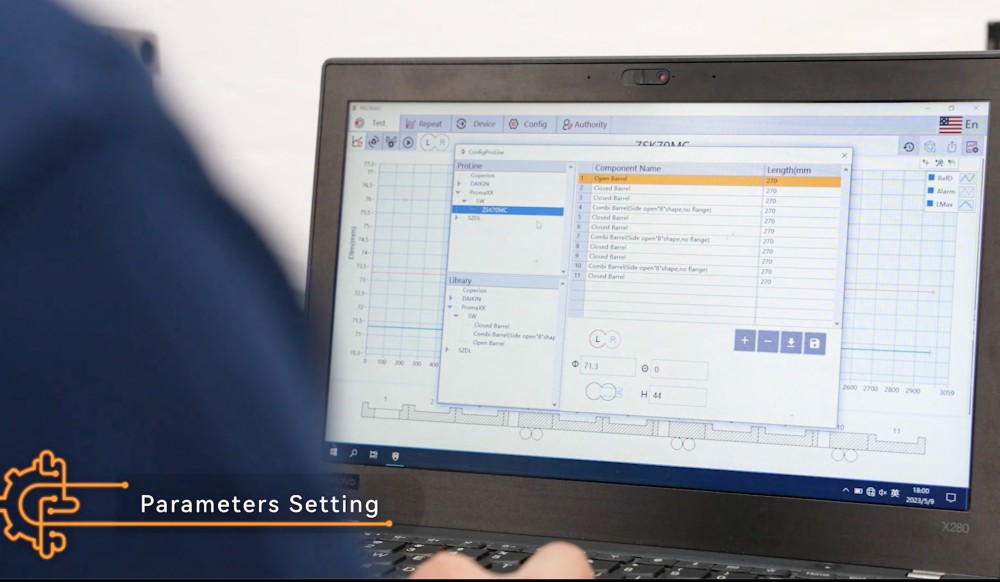
PROMIX-16 is suitable for advanced laboratory development, while PROMIX-26 provides stronger scale-up capability for pilot testing and larger material processing requirements.
Moving a material formulation from laboratory research to commercial production is a critical challenge in extrusion development.
A formulation that performs well on a small laboratory system may behave differently when transferred to larger equipment due to changes in:
Material flow behavior
Residence time
Heat transfer conditions
Shear intensity
Processing stability
PROMIX-16 and PROMIX-26 are both twin screw extrusion systems designed for development applications, but they support different stages of the scale-up process.
The right choice depends on whether the goal is:
Formulation research
Process optimization
Pilot validation
Preparation for industrial production
PROMIX-16 is a laboratory-scale twin screw extruder designed for advanced material research and process development.
It provides researchers with a platform to evaluate:
Material processability
Screw configuration
Mixing performance
Temperature conditions
Formulation behavior
PROMIX-16 is suitable for applications that require more processing capability than basic laboratory testing.
Typical uses include:
Polymer compounding research
Pharmaceutical hot melt extrusion studies
Functional material development
New formulation evaluation
Its main advantage is providing more realistic processing conditions while maintaining laboratory flexibility.
PROMIX-26 is designed for larger-scale development and pilot-level processing.
It provides a closer representation of industrial extrusion conditions, making it suitable for manufacturers preparing for commercial production.
PROMIX-26 supports:
Larger experimental batches
More realistic production simulation
Process validation
Scale-up studies
It helps manufacturers evaluate whether laboratory-developed formulations can transition successfully toward industrial manufacturing.
The primary difference is the level of scale-up capability.
| Comparison | PROMIX-16 Twin Screw Extruder | PROMIX-26 Twin Screw Extruder |
|---|---|---|
| Main purpose | Advanced laboratory development | Pilot-scale validation |
| Development stage | Research and optimization | Scale-up preparation |
| Processing volume | Medium laboratory scale | Larger development scale |
| Production simulation | Limited | Closer to industrial conditions |
| Sample output | Research samples | Larger validation samples |
| Commercial preparation | Initial evaluation | Stronger support |
Both systems are valuable, but they support different steps in the development process.
PROMIX-16 is better suited for detailed laboratory studies.
It allows researchers to investigate:
Material behavior
Formula performance
Processing windows
Screw element effects
When developing new materials, researchers often need to test multiple conditions with limited material consumption.
PROMIX-16 provides the flexibility needed for:
Formula comparison
Process adjustment
Material screening
It is especially suitable before entering pilot-scale validation.
PROMIX-26 provides stronger scale-up capability because it operates closer to production conditions.
Scale-up requires understanding how a formulation behaves when:
Output increases
Processing time changes
Mechanical energy changes
Material flow becomes more complex
PROMIX-26 helps manufacturers evaluate:
Larger production parameters
Process stability
Repeatability
Commercial feasibility
For companies preparing for industrial manufacturing, pilot-scale testing provides valuable information before major equipment investment.
PROMIX-16 plays an important role before pilot testing.
During laboratory development, researchers can determine:
Suitable formulations
Processing temperatures
Screw configurations
Mixing requirements
These results provide the foundation for PROMIX-26 testing.
A typical development path is:
PROMIX-16 → PROMIX-26 → Industrial Twin Screw Extruder
This approach reduces the risk of unexpected problems during commercial scale-up.
Both models use modular screw elements, allowing different processing sections to be configured.
Typical functions include:
Conveying
Melting
Mixing
Dispersing
Degassing
For PROMIX-16:
The focus is usually understanding material response and optimizing formulation conditions.
For PROMIX-26:
The focus shifts toward reproducing production behavior and improving process reliability.
The screw configuration selected during pilot testing often becomes the reference for industrial equipment design.
Material consumption is an important consideration during development.
PROMIX-16 requires less material and is suitable when:
Raw materials are expensive
Formulations are still changing
Multiple tests are required
PROMIX-26 requires more material but provides more realistic production information.
It is suitable when manufacturers need:
Larger samples
Customer testing materials
Production validation data
The choice depends on whether the priority is reducing research cost or improving scale-up confidence.
PROMIX-16 is suitable for applications requiring detailed material research.
Examples include:
Testing:
New formulations
Additive combinations
Material compatibility
Evaluating:
API-polymer interaction
Processing conditions
Formulation stability
Studying:
Functional additives
New polymer systems
Performance improvements
PROMIX-26 is suitable for applications moving closer to commercial production.
Examples include:
Validating:
Reinforced compounds
Production parameters
Material consistency
Testing:
Larger batch processing
Mixing stability
Production feasibility
Evaluating:
Continuous processing
Material variation handling
Pellet quality
PROMIX-16 can provide important development data, but it cannot fully replace pilot-scale validation.
The main limitation is that laboratory conditions may not completely represent larger-scale production behavior.
Without pilot validation, manufacturers may face:
Unexpected output changes
Different mixing performance
Processing instability
Additional optimization time
PROMIX-26 provides the additional process information required before industrial investment.
The decision depends on the current development stage.
Developing new formulations
Testing material behavior
Optimizing processing conditions
Using limited material quantities
Preparing for commercial production
Requiring larger samples
Validating production conditions
Studying scale-up performance
Successful scale-up requires confidence that laboratory results can be transferred to commercial manufacturing.
PROMIX-16 helps answer:
Can this material be processed successfully?
PROMIX-26 helps answer:
Can this process be transferred toward production?
LEMIX provides laboratory, pilot, and industrial twin screw extrusion solutions designed to support the complete development path from research to commercial manufacturing.
Choosing the right scale-up equipment helps manufacturers reduce risks, improve efficiency, and accelerate product commercialization.