
Search LEMIX Products
Compare PROMIX-26 pilot extruder and PROMIX-40 production extruder to understand which system is suitable for commercial manufacturing and industrial scale-up.
Category:Extruder Technology & Selection
Author:LEMIX Admin
Date:2026-10-05
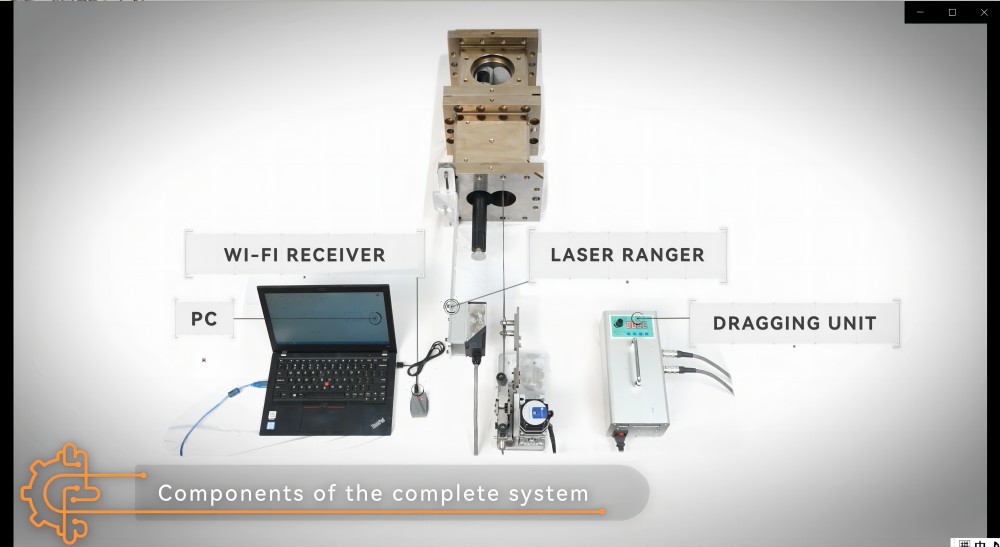
PROMIX-26 is suitable for pilot-scale validation and process optimization, while PROMIX-40 is designed for commercial manufacturing with higher output and continuous production capability.
Moving from pilot extrusion to commercial production is a critical stage for material manufacturers.
A successful pilot process does not automatically guarantee stable industrial production because larger-scale manufacturing introduces new challenges, including:
Higher output requirements
Longer operating time
Different heat transfer conditions
Increased material consumption
More demanding process stability
PROMIX-26 Pilot Extruder and PROMIX-40 Production Extruder serve different stages of the development process.
PROMIX-26 helps manufacturers verify whether a material process is ready for expansion.
PROMIX-40 provides the production capability required for commercial manufacturing.
Choosing the correct system helps reduce scale-up risks and improves long-term production reliability.
PROMIX-26 is a pilot-scale Twin Screw Extruder designed for process development, testing, and scale-up validation.
It is used when manufacturers need to evaluate whether a formulation can move from laboratory research toward industrial production.
Typical applications include:
Process optimization
Material testing
Customer sample production
Scale-up studies
Production parameter verification
PROMIX-26 provides a development environment closer to commercial equipment while maintaining flexibility for process adjustments.
Its main purpose is not maximum production output but generating reliable data before industrial investment.
PROMIX-40 is designed for industrial production applications requiring continuous and stable manufacturing.
It focuses on:
Higher throughput
Long-term operation
Consistent product quality
Production efficiency
PROMIX-40 is suitable for manufacturers that have completed development and require commercial-scale output.
Typical applications include:
Polymer compounding
Engineering plastics
Battery materials
Powder coatings
Recycled plastic processing
Advanced material production
Its role is to transform validated processes into reliable manufacturing operations.
The main differences are related to production purpose, capacity, and operating requirements.
| Comparison | PROMIX-26 Pilot Extruder | PROMIX-40 Production Extruder |
|---|---|---|
| Main purpose | Process validation | Commercial manufacturing |
| Development stage | Pilot and scale-up | Industrial production |
| Output capacity | Medium scale | High production capacity |
| Operation mode | Testing and validation | Continuous manufacturing |
| Main focus | Process optimization | Production efficiency |
| Material volume | Development batches | Commercial volumes |
Both systems use twin screw extrusion technology, but they support different manufacturing objectives.
PROMIX-26 is suitable when manufacturers are still optimizing their production process.
It helps answer important questions such as:
Can the formulation be processed consistently?
Is the screw configuration suitable?
Are temperature conditions stable?
Can product quality be maintained at a larger scale?
PROMIX-26 is valuable for:
Manufacturers can evaluate new compounds before investing in full production equipment.
Larger samples can be produced for:
Application testing
Customer approval
Performance verification
Engineers can adjust:
Screw elements
Feeding conditions
Temperature settings
Processing parameters
before commercial manufacturing begins.
PROMIX-40 becomes necessary when production demand increases.
It is designed for situations where manufacturers require:
Stable daily output
Long production cycles
Consistent product performance
Commercial supply capability
Production equipment must maintain reliable operation over extended periods.
Important requirements include:
Mechanical durability
Stable process control
Efficient energy use
Repeatable product quality
PROMIX-26 plays a critical role before commercial production.
During pilot testing, manufacturers can collect valuable information about:
Material behavior
Processing parameters
Screw configuration
Production stability
This information helps determine the requirements for the production system.
A typical development path is:
Laboratory Extruder → PROMIX-26 Pilot Extruder → PROMIX-40 Production Extruder
This staged approach reduces the risk of production problems after equipment investment.
Both systems use modular screw elements, but their design goals are different.
Focuses on:
Testing different processing strategies
Optimizing formulations
Understanding material behavior
Flexibility is important because the process may still change.
Focuses on:
Production stability
Energy efficiency
Consistent output
The production screw design is usually based on successful pilot results.
Output requirement is one of the biggest differences between pilot and production extrusion.
PROMIX-26 is suitable when manufacturers need:
Development quantities
Validation samples
Process studies
PROMIX-40 is suitable when manufacturers need:
Large-scale supply
Continuous operation
Commercial production volume
Selecting equipment based only on future output demand may increase investment unnecessarily.
The best approach is matching equipment capability with the current production stage.
Process control becomes more important as production scale increases.
PROMIX-26 focuses on collecting development information:
Temperature response
Torque behavior
Pressure changes
Mixing performance
PROMIX-40 focuses on maintaining production stability:
Continuous monitoring
Consistent output
Reduced variation
Long-term reliability
The purpose changes from understanding the process to controlling the process.
Many industries rely on both pilot and production systems.
PROMIX-26 supports formulation development.
PROMIX-40 supports commercial compound production.
PROMIX-26 evaluates processing feasibility.
PROMIX-40 enables larger-scale manufacturing.
PROMIX-26 helps validate hot melt extrusion processes.
PROMIX-40 supports commercial production requirements.
PROMIX-26 optimizes recycling formulations.
PROMIX-40 handles continuous pellet production.
PROMIX-26 cannot fully replace PROMIX-40 when commercial production is required.
Pilot equipment is designed for:
Testing
Validation
Optimization
Production equipment is designed for:
High output
Continuous operation
Long-term manufacturing
Using pilot equipment for commercial production may result in:
Limited capacity
Lower efficiency
Higher operating costs
The correct equipment depends on production objectives.
The decision depends on the production stage.
Developing new materials
Validating production processes
Preparing customer samples
Optimizing extrusion conditions
Commercial production is required
Large output is needed
Stable manufacturing is the priority
Long-term operation is planned
The move from pilot extrusion to commercial manufacturing determines whether a material process can succeed in the market.
PROMIX-26 helps manufacturers confirm:
Process feasibility
Product consistency
Scale-up requirements
PROMIX-40 delivers:
Reliable production
Higher efficiency
Commercial manufacturing capability
LEMIX provides laboratory, pilot, and production-scale twin screw extrusion solutions designed to support the complete journey from material research to industrial manufacturing.
Choosing the right equipment stage helps manufacturers reduce risk and achieve stable commercial production.