
Search LEMIX Products
Learn how high-moisture twin screw extrusion transforms plant proteins into meat-like textures through controlled mixing, heating, and structural processing.
Category:Pharmaceutical Extrusion Technology
Author:LEMIX Admin
Date:2026-09-15
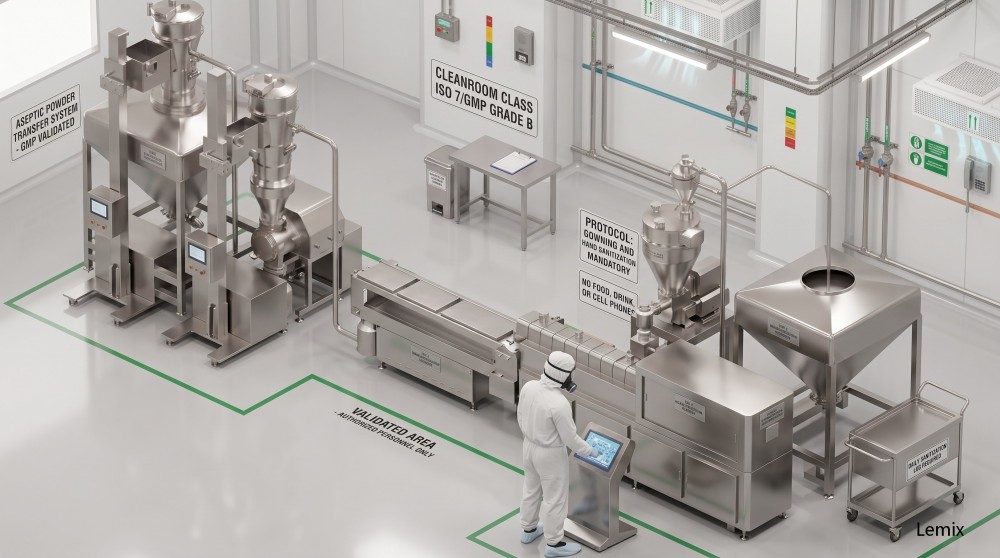
Plant-based meat is produced with high-moisture twin screw extrusion by structuring plant proteins under controlled temperature, moisture, and shear conditions to create meat-like texture.
High-moisture twin screw extrusion (HMEC) is one of the most important technologies used to produce modern plant-based meat alternatives.
Unlike traditional low-moisture extrusion, high-moisture extrusion processes plant proteins with a higher water content, allowing manufacturers to create fibrous structures that more closely resemble animal meat.
The Twin Screw Extruder provides controlled:
Material mixing
Protein hydration
Shear processing
Temperature management
Structural formation
During production, plant proteins are transformed from powder-based raw materials into organized protein networks with improved bite, texture, and moisture retention.
For manufacturers developing meat alternatives, the extrusion process is a key factor in achieving realistic sensory performance.
Plant-based meat formulations typically contain protein-rich ingredients combined with functional components.
Common raw materials include:
Soy protein is widely used because of its high protein content, good water absorption, and ability to form fibrous structures during extrusion.
Pea protein is increasingly popular because of its plant-based positioning and functional processing characteristics.
Wheat gluten provides elasticity and helps create a meat-like chew texture.
Manufacturers may also use:
Fava bean protein
Rice protein
Starches
Fibers
Oils
Natural flavors
The formulation design determines how the material behaves inside the twin screw extruder and influences the final texture.
The key objective of high-moisture extrusion is to transform plant proteins into an aligned fibrous structure.
The process involves several stages:
High moisture levels allow proteins to absorb water before and during processing.
This improves protein mobility and helps create a uniform material structure.
Inside the twin screw extruder, mechanical shear forces cause protein molecules to reorganize.
Under controlled conditions, proteins begin forming directional structures similar to muscle fibers.
A cooling die helps stabilize the protein structure after extrusion.
The controlled cooling process allows the material to maintain its fibrous texture instead of returning to a random structure.
Twin screw extrusion provides several advantages for plant-based meat production.
Intermeshing screws create strong distributive and dispersive mixing, ensuring proteins, water, and additives are evenly combined.
High-moisture extrusion requires accurate control of:
Temperature
Moisture content
Screw speed
Pressure
Residence time
Twin screw systems allow manufacturers to adjust these parameters according to different formulations.
Modular screw elements enable different processing sections for:
Conveying
Mixing
Protein modification
Cooling
Structuring
This flexibility makes twin screw extrusion suitable for different plant protein applications.
A typical high-moisture plant-based meat production process includes several stages.
Dry ingredients are accurately fed into the extruder.
Consistent feeding is important because changes in formulation ratios can affect final texture and quality.
Water is introduced into the system to hydrate plant proteins.
The twin screw design ensures ingredients are evenly distributed.
Controlled heat and shear modify protein structures and promote texturization.
The material passes through a cooling die where directional structures are developed.
The final extrudate can be shaped, cut, seasoned, or processed into finished plant-based products.
Moisture content is one of the most important factors in high-moisture extrusion.
Higher moisture levels generally help create:
Softer texture
Better juiciness
More flexible protein structures
Improved meat-like mouthfeel
However, moisture must be carefully controlled.
Too much moisture may reduce structural strength, while insufficient moisture may create:
Hard texture
Poor protein alignment
Uneven processing
The optimal moisture level depends on:
Protein type
Formula composition
Extruder configuration
Desired product texture
Several processing parameters influence the final product performance.
Temperature affects protein denaturation and structural formation.
Incorrect temperature settings may result in poor texture or unstable products.
Screw speed influences:
Shear intensity
Mixing efficiency
Residence time
Stable feeding ensures consistent production and prevents process fluctuations.
Cooling control determines how effectively the fibrous structure is maintained after extrusion.
Optimizing these parameters helps manufacturers achieve consistent product quality.
High-moisture and low-moisture extrusion are both used for plant protein processing, but they create different product characteristics.
| Feature | High-Moisture Extrusion | Low-Moisture Extrusion |
|---|---|---|
| Moisture content | Higher water content | Lower water content |
| Product texture | Meat-like fibrous texture | Dry textured protein |
| Cooling requirement | Usually requires cooling die | Less dependent on cooling |
| Common applications | Meat alternatives, fresh-style products | Protein chunks, dry ingredients |
| Texture formation | Stronger muscle-like structure | More porous structure |
For manufacturers targeting realistic meat alternatives, high-moisture extrusion is often preferred because it provides better fibrous texture development.
Selecting the right extrusion equipment depends on production goals and formulation requirements.
Important considerations include:
Laboratory systems support formulation research, while pilot and industrial systems support scale-up and commercial production.
High-moisture plant protein processing requires sufficient mechanical power for effective structuring.
High-moisture extrusion often requires specialized cooling systems to maintain product structure.
The screw configuration should match:
Protein type
Moisture level
Desired texture
Production requirements
Professional extrusion manufacturers often customize screw arrangements to achieve specific product characteristics.
The demand for plant-based meat continues to increase as food manufacturers look for efficient ways to create sustainable protein products.
High-moisture twin screw extrusion supports this development by providing:
Consistent texture control
Continuous production capability
Flexible formulation development
Scalable manufacturing solutions
For companies producing plant-based meat, the extrusion system is not only processing equipment but also a key technology for creating consumer-accepted food textures.
LEMIX provides twin screw extrusion solutions for advanced material processing applications, including food extrusion and high-moisture protein structuring, helping manufacturers develop stable and scalable production processes.