
Search LEMIX Products
Learn how to clean extruder cooling channels, remove deposits, restore temperature control, improve cooling efficiency, and maintain stable twin screw extrusion performance.
Category:Process Control & Troubleshooting
Author:LEMIX Admin
Date:2026-08-18
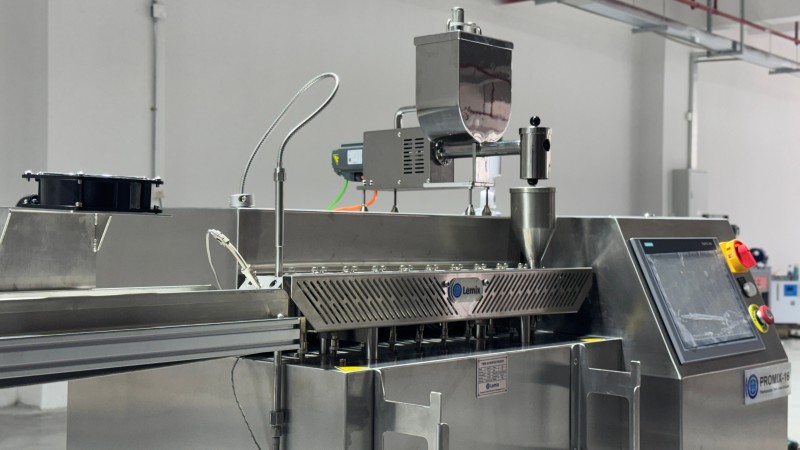
Extruder cooling channels can be cleaned by removing mineral deposits, rust, polymer contamination, and blocked water paths to restore stable cooling performance and improve temperature control during extrusion.
Extruder cooling channels are internal passages inside the barrel, die head, adapter, and other extrusion components that control heat transfer during processing.
A Twin Screw Extruder generates heat from several sources:
Barrel heaters
Screw rotation
Material friction
Shear energy
High-viscosity polymer processing
Cooling channels work together with heating zones to maintain the correct processing temperature.
Stable temperature control affects:
Melt viscosity
Mixing performance
Residence time
Material stability
Pellet quality
Output consistency
Product appearance
When cooling channels become blocked or contaminated, heat cannot be removed effectively. The extrusion process may then experience temperature fluctuations, unstable output, increased degradation risk, and poor product quality.
Extruder cooling channels can gradually lose efficiency because deposits accumulate inside the water passages.
Common causes include:
| Cause | Effect on Cooling System |
|---|---|
| Mineral deposits | Reduce water flow and heat transfer |
| Rust and corrosion | Restrict channel diameter |
| Water impurities | Create scale buildup |
| Long operating periods | Increase internal contamination |
| Poor water treatment | Accelerate deposits |
| Small channel diameter | Higher blockage risk |
Over time, even a small reduction in cooling flow can affect temperature balance between extrusion zones.
The problem is often difficult to notice because the extruder may continue running while temperature control slowly becomes less effective.
Blocked cooling channels reduce the ability of the extrusion system to remove heat.
This can create several process problems:
Barrel temperature exceeds the set value
Cooling response becomes slower
Temperature zones become unstable
Melt temperature increases
Polymer degradation risk rises
Output quality changes
For heat-sensitive materials, temperature instability can have a greater impact.
Examples include:
PVC compounds
TPE and TPU materials
Pharmaceutical hot melt extrusion formulations
Engineering plastics
Thermoset compounds
A temperature control issue should not always be solved by changing heater settings. The cooling system condition should also be checked.
Twin screw extrusion requires a balance between heat input and heat removal.
The screws generate mechanical energy that becomes heat inside the polymer melt. Cooling systems help control this heat and maintain the correct processing window.
Poor cooling may cause:
Excessive melt temperature
Lower material stability
Increased torque fluctuation
Poor dispersion
Color changes
Gel formation
Reduced product consistency
For example, a compound may initially appear to have a formulation problem when the actual cause is insufficient cooling capacity caused by blocked channels.
Several operating signs can indicate cooling channel problems.
Common indicators include:
Barrel temperature is difficult to control
Cooling water flow decreases
Temperature recovery becomes slow
Cooling zones respond unevenly
Output quality changes without formula changes
Melt temperature increases
Energy consumption rises
Alarm frequency increases
A comparison between historical operating data and current performance can help identify cooling system degradation.
Important data includes:
Cooling water flow rate
Cooling water temperature
Barrel temperature trend
Melt temperature
Output stability
Torque changes
Production defects
Cooling channel cleaning involves removing deposits and restoring internal water flow.
The general cleaning process includes:
Inspect cooling performance
Identify blocked cooling zones
Remove contaminated water
Apply suitable cleaning solution
Circulate cleaning fluid through channels
Remove loosened deposits
Flush with clean water
Verify water flow improvement
Check temperature response during operation
The cleaning method depends on:
Deposit type
Channel design
Equipment condition
Water quality
Operating history
Regular cleaning is usually more effective than waiting until cooling performance drops significantly.
Scale buildup creates an insulating layer inside cooling channels.
Even when water continues flowing, deposits can reduce heat transfer between the barrel metal and cooling water.
The result may include:
Slower cooling response
Higher barrel temperature
Longer adjustment time
Uneven temperature distribution
Higher cooling energy consumption
Mineral deposits are especially common in systems using untreated or hard water.
Preventive measures include:
Water quality management
Regular inspection
Cooling system flushing
Scheduled cleaning
Poor cooling can contribute to material degradation because excessive temperature exposure may exceed the material processing window.
Possible effects include:
Polymer breakdown
Color change
Odor generation
Reduced mechanical properties
Increased gel formation
Lower product consistency
For sensitive materials, temperature control is closely connected with product quality.
Pharmaceutical hot melt extrusion requires particularly careful control because excessive thermal exposure may affect:
API stability
Polymer properties
Dissolution performance
Batch consistency
Cleaning cooling channels improves temperature stability by restoring water flow and heat transfer efficiency.
After cleaning, the extrusion system can achieve:
Faster cooling response
More accurate temperature control
Reduced temperature fluctuation
More stable melt conditions
Better process repeatability
A clean cooling system helps the extruder maintain the designed relationship between heating and cooling zones.
The cleaning frequency depends on operating conditions rather than a fixed schedule.
Factors affecting cleaning frequency include:
Water quality
Operating hours
Cooling system design
Production temperature
Material type
Maintenance history
Systems using poor-quality cooling water may require more frequent cleaning.
A preventive maintenance plan should monitor:
Water flow reduction
Temperature response changes
Pressure difference
Cooling efficiency
Cleaning should be considered before temperature control problems affect product quality.
Ignoring cooling channel maintenance can create long-term process risks.
Possible consequences include:
Permanent deposit buildup
Reduced cooling capacity
Higher operating temperature
More frequent production adjustments
Increased material waste
Shorter component life
Unstable product quality
In severe cases, blocked channels may require more extensive maintenance or component replacement.
Different extrusion applications have different temperature control requirements.
Plastic compounding requires stable melt temperature for:
Polymer blending
Filler dispersion
Additive distribution
Pellet quality
Unstable cooling can affect mixing performance and final compound properties.
Pharmaceutical HME requires precise thermal control because processing conditions influence:
API-polymer interaction
Amorphous stability
Dissolution performance
Impurity control
LEMIX pharmaceutical extrusion systems focus on thermal stability, uniform mixing, impurity control, PAT monitoring, and GMP process verification.
Internal link:
TPE and TPU materials require controlled temperature because excessive heat may affect elasticity, hardness, and mechanical performance.
Internal link:
Cleaning is usually preferred when the component structure remains suitable and the main problem is internal contamination.
| Situation | Recommended Action |
|---|---|
| Mineral deposits inside channels | Cleaning |
| Reduced water flow | Cleaning and flushing |
| Minor corrosion | Cleaning and inspection |
| Severe channel damage | Component replacement |
| Permanent blockage | Evaluation and possible replacement |
Regular cleaning can extend component service life and reduce unnecessary replacement costs.
Preventive maintenance can reduce cooling system failures.
Recommended practices include:
Monitoring cooling water quality
Checking flow rate regularly
Recording temperature performance
Cleaning channels periodically
Inspecting corrosion
Maintaining water treatment systems
Checking cooling pressure
Cooling maintenance should be included in the overall extrusion maintenance plan.
LEMIX provides extrusion maintenance solutions designed to improve equipment reliability and maintain stable production.
The PRO-CLEAN Water Cooling Channel Cleaning Machine is designed to clean internal cooling channels and remove deposits that affect heat transfer.
It helps with:
Removing scale buildup
Improving cooling efficiency
Restoring water circulation
Reducing temperature instability
Extending component service life
Internal link:
PRO-CLEAN Water Cooling Channel Cleaning Machine
LEMIX also provides other extrusion maintenance solutions:
Screw cleaning equipment
Barrel wear measurement devices
Screw elements
Twin screw extrusion systems
Relevant pages:
Extruder cooling channels play an important role in maintaining stable temperature control during twin screw extrusion.
Blocked channels caused by scale, corrosion, and contamination can reduce cooling efficiency and create temperature instability, material degradation, and inconsistent product quality.
Regular cooling channel cleaning, water quality management, and preventive maintenance help restore heat transfer performance and improve extrusion reliability.
LEMIX supports extrusion maintenance with cooling channel cleaning equipment, screw cleaning systems, barrel wear measurement devices, and twin screw extrusion solutions for laboratory, pilot, and production applications.