
Search LEMIX Products
Compare PROMIX-11 and PROMIX-16 laboratory twin screw extruders to understand which model better fits different material research and development stages.
Category:Extruder Technology & Selection
Author:LEMIX Admin
Date:2026-10-01
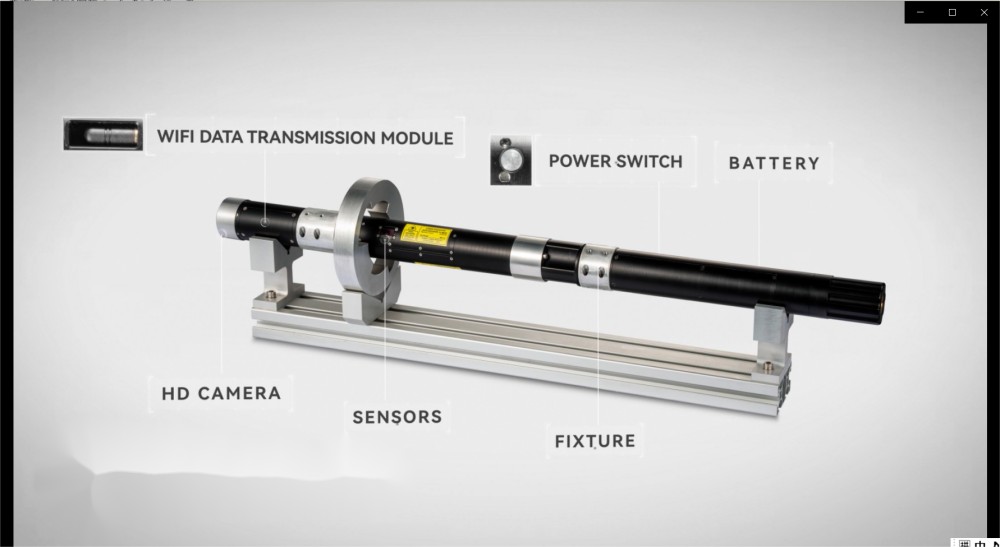
PROMIX-11 is suitable for compact material research and small-scale testing, while PROMIX-16 provides larger processing capacity and more flexibility for advanced laboratory development.
Laboratory Twin Screw Extruders play an important role in material development because they allow researchers to evaluate formulations before moving to pilot or industrial production.
However, not every laboratory project requires the same extrusion capability.
The choice between PROMIX-11 and PROMIX-16 depends on factors such as:
Required material volume
Research objectives
Processing complexity
Scale-up requirements
Future development plans
Selecting the right laboratory extruder helps researchers obtain reliable processing data while reducing material consumption and development risks.
Both PROMIX-11 and PROMIX-16 are designed for laboratory-scale twin screw extrusion, but they serve different research needs.
PROMIX-11 is a compact laboratory twin screw extruder designed for early-stage material research and formulation testing.
It is suitable for applications where researchers need to:
Test new formulations
Evaluate material behavior
Compare additives
Study processing conditions
The compact design allows efficient experimentation with limited material usage.
PROMIX-11 is especially suitable for:
University research laboratories
Material development centers
Small-scale formulation studies
Early product testing
Its main advantage is flexibility and efficiency during the initial research stage.
PROMIX-16 is a larger laboratory twin screw extrusion platform designed for more advanced material development.
Compared with smaller laboratory systems, it provides more processing space and greater flexibility for:
Complex formulations
Scale-up studies
More detailed process evaluation
PROMIX-16 is suitable for researchers who need a closer connection between laboratory testing and future pilot production.
It is commonly used for:
Polymer compounding research
Advanced material development
Process optimization
Customer sample preparation
The main difference is processing capability and development purpose.
| Comparison | PROMIX-11 Lab Extruder | PROMIX-16 Lab Extruder |
|---|---|---|
| Main application | Early research and testing | Advanced laboratory development |
| Development stage | Formula exploration | Process optimization and validation |
| Material requirement | Lower material consumption | Larger experimental batches |
| Processing flexibility | Suitable for basic studies | Suitable for more complex studies |
| Scale-up support | Initial evaluation | Closer to pilot transition |
Both models provide laboratory extrusion capabilities, but the appropriate choice depends on the research objective.
For early-stage research, PROMIX-11 is often the more practical choice.
It is suitable when researchers need to:
Test multiple formulations
Reduce material usage
Quickly evaluate processing behavior
Perform preliminary experiments
When material availability is limited or formulations are still being explored, a compact laboratory extruder provides greater efficiency.
PROMIX-11 allows researchers to collect valuable processing data before investing in larger-scale equipment.
PROMIX-16 is better suited for projects requiring more detailed process investigation.
It provides advantages when researchers need to study:
More complex formulations
Larger experimental quantities
Scale-up behavior
Production-related processing conditions
For companies preparing materials for commercialization, PROMIX-16 can provide more representative processing information before pilot or industrial production.
Scale-up is one of the most important goals of laboratory extrusion.
A successful laboratory process should provide information about:
Material behavior
Screw configuration
Temperature conditions
Mixing performance
Processing stability
PROMIX-11 helps answer:
Can this material formulation be processed successfully?
PROMIX-16 helps answer:
Can this process be developed further toward pilot or commercial production?
The choice depends on how close the project is to the production stage.
Both models use modular screw element concepts, allowing researchers to adjust processing functions.
Possible screw functions include:
Conveying
Melting
Mixing
Dispersing
Degassing
For PROMIX-11, screw configurations are often used to understand basic material response.
For PROMIX-16, screw designs may focus more on:
Optimizing processing conditions
Improving mixing performance
Preparing for scale-up
The screw configuration should always match the material characteristics and research objectives.
PROMIX-11 is suitable for a wide range of laboratory studies.
Typical applications include:
Testing:
New polymer blends
Additive effects
Material compatibility
Evaluating:
Pigment dispersion
Color consistency
Processing conditions
Supporting:
Extrusion experiments
Material studies
Process learning
PROMIX-16 is suitable for more advanced laboratory applications.
Typical applications include:
Researching:
Reinforced polymers
High-performance compounds
Functional materials
Evaluating:
API-polymer compatibility
Formulation performance
Processing stability
Studying:
Material mixing
Process parameters
Scale-up feasibility
The selection should be based on the development stage rather than only equipment size.
Starting new material research
Testing multiple formulas
Working with limited material quantities
Performing initial process studies
Developing advanced formulations
Preparing for pilot production
Requiring larger experimental output
Studying scale-up behavior
PROMIX-11 and PROMIX-16 are designed for different laboratory requirements.
PROMIX-11 focuses on efficient early-stage research.
PROMIX-16 focuses on more advanced development and scale-up preparation.
Using a smaller system for complex development projects may limit the amount of production-related information available.
Using a larger system for simple screening projects may increase unnecessary investment.
The best choice depends on the actual research purpose.
A laboratory extruder is not only a testing machine. It is a tool for generating reliable process knowledge before commercial production.
Choosing the right model helps researchers:
Reduce development costs
Improve testing efficiency
Obtain more accurate scale-up data
Accelerate commercialization
LEMIX provides laboratory, pilot, and production-scale twin screw extrusion solutions, including PROMIX series laboratory extruders designed for different material development requirements.
Selecting between PROMIX-11 and PROMIX-16 depends on whether the project needs compact research flexibility or advanced development capability.