
Search LEMIX Products
Compare hot melt extrusion and twin screw granulation, including mechanisms, applications, parameters, scale-up, and pharmaceutical processing differences.
Category:Materials & Applications
Author:LEMIX Admin
Date:2026-09-01
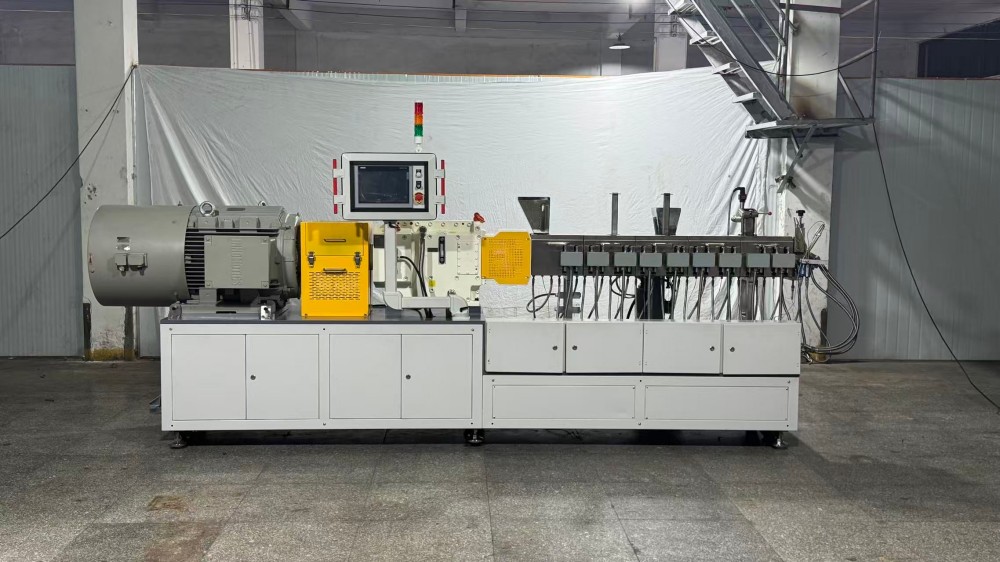
Hot melt extrusion and twin screw granulation are both continuous pharmaceutical processing technologies, but they serve different purposes. Hot melt extrusion focuses on melting and dispersing APIs in polymer matrices, while twin screw granulation focuses on forming uniform granules from powders and binders.
Hot melt extrusion is a continuous process that uses heat and mechanical energy to melt polymers and mix active pharmaceutical ingredients into a uniform matrix.
The process is mainly used for:
Amorphous solid dispersion development
Poorly soluble drug formulation
Controlled release systems
Polymer-based drug delivery
During hot melt extrusion, materials pass through different processing zones:
Feeding zone
Melting zone
Mixing zone
Degassing zone
Metering zone
Extrusion discharge
The Twin Screw Extruder controls:
Temperature
Shear energy
Residence time
Mixing efficiency
API distribution
The final extrudate can be processed into tablets, films, implants, or other dosage forms.
Twin screw granulation is a continuous granulation technology that combines powders, binders, and active ingredients to produce pharmaceutical granules.
The process focuses on:
Powder wetting
Particle aggregation
Granule formation
Particle size control
Flow improvement
A typical twin screw granulation process includes:
Powder feeding
Liquid binder addition
Wet mixing
Granule growth
Granule shaping
Product discharge
The purpose is to improve powder properties before downstream processes such as tablet compression.
The main difference is the material transformation process.
Hot melt extrusion changes materials through melting and polymer dispersion.
Twin screw granulation changes powders into granules through controlled wet mixing and particle growth.
| Comparison | Hot Melt Extrusion | Twin Screw Granulation |
|---|---|---|
| Main purpose | Create polymer-based drug systems | Produce pharmaceutical granules |
| Material state | Polymer melt | Powder and binder mixture |
| Main mechanism | Melting and dispersion | Wetting and granule formation |
| Key parameter | Temperature and shear | Liquid addition and mixing |
| Typical output | Extrudate | Granules |
| Common application | Amorphous solid dispersion | Tablet manufacturing preparation |
Both technologies use twin screw processing but solve different pharmaceutical manufacturing challenges.
Hot melt extrusion uses controlled heat and mechanical energy to process polymers and APIs.
The polymer is heated until it reaches a suitable melt condition. The API is then dispersed throughout the polymer matrix through mixing elements.
Important process parameters include:
Barrel temperature
Screw speed
Feed rate
Torque
Residence time
Vacuum level
Screw configuration
A successful HME process requires a balance between:
Sufficient melting
Uniform mixing
API protection
Stable product properties
Excessive temperature or residence time may cause API degradation, while insufficient mixing may create poor dispersion.
Twin screw granulation focuses on creating consistent granule structures.
Powders are continuously fed into the extruder, where liquid binders are introduced and distributed through mixing zones.
The process controls:
Binder distribution
Granule size
Granule density
Powder flowability
Compression performance
Important parameters include:
Screw speed
Feed rate
Liquid addition rate
Screw configuration
Residence time
Torque
The goal is to create granules with stable physical properties.
The two technologies use different material mechanisms.
Hot melt extrusion relies on:
Polymer melting
Molecular mixing
API dissolution or dispersion
Solidification after cooling
Twin screw granulation relies on:
Powder wetting
Particle bonding
Agglomeration
Granule growth
The difference determines the type of formulation that each technology can process.
Hot melt extrusion is commonly used when pharmaceutical formulations require polymer-based delivery systems.
Applications include:
Poorly water-soluble APIs
Amorphous solid dispersions
Sustained release formulations
Taste masking systems
Transdermal delivery materials
HME is suitable when the API needs to be distributed inside a polymer carrier.
LEMIX provides pharmaceutical twin screw extrusion solutions for laboratory development, process optimization, and GMP production.
Internal links:
Twin screw granulation is mainly used when powder materials need improved handling properties.
Applications include:
Tablet formulation preparation
Poor-flowing powders
Continuous manufacturing processes
Controlled granule production
Granulation helps improve:
Powder flow
Compression behavior
Content uniformity
Manufacturing consistency
The technology is especially valuable for continuous pharmaceutical production systems.
Temperature control is one of the biggest differences between the two processes.
Hot melt extrusion requires controlled heating because polymers must reach a molten state.
Temperature affects:
Polymer viscosity
API stability
Melt flow
Dispersion quality
Twin screw granulation usually does not depend on polymer melting. Instead, it focuses more on:
Binder behavior
Powder interaction
Moisture control
Granule formation
The thermal requirements are therefore different.
Residence time is important for both technologies but affects product quality differently.
In hot melt extrusion, residence time influences:
API thermal exposure
Polymer mixing
Amorphous dispersion formation
In twin screw granulation, residence time influences:
Binder distribution
Granule growth
Particle structure
Too much residence time may increase processing risks, while too little time may result in incomplete processing.
Screw configuration must match the processing objective.
For hot melt extrusion:
Melting sections are important.
Mixing elements control API dispersion.
Degassing sections remove moisture and volatiles.
For twin screw granulation:
Feeding sections control powder transport.
Mixing zones distribute binders.
Conveying sections regulate granule movement.
Modular screw elements allow adjustment according to formulation requirements.
LEMIX provides customized screw element solutions for different twin screw extrusion applications.
Internal link:
Although both processes use twin screw technology, equipment configurations may differ.
| Equipment Requirement | Hot Melt Extrusion | Twin Screw Granulation |
|---|---|---|
| Heating system | Critical | Less dominant |
| Cooling control | Important | Application dependent |
| Liquid feeding | Optional | Usually required |
| Vacuum system | Common | May be required |
| Screw mixing | High intensity | Controlled granulation |
Equipment selection depends on:
Formulation characteristics
Production target
Quality requirements
Scale-up strategy
Both technologies require careful scale-up from laboratory to production.
Important scale-up factors include:
Screw diameter
Output capacity
Residence time
Torque
Screw configuration
Feeding conditions
For HME, maintaining API stability and polymer processing behavior is critical.
For twin screw granulation, maintaining granule properties and binder distribution is essential.
LEMIX supports laboratory, pilot, and production twin screw extrusion systems for pharmaceutical development.
Internal links:
The selection depends on the desired product function.
Hot melt extrusion is suitable when the goal is:
Improving API solubility
Creating polymer-based drug delivery systems
Producing amorphous solid dispersions
Twin screw granulation is suitable when the goal is:
Improving powder flow
Creating uniform granules
Preparing materials for tablet production
The formulation objective should determine the processing technology.
LEMIX provides twin screw extrusion solutions for pharmaceutical research, scale-up, and production.
Solutions include:
| Requirement | LEMIX Solution |
|---|---|
| Formulation research | Laboratory twin screw extruders |
| Process development | Pilot extrusion systems |
| GMP production | GMP twin screw extruders |
| Screw optimization | Modular screw elements |
| Process stability | Temperature and vacuum control |
Relevant pages:
Hot melt extrusion and twin screw granulation both use twin screw processing technology but serve different pharmaceutical manufacturing purposes.
Hot melt extrusion focuses on polymer melting, API dispersion, and advanced drug delivery systems. Twin screw granulation focuses on powder processing, binder mixing, and granule formation.
Choosing the right technology depends on formulation requirements, product goals, and desired manufacturing process.