
Search LEMIX Products
Learn how to choose twin screw extruder size and output by material, torque, screw diameter, L/D, feeding, venting, downstream setup, scale-up data, and LEMIX support for stable production planning accuracy.
Category:Extruder Technology & Selection
Author:LEMIX Admin
Date:2026-08-05
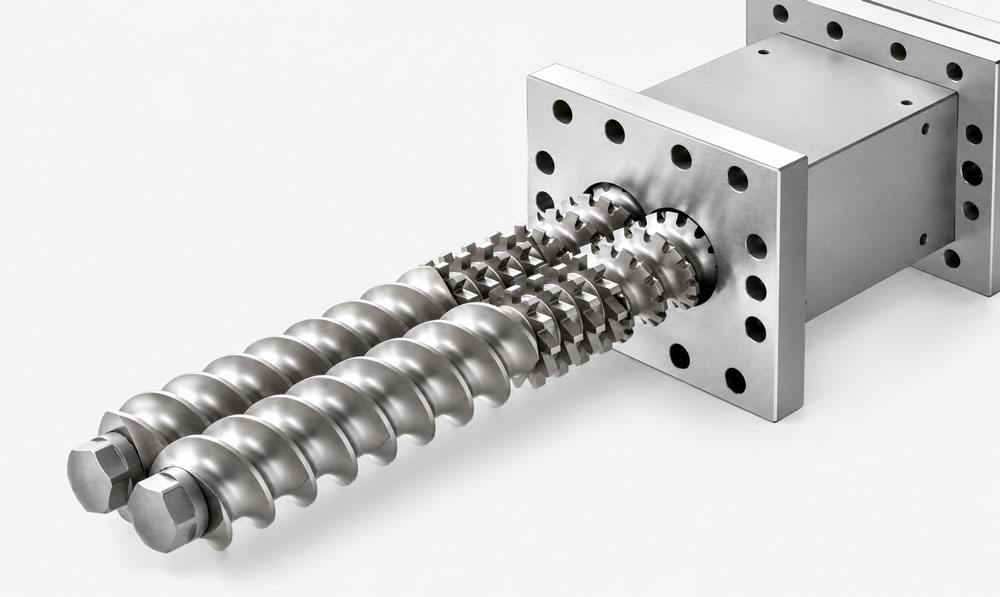
Choose Twin Screw Extruder size and output by matching the material, target throughput, screw diameter, torque reserve, L/D ratio, screw speed, feeding method, venting need, temperature window, downstream system, and scale-up data. The right size runs stable production, not only the highest listed output.
Twin screw extruder size usually refers to the screw diameter, barrel length, L/D ratio, motor power, torque capacity, screw speed, feeding capacity, and output range.
In practice, screw diameter is the most visible size parameter. A larger screw diameter usually means more free volume, more material conveying capacity, higher output potential, and stronger mechanical load demand. But diameter alone does not decide the final output.
A small extruder with the right screw design may produce stable R&D samples. A larger extruder with poor feeding or weak venting may still fail to reach stable output. The correct size must be judged by the full process window, not by diameter alone.
Output means the amount of material the extruder can process per hour, usually shown as kg/h. However, the listed output range is not a fixed promise for every formula.
Actual output depends on material flow behavior, bulk density, viscosity, filler loading, moisture level, screw configuration, feed system, screw speed, torque limit, barrel temperature, vacuum venting, die resistance, cooling, and pelletizing capacity.
A practical selection rule is this: the target production output should sit inside a stable operating window, not at the absolute edge of the machine range. A line that constantly runs near its torque, pressure, cooling, or feeding limit may produce unstable output and higher maintenance cost.
Maximum output is useful for comparison, but it should not be the only sizing rule. The highest number in a catalog often depends on a specific material, formula, screw design, and downstream condition.
A twin screw extruder may reach high output with easy-flowing pellets but produce much lower output with glass fiber, mineral filler, PEEK, thermoset premix, pharmaceutical HME formulation, PVC cable compound, or sticky elastomer blend.
Choosing by maximum output only may cause:
High torque during production
Poor melting
Weak mixing
Vent flooding
Pressure fluctuation
Temperature drift
Pellet defects
Frequent shutdown
Shorter screw and barrel life
Difficulty scaling from trial to production
The better question is not “What is the highest kg/h?” The better question is “What output can this formula run at with stable torque, pressure, temperature, venting, and product quality?”
The extruder supplier needs material and process information before recommending a size. Without this information, the output estimate may be too general.
Useful information includes:
| Information Needed | Why It Matters |
|---|---|
| Base material | Decides melting temperature, viscosity, torque, and screw design |
| Material form | Pellets, powder, flakes, liquid, fiber, or blend feed differently |
| Filler or fiber loading | Affects torque, wear, feeding, and output |
| Moisture or volatile content | Decides drying and vacuum venting need |
| Target output | Helps select screw diameter, drive power, and downstream size |
| Product form | Pellet, strand, sheet, film, strip, or special product changes equipment layout |
| Temperature window | Protects heat-sensitive materials and APIs |
| Required mixing level | Decides screw configuration and residence time |
| Downstream method | Cooling, cutting, inspection, and conveying can limit real output |
| Industry requirement | GMP, pharmaceutical, battery, food, or cable applications need special design |
A clear process description gives a more reliable size recommendation than asking for a machine by diameter only.
Material type strongly affects output. Two materials can run on the same screw diameter but produce very different kg/h because their viscosity, friction, heat sensitivity, and feeding behavior are different.
Easy-flowing thermoplastics may allow higher output. High-viscosity engineering plastics need stronger torque. Mineral-filled compounds create abrasion and resistance. Glass fiber or carbon fiber compounds need controlled side feeding. TPE and TPU need stable temperature, drying, oil absorption, and venting. Thermoset materials need low temperature, mild shear, short residence time, and rapid discharge.
Pharmaceutical hot melt extrusion has another sizing logic. It may not require the highest output, but it requires stable residence time, low degradation risk, uniform API-polymer mixing, accurate feeding, GMP records, and process reproducibility.
Internal link: Pharmaceutical Extrusion
Screw diameter affects the material volume that can be carried through the barrel. Larger diameters usually allow higher output because each screw revolution can move more material.
However, larger diameter also means stronger motor and gearbox requirements, more material inside the machine, more cleaning volume, more thermal mass, and higher trial cost. For R&D or pharmaceutical formulation screening, a large machine may waste expensive material and make small-batch testing difficult.
A practical size view:
| Screw Diameter Direction | Better Fit |
|---|---|
| Small diameter | R&D, formulation trial, expensive materials, pharmaceutical screening |
| Medium diameter | Pilot production, process development, small industrial batches |
| Larger diameter | Commercial production, high-volume compounding, stable long-run output |
The right screw diameter should fit the process stage: lab trial, pilot scale, or production scale.
LEMIX PROMIX models cover small R&D output and industrial compounding output. The model should be selected by formula behavior and stable operating range, not only by the listed output value.
| LEMIX Model | Screw Diameter | L/D | Motor Power | Max Screw Speed | Torque Per Shaft | Listed Output Range |
|---|---|---|---|---|---|---|
| PROMIX-11 | 11 mm | 40:1 | 2 kW | 1000 rpm | 6 N.m | 0.2–2.5 kg/h |
| PROMIX-16 | 16 mm | 40:1 | 3.5 kW | 1000 rpm | 9.5 N.m | 0.5–20 kg/h |
| PROMIX-26S | 25.7 mm | 40:1 | 37 kW | 900 rpm | 140 N.m | 50–200 kg/h |
| PROMIX-32S | 31.8 mm | 40:1 | 83 kW | 900 rpm | 315 N.m | 60–250 kg/h |
| PROMIX-40S | 40.3 mm | 40:1 | 110 kW | 900 rpm | 600 N.m | 80–300 kg/h |
| PROMIX-50S | 50.3 mm | 40:1 | 130 kW | 900 rpm | 980 N.m | 100–350 kg/h |
These ranges give a useful starting point. Final selection should still confirm material type, filler loading, target product, feeding method, venting need, die design, downstream capacity, and trial data.
Internal link: Twin Screw Extruder
Output reserve means the machine should have enough capacity beyond the normal production target. This helps the line handle material variation, feeder fluctuation, viscosity change, screen buildup, seasonal temperature change, and future output increase.
A practical production view is that the machine should not run at its upper limit every day. A stable line usually needs room for torque, pressure, cooling, venting, and downstream adjustment.
Output reserve is especially important when processing:
High filler compounds
Glass fiber or carbon fiber compounds
High-viscosity engineering plastics
PVC cable compounds
PEEK and high-temperature polymers
Heat-sensitive pharmaceutical formulations
Battery compounds
Thermoset premixes
Materials with frequent formula changes
Too little reserve can make the line cheaper at purchase but more expensive during daily production.
Torque capacity is one of the most important sizing factors. Torque shows how much mechanical load the extruder can handle while turning the screws.
High-output compounding often needs high torque because the machine must move, melt, wet, mix, vent, and discharge resistant materials. High torque is especially important for engineering plastics, high-filler compounds, fiber reinforcement, PEEK, PVC cable compounds, battery materials, and some pharmaceutical HME formulations.
If torque reserve is too low, the line may show:
Torque alarm
Output limitation
Poor mixing at higher feed rate
Overheating from friction
Pressure fluctuation
Frequent shutdown
Shorter gearbox or shaft service life
LEMIX twin screw extruders use high-power drive solutions, high-torque gearbox design, and DIN 5480 involute splines to support high-output and high-load working conditions.
L/D ratio means barrel length compared with screw diameter. A longer process section can provide more space for feeding, melting, mixing, side feeding, venting, pressure building, and residence time control.
However, longer is not always better. Some heat-sensitive or reactive materials may need shorter residence time. Some formulas need more mixing length. Some materials need venting space. Some materials need rapid discharge.
A 40:1 L/D design is common in many compounding applications because it provides enough process sections for melting, mixing, feeding, venting, and discharge. But the final screw configuration inside that length is just as important as the L/D number.
The selection question should be:
Does the material need long mixing?
Does it need side feeding?
Does it need vacuum venting?
Does it need short residence time?
Does it need low shear?
Does it need pressure building before pelletizing?
L/D should be matched to the process, not treated as a fixed quality grade.
Screw speed affects conveying rate, shear, residence time, mixing energy, frictional heat, and filling level. Higher screw speed can increase output only when feeding, torque, melting, venting, cooling, and downstream systems can support it.
If screw speed rises but feed rate does not rise, the barrel may become underfilled. Output may not improve much, and mixing may become less repeatable. If feed rate rises but screw speed is too low, the screw may become overfilled, causing high torque or vent flooding.
The useful control point is feed rate per screw revolution. This shows how much material each screw revolution must carry.
A stable process usually has:
Stable feed rate
Stable feed per screw revolution
Torque within a safe range
Stable melt pressure
Controlled material temperature
No vent flooding
Consistent pellet quality
Output is not only a screw speed number. It is the result of balanced screw speed, feed rate, torque, temperature, and downstream capacity.
Feeding can limit output before the extruder itself reaches its mechanical limit. Powders, flakes, low-bulk-density materials, fibers, sticky blends, regrind, and pharmaceutical blends can all feed unevenly.
Feeding problems may appear as:
Hopper bridging
Powder flooding
Side feeder surging
Fiber bridging
Liquid feeder pulsation
Material segregation
Low real kg/h
Torque fluctuation
Content variation
Output instability
For high-output production, the feeder must match the material form. For pharmaceutical extrusion, high-precision loss-in-weight feeding is important because API, polymer, and excipient ratios must remain stable during continuous processing.
Internal link: GMP Twin Screw Extruder
Venting affects size selection because moisture, residual solvent, air, low-molecular substances, and volatiles need enough melt surface area and residence time to escape.
If output is pushed too high, the vent section may flood. If the screw is too full near the vent, vacuum cannot work correctly. If venting is weak, the product may show bubbles, voids, strand breakage, odor, or unstable pressure.
Pharmaceutical extrusion often needs stronger venting control because moisture, residual solvents, and low-molecular impurities can affect product quality. LEMIX pharmaceutical extrusion systems use a dedicated large-pitch vacuum section and multistage high-vacuum system to support consistent product quality.
A machine with a higher listed output may still be too small if the formula needs heavy devolatilization. In this case, venting capacity can decide the real output, not only screw diameter.
Temperature control affects output because material viscosity changes with heat. If the machine cannot heat, cool, or respond fast enough, the line may not reach stable output even when the screw size looks correct.
High output creates more shear heat. High filler loading creates more friction. Heat-sensitive materials need tighter control. Pharmaceutical APIs may degrade if the process creates too much heat. Thermoset materials may cure early if the process holds material too hot for too long.
LEMIX twin screw extruders include heating, cooling, pressure and temperature sensors, HMI control, and high cooling capacity design. The cooling design is important because a larger material volume may require stronger heat removal to keep a wider process window.
Downstream equipment can limit real output. A correctly sized extruder may still fail to reach target kg/h if the die, cooling bath, air knife, pelletizer, conveyor, dryer, classifier, or inspection system cannot handle the material flow.
Common downstream limits include:
| Downstream Limit | Output Problem |
|---|---|
| Die flow restriction | Pressure rise and torque increase |
| Weak cooling | Sticky strands, deformation, or pellet sticking |
| Pelletizer undersized | Irregular pellet size and cutting overload |
| Worn cutter blades | Long tails, fines, and unstable pellet length |
| Water carryover | Surface defects and drying problems |
| Weak conveying | Material buildup after cutting |
| No inspection system | Defects may pass into final packaging |
For pellet production, in-line inspection can help confirm whether higher output still produces acceptable quality. LEMIX in-Line Plastic Pellet Inspection can detect defects such as burnt material, gels, cutting issues, cross contamination, yellowing, and color deviation.
Internal link: in-Line Plastic Pellet Inspection
Lab, pilot, and production sizes should be connected through process data. Scale-up should not rely only on geometric similarity or output multiplication.
A lab extruder helps test material behavior with small samples. A pilot line helps verify feeding, screw configuration, venting, torque, pelletizing, and process repeatability. A production line must then hold stable output for long runs.
LEMIX offers 11 mm and 16 mm lab type twin screw extruders for R&D and trial applications. These models can support pharmaceutical trials and rubber or plastics compounding research, development, and testing.
Internal link: Lab Type Twin Screw Extruder
Scale-up should compare process conditions that directly affect quality, not only kg/h.
Useful scale-up data includes:
Screw diameter
L/D ratio
Screw configuration
Screw speed
Feed rate
Feed rate per screw revolution
Fill level
Specific mechanical energy
Torque percentage
Melt pressure
Actual material temperature
Residence time
Vacuum level
Cooling rate
Pellet quality
Defect rate
Cleaning result
Final product performance
In pharmaceutical extrusion, LEMIX describes linear scale-up across small-volume research machines, pilot-scale systems, and commercial production lines. Core process parameters such as shear rate, fill level, and specific mechanical energy can be transferred across equipment scales to reduce scale-up risk.
Pharmaceutical hot melt extrusion sizing is different because the target is not only output. The process must protect API stability, content uniformity, amorphous dispersion, impurity control, GMP traceability, and cleaning validation.
A small GMP extruder may be better for formulation screening because it uses less material and supports controlled trials. A production GMP extruder must support continuous operation, validated cleaning, stable feeding, batch records, audit trail, electronic signature, recipe management, and PAT monitoring.
Pharmaceutical HME size selection should check:
API heat sensitivity
Polymer carrier behavior
Excipient feeding stability
Required residence time
Low-temperature and low-shear capability
Vacuum devolatilization need
Rapid quenching method
GMP documentation
Cleaning method
Scale-up route
Batch size and commercial demand
The machine should be sized for process reproducibility, not only maximum throughput.
A smaller twin screw extruder should be chosen when material is expensive, sample volume is limited, the formula is still under development, or process risk is high.
Smaller machines are useful for:
R&D trials
Pharmaceutical formulation screening
API-polymer testing
Small-batch compound development
Material behavior study
Screw configuration comparison
Color or additive trial
Scale-up data collection
University or laboratory use
The main benefit is lower material consumption. The main limitation is that small-scale data must be interpreted carefully before production scale-up.
A larger twin screw extruder should be chosen when the formula is already validated and the target is stable commercial production.
Larger machines are useful when:
Output demand is high
Production runs are long
Material feeding is stable
The formula has passed lab or pilot trials
Downstream equipment can match the output
Torque reserve is needed
Future capacity growth is expected
Maintenance planning is clear
A larger extruder should not be used to solve an undeveloped formula. If the material process window is unknown, a lab or pilot trial should come first.