
Search LEMIX Products
Learn what causes high torque in twin screw extrusion, including overfeeding, low temperature, high viscosity, filler loading, screw design, residue, wear, cooling issues, and LEMIX support.
Category:Process Control & Troubleshooting
Author:LEMIX Admin
Date:2026-08-04
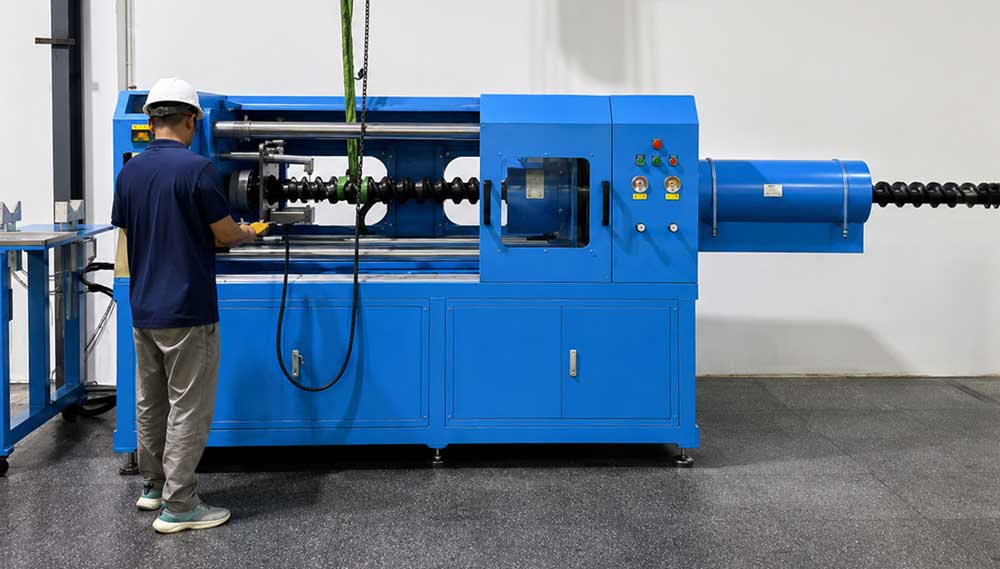
High torque in twin screw extrusion is usually caused by overfeeding, low melt temperature, high material viscosity, excessive filler loading, aggressive screw design, blocked die or screen, poor cooling, screw/barrel wear, residue buildup, or unstable feeding. The cause should be checked by matching torque changes with feed, pressure, temperature, and product defects.
Torque shows how much rotational force the gearbox and drive system need to turn the screws under load. In a twin screw extruder, torque is affected by material resistance, screw filling, melt viscosity, screw configuration, barrel temperature, die pressure, filler loading, and equipment condition.
High torque does not always mean the machine is failing. Some high-viscosity compounds, high-filler formulas, engineering plastics, and pharmaceutical HME formulations naturally run at a higher load. The real question is whether torque is stable, repeatable, and within the safe operating range.
A useful field rule is this: high torque should be read as a process signal, not only as an alarm. If torque rises suddenly, check what changed just before it. If torque slowly rises during a long run, check heat transfer, die restriction, screen buildup, residue, or wear.
The most common causes are high material resistance and poor process balance. The extruder may be receiving more material than the screws can melt, mix, vent, and discharge smoothly.
Common causes include:
| Cause | How It Raises Torque |
|---|---|
| Feed rate too high | Screw channels become overfilled |
| Barrel temperature too low | Melt viscosity stays high |
| Screw speed too low for feed rate | Each screw revolution carries too much material |
| High filler or fiber loading | Friction and mechanical resistance increase |
| High-viscosity resin | More force is needed to move the melt |
| Aggressive screw configuration | Strong kneading or reverse elements create higher resistance |
| Blocked die or screen | Back pressure rises near discharge |
| Poor cooling control | Material viscosity changes unpredictably |
| Barrel or screw wear | Flow pattern and clearance become unstable |
| Polymer residue buildup | Local restriction and friction increase |
The fastest diagnosis is not to adjust everything at once. The first step is to locate where the torque increase begins.
Overfeeding happens when the feed rate is too high for the current screw speed, temperature profile, melting capacity, venting capacity, or discharge capacity. The screw channels become too full, and the drive must work harder to turn the screws.
Typical signs include:
Torque rises after feed rate increases
Melt pressure rises at the same time
Feed throat may show buildup
Vent port may flood
Poor melting appears near the discharge
Strand or pellet quality becomes unstable
Motor load approaches the alarm range
This issue is common when output is increased only by raising feed rate. Higher throughput is possible only when screw speed, melting length, screw configuration, cooling, venting, and die flow can support the added material.
A better adjustment method is to increase feed rate step by step and compare torque, melt pressure, barrel temperature, vacuum stability, and pellet quality after each change.
Low barrel temperature or low melt temperature increases torque because the material remains too viscous. The screws must use more mechanical force to convey, melt, mix, and discharge the material.
Low temperature may cause:
High torque
Poor melting
Rough strand surface
Pressure fluctuation
Unmelted particles
Poor filler wetting
Poor dispersion
High motor load
Die instability
However, simply raising the barrel temperature is not always the right solution. In a twin screw extruder, real material temperature is also created by shear heat. A material may be cold in one zone but overheated in another. The operator should check actual temperature trend, torque trend, pressure trend, and product appearance together.
For heat-sensitive materials, especially pharmaceutical hot melt extrusion, temperature must be raised carefully. LEMIX pharmaceutical extrusion systems focus on low-temperature and low-shear processing, multi-zone temperature control, and stable process data for API protection.
Internal link: Pharmaceutical Extrusion
Material viscosity is one of the strongest drivers of torque. Higher viscosity means the melt resists flow, so the gearbox must deliver more force to keep the screws rotating.
Viscosity can rise because of:
Lower temperature
Higher molecular weight resin
Higher filler loading
More glass fiber or mineral powder
Resin batch variation
Poor plasticizer distribution
Moisture-related degradation in some polymers
Premature curing in reactive systems
Long residence time
Formula imbalance
A practical sign is batch timing. If torque increases after a new resin batch, new powder blend, new API-polymer mixture, or new filler lot enters the process, material variation should be checked before changing the machine.
High torque caused by viscosity should be corrected by reviewing material data, drying condition, feeding stability, temperature window, screw design, and discharge resistance together.
High-filler materials create high torque because fillers increase friction, bulk resistance, and melt viscosity. Mineral fillers, glass fiber, carbon fiber, flame retardants, conductive additives, ceramic powders, and high-density additives can all raise the mechanical load.
High-filler compounding needs enough torque capacity, stable feeding, strong wetting, controlled shear, and suitable side feeding. If the formula is added too early or too heavily, the screws may experience excessive resistance before the resin can wet the filler.
Common high-filler torque problems include:
| Material Type | Torque Risk |
|---|---|
| Glass fiber compounds | High friction and possible fiber bridging |
| Carbon fiber compounds | Feeding fluctuation and high resistance |
| Mineral-filled compounds | Abrasion and high screw load |
| Flame-retardant compounds | Viscosity increase and additive agglomeration |
| Battery compounds | High solids content and strict dispersion demand |
| Thermoset compounds | Filler friction plus premature reaction risk |
| Color masterbatch | Pigment loading and poor wetting risk |
LEMIX twin screw extruders use high-torque drive design, modular screw systems, and modular barrel systems to support different formulas and high-load applications.
Internal link: Twin Screw Extruder
Screw configuration directly changes torque because it controls conveying, filling, melting, kneading, mixing, venting, pressure building, and residence time.
A screw design may cause high torque when it has too much restriction, too many aggressive kneading elements, too many reverse elements, weak conveying before high-load sections, or poor discharge design. Strong kneading can improve dispersion, but it can also increase shear heat and mechanical resistance.
Common screw-related causes include:
Too many kneading blocks
Kneading angle too aggressive
Reverse elements creating excessive back pressure
Poor transition from feeding to melting
Side feeding before enough polymer melt is available
Vent section overfilled
Discharge section too restrictive
Dead zones holding degraded material
Screw elements assembled in the wrong order
A good screw design should not only create mixing. It should create the right mixing at the right filling level, with controlled torque and stable pressure.
Screw speed affects torque through residence time, shear input, barrel filling, and material temperature. The relationship is not always linear.
If screw speed is too low while feed rate remains high, each screw revolution must carry more material. This can raise torque because the screw is more heavily filled.
If screw speed is raised, torque may drop because filling per revolution becomes lower. But torque may also rise if the higher speed creates more shear resistance, frictional heat, or pressure.
A practical way to judge the relationship is to compare feed rate per screw revolution. The same rpm can be safe at low feed rate and overloaded at high feed rate.
| Adjustment | Possible Torque Response |
|---|---|
| Increase feed rate at same screw speed | Torque usually rises |
| Increase screw speed at same feed rate | Torque may fall from lower filling or rise from stronger shear |
| Raise temperature | Torque often drops if viscosity decreases |
| Add more filler | Torque often rises |
| Increase die restriction | Torque and pressure may rise together |
| Improve melting | Torque may become smoother and more stable |
Torque should always be checked with pressure, temperature, product quality, and feeder trend.
A blocked die, screen, breaker plate, filter, or discharge path increases back pressure. When the extruder cannot discharge melt smoothly, the screws must work against higher resistance.
Signs of downstream restriction include:
Melt pressure rises before or with torque
Output becomes unstable
Die flow becomes uneven
Strand thickness changes
Screen pressure increases
Die temperature becomes harder to control
Pellet size becomes inconsistent
Torque rises during long production runs
A key troubleshooting method is timing. If pressure rises first and torque follows, the cause is often downstream restriction. If torque rises first and pressure follows, the cause may be feeding, melting, screw filling, material viscosity, or screw configuration.
Blocked discharge parts should not be solved only by increasing temperature or reducing feed rate. The die, screen, breaker plate, and discharge tooling should be inspected and cleaned.
Yes. Cooling channel problems can cause high torque indirectly by making barrel temperature control unstable. Blocked or scaled cooling channels reduce heat exchange efficiency. The control panel may show normal setpoints, but the barrel may respond slowly or unevenly.
Poor cooling can cause two different torque problems:
The melt stays too viscous in some zones, raising torque.
Local overheating creates degradation, residue, or gel buildup, which later raises torque.
Cooling channel problems are often seen during long runs. The line may start well, then torque slowly rises after the system heats up, filler friction increases, or water flow becomes insufficient.
LEMIX PRO-CLEAN Water Cooling Channel Cleaning Machine is designed for inspection and maintenance of cooling channels. It can check water channel volume, flow rate, and leakage without dismantling the barrel, then clean and dredge channels to help maintain stable barrel temperature control.
Internal link: PRO-CLEAN Water Cooling Channel Cleaning Machine
Yes. Screw and barrel wear can cause high torque when worn surfaces, changed clearances, scoring, corrosion, or local damage disturb normal material flow.
In some cases, wear increases clearance and reduces conveying efficiency. The operator may increase screw speed or feed rate to recover output, which then raises torque elsewhere. In other cases, local scoring or metal contact creates friction and sudden torque spikes.
Wear-related torque issues are more likely when the line processes:
Glass fiber compounds
Carbon fiber compounds
Mineral-filled materials
Flame-retardant compounds
PEEK and high-temperature polymers
Thermoset materials
PVC cable compounds
Battery compounds
Corrosive additives
LEMIX PROMAC-S Barrel Wear Measurement Device uses inside laser equipment and a 360° rotating laser sensor to measure barrel wear, diameter changes, and inner surface condition. It helps locate maximum wear areas and supports preventive maintenance decisions.
Internal link: Barrel Wear Measurement Device PROMAC-S
Residue buildup creates high torque by narrowing flow space, increasing friction, disturbing melting, and creating local restrictions. Old polymer, carbonized material, gels, pigments, fillers, or degraded compounds can stay on screw roots, kneading blocks, vent areas, die plates, breaker plates, shafts, nozzles, and mandrels.
Residue-related torque problems often appear as:
Slowly rising torque during production
Sudden torque spikes when deposits break loose
Black specks
Color contamination
Pressure fluctuation
Poor product appearance
Longer purging time
Difficult screw removal
More frequent die cleaning
LEMIX PRO-COOL Screw Cleaning Machine is designed for non-destructive cleaning of extruder screws and extrusion components. It removes polymer residue and contaminants without flame burning, manual brushing, toxic smoke, or surface damage, helping protect screw structure, hardness, and dimensional accuracy.
Internal link: PRO-COOL Screw Cleaning Machine
Unstable feeding can cause torque spikes because the screw filling level changes suddenly. A twin screw extruder may run smoothly when feed is stable, then overload when a large pulse of powder, pellets, fibers, or liquid enters the barrel.
Feeding-related torque spikes may come from:
Hopper bridging
Powder flooding
Low-bulk-density material
Side feeder surging
Glass fiber bridging
Liquid feeder pulsation
Material segregation
Poor feeder calibration
Moisture changing powder flow
Regrind or flakes feeding unevenly
In pharmaceutical HME, feeding stability is especially important because API, polymer, and excipient ratios must remain uniform. LEMIX pharmaceutical extrusion systems use high-precision loss-in-weight feeding to reduce material stratification and segregation and support stable residence time and batch-to-batch consistency.
Internal link: GMP Twin Screw Extruder
In pharmaceutical hot melt extrusion, high torque is not only a mechanical issue. It can also affect thermal exposure, residence time, mixing uniformity, impurity formation, and product quality.
High torque in HME may indicate:
API-polymer blend is too viscous
Barrel temperature is too low
Feed rate is too high
Screw speed and feed rate are not balanced
Screw design creates excessive shear
Material is not matched to the hot-processing window
Vacuum section is overfilled
Residence time is not stable
Material is degrading or reacting
Discharge pressure is too high
For pharmaceutical applications, the process goal is not maximum shear. The goal is uniform mixing with controlled degradation risk. LEMIX pharmaceutical extrusion guidance focuses on thermal stability, uniform mixing, amorphous stability, impurity control, PAT monitoring, and GMP full-life-cycle verification.
Internal link: Pharmaceutical Extrusion
The first check should identify whether torque rose suddenly, slowly, or only after a process change. The timing gives the best clue.
A practical checking sequence:
Check whether feed rate or feeder trend changed.
Check whether a new material batch entered the line.
Check barrel temperature actual values, not only setpoints.
Check whether melt pressure rose before torque.
Check die, screen, breaker plate, and discharge flow.
Check vacuum section for flooding or blockage.
Check cooling water flow and cooling response.
Check screw speed and feed rate per screw revolution.
Review screw configuration and recent screw assembly.
Inspect for residue, black specks, or cleaning difficulty.
Measure barrel wear if torque drift repeats.
Record the stable setting after correction.
The most useful diagnostic habit is to compare time trends. Torque should be checked beside feed, pressure, temperature, vacuum, and defect timing on one timeline.
High torque troubleshooting should be based on trend data, not only one alarm value.
Useful data includes:
Material name and batch
Moisture or drying condition
Feed rate
Main feeder trend
Side feeder trend
Liquid feeder trend
Screw speed
Feed rate per screw revolution
Torque trend
Melt pressure trend
Barrel temperature setpoints
Actual barrel temperature
Vacuum level
Die temperature
Screen or filter change time
Cooling water flow condition
Product defects
Cleaning history
Screw configuration
Barrel wear record
A strong record should answer three questions: what changed first, what changed next, and what product or machine symptom appeared last.
High torque should not be handled by random parameter changes. Random changes can hide the root cause and create new defects.
Avoid these actions:
Do not keep running near torque alarm without investigation.
Do not raise temperature blindly for heat-sensitive materials.
Do not reduce screw speed without checking filling level.
Do not reduce feed rate without checking die pressure.
Do not ignore pressure rise before torque rise.
Do not continue production when metal contact is suspected.
Do not force screw rotation after a mechanical blockage.
Do not rely only on purging when residue is severe.
Do not assume the feeder is stable without checking trend data.
Do not treat repeated high torque as normal if the same formula used to run lower.
High torque is a warning signal. It should lead to a structured check of material, feeding, temperature, screw design, discharge, cooling, wear, and cleaning condition.
High torque should be reduced according to the real cause. The safe correction method depends on whether the problem is material-related, feeding-related, temperature-related, screw-related, or equipment-related.
| Cause | Safer Correction Direction |
|---|---|
| Overfeeding | Reduce feed rate or increase screw speed carefully |
| Low temperature | Adjust temperature profile gradually |
| High viscosity | Review material batch, drying, formula, and process window |
| High filler loading | Improve side feeding, wetting, and screw design |
| Aggressive screw design | Reduce excessive kneading or restriction |
| Die or screen restriction | Clean or replace blocked discharge parts |
| Cooling problem | Inspect water flow and cooling channels |
| Residue buildup | Clean screws and components non-destructively |
| Barrel wear | Measure bore condition and plan repair or replacement |
| Feeder surging | Calibrate feeder and improve material flow |
The safest correction is the one that restores stable torque without creating new defects such as poor dispersion, bubbles, degradation, vent flooding, or unstable output.