
Search LEMIX Products
Learn how residence time affects twin screw extrusion quality, including mixing, temperature, screw speed, scale-up, defects, and process optimization.
Category:Process Control & Troubleshooting
Author:LEMIX Admin
Date:2026-08-31
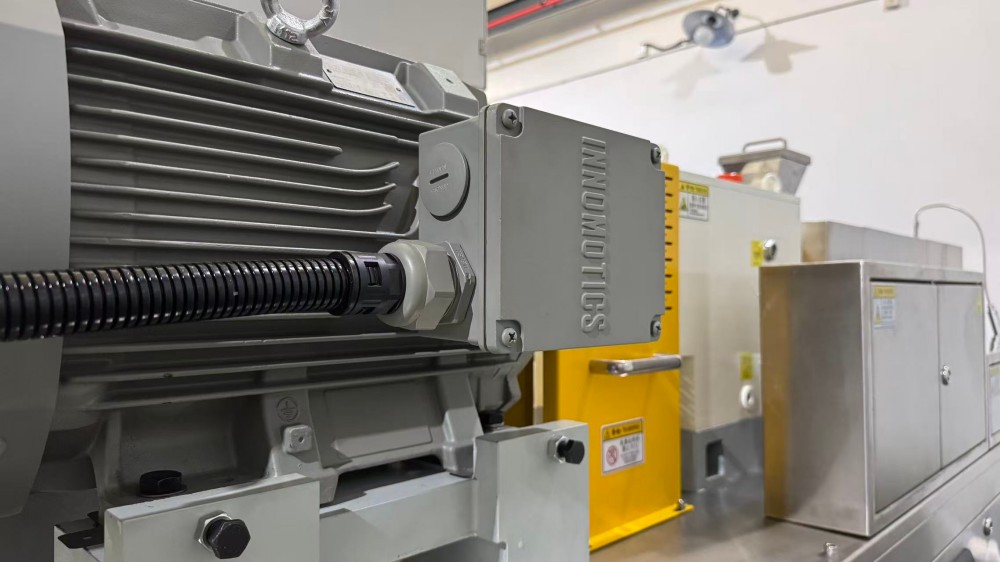
Residence time affects product quality in twin screw extrusion by controlling how long materials experience heat, shear, and mixing inside the barrel. Proper residence time helps achieve stable dispersion, consistent properties, and reliable output quality.
Residence time is the period that material remains inside a Twin Screw Extruder from feeding to discharge.
During this period, the material experiences:
Heating
Melting
Mixing
Shearing
Degassing
Pressure changes
Residence time determines how much processing energy is transferred into the material.
A suitable residence time allows:
Complete polymer melting
Uniform additive dispersion
Stable material flow
Effective moisture removal
Consistent product properties
However, residence time that is too long or too short can negatively affect product quality.
Residence time is a key process parameter because it directly influences the material history inside the extruder.
The final product quality depends not only on formulation but also on how the material is processed.
Residence time affects:
| Quality Factor | Influence |
|---|---|
| Mixing quality | Determines additive and filler dispersion |
| Thermal exposure | Controls degradation risk |
| Shear history | Affects molecular structure |
| Degassing efficiency | Influences moisture and volatile removal |
| Output stability | Affects production consistency |
For polymer compounding, pharmaceutical extrusion, and specialty materials, controlling residence time helps maintain repeatable processing conditions.
A short residence time means materials pass through the extruder quickly.
While this can reduce thermal exposure, it may create processing problems when materials require more time for melting and mixing.
Possible effects include:
Incomplete polymer melting
Poor additive dispersion
Uneven filler distribution
Insufficient degassing
Inconsistent pellet quality
Short residence time may occur because of:
Excessive screw speed
High output rate
Low barrel filling level
Insufficient mixing section
Incorrect screw configuration
For example, in filled polymer compounds, insufficient residence time may prevent fillers from being fully dispersed in the polymer matrix.
Long residence time increases the duration of heat and mechanical exposure.
A longer processing period can improve:
Mixing uniformity
Additive distribution
Moisture removal
However, excessive residence time may increase the risk of:
Polymer degradation
Color changes
Molecular weight reduction
Thermal damage
Material contamination
Sensitive materials require careful residence time control.
Examples include:
Engineering plastics
Biodegradable polymers
Pharmaceutical formulations
Heat-sensitive additives
The goal is not to maximize residence time but to maintain the correct processing window.
Residence time is influenced by multiple equipment and process parameters.
The main factors include:
| Factor | Effect on Residence Time |
|---|---|
| Screw speed | Higher speed usually reduces residence time |
| Feed rate | Higher filling can increase residence time |
| Screw configuration | Mixing elements can increase material holding time |
| Barrel filling level | Changes material volume inside barrel |
| Screw diameter | Influences barrel volume |
| Material viscosity | Changes flow behavior |
| Output rate | Affects material movement speed |
Because these factors interact with each other, residence time should be evaluated together with torque, pressure, temperature, and output.
Screw speed is one of the most direct ways to adjust residence time.
Increasing screw speed usually:
Moves material faster
Reduces residence time
Increases mixing intensity
Changes shear energy input
Reducing screw speed usually:
Extends residence time
Increases material exposure to heat
Changes mixing behavior
The best screw speed depends on:
Material type
Required output
Mixing requirements
Thermal stability
Product quality targets
For example, pharmaceutical hot melt extrusion may require a controlled residence time to protect active ingredients while achieving uniform dispersion.
Feed rate changes how much material fills the barrel.
When feed rate increases:
Barrel filling level increases
Material throughput increases
Residence time behavior changes
When feed rate decreases:
Material volume inside the barrel decreases
Mixing conditions may change
Production efficiency may decrease
An unstable feed rate can cause residence time variation, leading to:
Output fluctuation
Uneven product properties
Batch inconsistency
Stable feeding is essential for predictable residence time.
Screw configuration determines how materials move through different zones inside the extruder.
Different screw elements create different flow behaviors.
| Screw Element | Residence Time Effect |
|---|---|
| Conveying element | Moves material efficiently |
| Kneading block | Increases mixing and holding effect |
| Reverse element | Increases filling and residence time |
| Special mixing element | Improves dispersion |
A screw configuration with more restrictive elements may increase residence time.
However, excessive restriction may cause:
Higher torque
Increased melt temperature
Pressure instability
Material degradation
LEMIX provides modular screw elements that allow optimization of conveying, mixing, and residence time according to different materials and applications.
Internal link:
In polymer compounding, residence time affects how well additives, fillers, and modifiers are distributed in the polymer matrix.
A suitable residence time improves:
Filler dispersion
Color consistency
Mechanical performance
Material uniformity
For applications such as:
Engineering plastics
TPE and TPU compounds
Cable materials
WPC compounds
Masterbatch production
residence time must be balanced with shear and temperature.
Too much processing energy may damage polymers, while insufficient processing may reduce dispersion quality.
Residence time is especially important in pharmaceutical hot melt extrusion because active pharmaceutical ingredients may be sensitive to heat and mechanical stress.
It affects:
API stability
Polymer-API mixing
Amorphous solid dispersion formation
Dissolution performance
Product consistency
A long residence time may increase degradation risk.
A short residence time may result in:
Poor mixing
Incomplete dispersion
Unstable product performance
Pharmaceutical HME requires precise control of:
Temperature
Screw speed
Feed rate
Screw configuration
Vacuum conditions
LEMIX provides laboratory and GMP twin screw extrusion solutions for pharmaceutical process development and production.
Internal links:
Residence time also influences the efficiency of moisture and volatile removal.
During extrusion, vacuum degassing requires enough time for:
Moisture evaporation
Gas release
Solvent removal
Melt stabilization
Insufficient residence time may reduce degassing efficiency.
Excessive residence time may increase thermal exposure.
The degassing process depends on:
Vacuum level
Screw design
Material properties
Barrel filling
Temperature profile
Residence time can be evaluated through different methods depending on application requirements.
Common methods include:
Tracer testing
Material color change observation
Process monitoring data
Simulation analysis
Residence time distribution is often more useful than a single average value because materials do not always travel through the extruder at the same speed.
Understanding residence time distribution helps engineers optimize:
Screw design
Processing parameters
Product quality
Residence time can change significantly when moving from laboratory equipment to production systems.
A larger extruder may have:
Different barrel volume
Different heat transfer behavior
Different screw geometry
Different filling conditions
During scale-up, engineers should compare:
Residence time
Melt temperature
Torque
Pressure
Output rate
Mixing performance
LEMIX provides laboratory, pilot, and production twin screw extrusion systems to support material development and industrial scale-up.
Internal links:
Incorrect residence time may appear through different product and process problems.
Common signs include:
| Problem | Possible Residence Time Issue |
|---|---|
| Poor dispersion | Too short processing time |
| Color change | Excessive thermal exposure |
| Degraded material | Too long residence time |
| Unstable output | Residence time variation |
| Poor pellet quality | Incorrect process balance |
| Reduced mechanical properties | Material degradation |
Residence time should always be evaluated together with other process parameters.
Optimizing residence time requires balancing multiple extrusion conditions.
Key adjustment methods include:
Selecting suitable screw configuration
Adjusting screw speed
Controlling feed rate
Optimizing temperature profile
Improving material preparation
Monitoring torque and pressure
The ideal residence time depends on:
Material sensitivity
Required output
Product specifications
Mixing requirements
A stable process window provides better product quality than operating at extreme conditions.
Extruder condition can influence residence time over long-term operation.
Wear or contamination may change:
Material flow behavior
Screw conveying efficiency
Internal clearance
Pressure stability
Regular maintenance helps maintain consistent processing conditions.
LEMIX provides extrusion maintenance solutions including:
Screw cleaning systems
Barrel wear measurement devices
Screw elements
Relevant pages:
Barrel Wear Measurement Device PROMAC-S
LEMIX provides twin screw extrusion solutions for polymer compounding, pharmaceutical extrusion, and specialty material processing.
Solutions include:
| Requirement | LEMIX Solution |
|---|---|
| Material development | Laboratory twin screw extruders |
| Production processing | Twin screw extrusion systems |
| Screw optimization | Modular screw elements |
| Process control | Stable extrusion systems |
| Maintenance | Cleaning and inspection equipment |
Relevant pages:
Residence time is a critical factor affecting product quality in twin screw extrusion because it controls the amount of heat, shear, and mixing exposure experienced by materials.
A suitable residence time improves dispersion, stability, and product consistency, while excessive or insufficient residence time may create quality problems.
By optimizing screw configuration, screw speed, feed rate, temperature, and equipment condition, manufacturers can achieve stable extrusion performance from laboratory development to industrial production.