
Search LEMIX Products
Learn when extruder screws and barrels should be repaired, rebuilt, or replaced by checking wear, clearance, torque, pressure, defects, cleaning results, barrel measurement, and LEMIX maintenance support.
Category:Maintenance & Quality Control
Author:LEMIX Admin
Date:2026-08-08
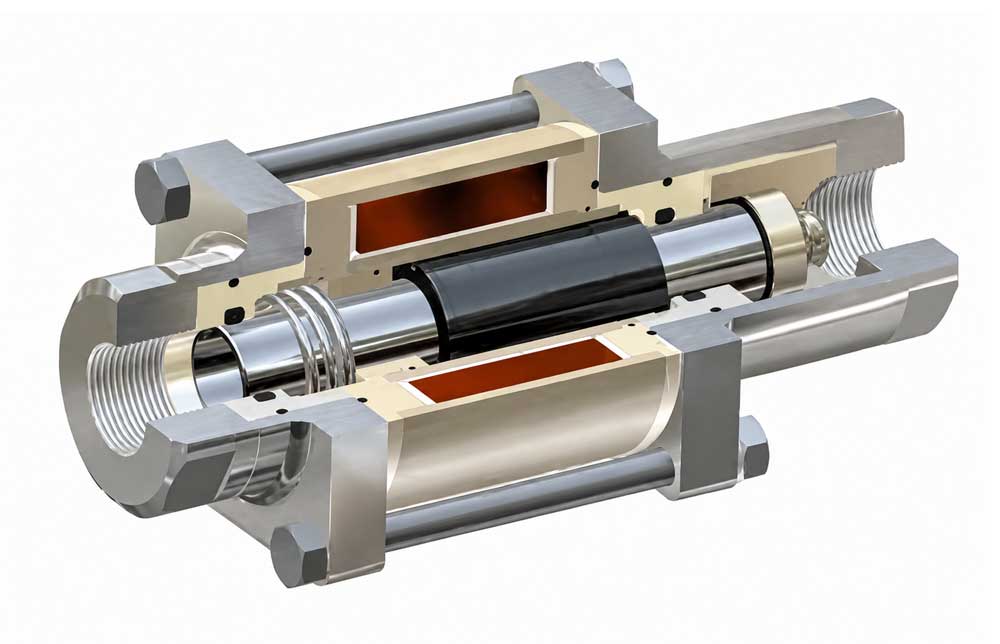
Extruder screws and barrels should be repaired, rebuilt, or replaced when wear, corrosion, scoring, clearance change, residue buildup, unstable torque, poor output, pressure fluctuation, or repeated product defects can no longer be corrected by process adjustment or cleaning.
Extruder screws and barrels wear because they work under heat, torque, pressure, shear, friction, chemical exposure, and abrasive material flow. In twin screw extrusion, the screws do not only move material forward. They also melt, mix, knead, vent, pressurize, and discharge the material.
Wear becomes faster when the process handles:
Glass fiber compounds
Carbon fiber compounds
Mineral-filled plastics
Flame-retardant compounds
PVC and cable compounds
Engineering plastics
Thermoset compounds
Recycled plastics
Powder coating materials
Battery compounds
High-temperature polymers
Corrosive additives
A field-based maintenance view is simple: screws and barrels do not fail only when they break. They begin to fail when the process window becomes narrower. The line may still run, but the same formula needs more adjustment, more torque, more cleaning, or more operator attention.
Repair, rebuild, and replacement are different maintenance decisions.
Repair means fixing a local problem while keeping the original component in service. This may include polishing small burrs, removing deposits, correcting minor surface issues, cleaning residue, or restoring a limited damaged area.
Rebuild means restoring a worn screw or barrel to a usable condition through more extensive work. This may include replacing screw elements, changing barrel liners, reconditioning surfaces, reviewing metallurgy, or upgrading wear-resistant materials.
Replacement means removing the component from service and installing a new screw, screw element, barrel, liner, shaft, or related spare part.
| Decision | Meaning | Typical Situation |
|---|---|---|
| Repair | Local correction | Minor burrs, deposits, small surface defects |
| Rebuild | Restore useful condition | Worn screw elements, liner wear, repeated but repairable wear |
| Replace | Install new part | Severe wear, deep scoring, cracked elements, red-zone barrel wear, unstable process after correction |
The decision should be based on measurement, production symptoms, material risk, component cost, downtime cost, and product quality risk.
Inspection should be done before deciding whether to repair or replace. Many extrusion problems look like process issues at first, but the real cause may be component condition.
Inspection is recommended when the line shows:
Lower output at the same screw speed
Higher torque under the same formula
Melt pressure fluctuation
Poor dispersion
More black specks
More gels
Unstable pellet size
Strand breakage
Longer purging time
Color contamination
More difficult screw removal
Abnormal noise or vibration
Repeated quality complaints
Different performance under the same recipe
The most useful inspection trigger is comparison. If the same material, same screw configuration, and same settings no longer give the same output, torque, pressure, and product quality, screw and barrel condition should be checked.
An extruder screw may need repair when local damage or residue affects operation but the main geometry is still usable.
Common repair-level signs include:
| Sign | Possible Cause | Typical Action |
|---|---|---|
| Small burrs | Mechanical handling damage | Local polishing or correction |
| Minor surface scratches | Abrasive material or tool contact | Surface inspection and repair |
| Residue buildup | Poor cleaning or material degradation | Non-destructive cleaning |
| Light corrosion | Chemical exposure or storage issue | Surface treatment and protection |
| Small edge damage | Assembly or dismantling impact | Local correction if geometry is still safe |
| Difficult element movement | Residue, thermal expansion, or shaft deposits | Cleaning and careful dismantling |
A screw should not be repaired blindly. If the screw flight profile, element fit, shaft spline, or screw timing is already affected, simple repair may not be enough.
Screw elements should be replaced when wear, cracking, deformation, face damage, spline damage, or processing performance loss affects the screw function.
Replacement is usually needed when:
The screw element is cracked.
The element face is severely worn.
The spline fit is loose or damaged.
The conveying flight has lost its profile.
Kneading blocks no longer provide stable mixing.
Corrosion has weakened the surface.
The element causes abnormal torque or vibration.
The element cannot be removed safely.
The same position shows repeated wear.
Product quality cannot recover after cleaning and process adjustment.
For modular Twin Screw Extruders, it is often possible to replace individual screw elements instead of replacing the whole screw assembly. This is one advantage of a modular system.
Internal link: Screw Elements for TSE
The whole screw assembly should be rebuilt when several elements, shafts, spacers, adapters, or retaining parts show combined wear or assembly problems.
Rebuilding may be needed when:
Multiple screw elements are worn.
Element faces show repeated fretting.
The shaft spline has wear or deformation.
Screw elements become difficult to slide on the shaft.
Axial looseness appears during operation.
The screw configuration no longer matches the material.
The same screw causes unstable torque after cleaning.
The screw assembly has repeated contact marks.
A formula change requires a new screw layout.
Maintenance records show repeated damage at the same zones.
A rebuild should not only replace damaged parts. It should also review why the damage happened. Common root causes include abrasive fillers, excessive kneading, high torque, wrong feeding position, poor cooling, harsh cleaning, wrong assembly, or operating outside the process window.
An extruder barrel may be repaired when the damage is local, measurable, and still within a recoverable condition. Small surface problems, deposits, minor corrosion, or early wear may be handled before they become severe.
Repair may be possible when:
The inner bore has light residue.
The surface has minor corrosion.
A small local mark does not affect clearance seriously.
The barrel liner is still within usable wear limits.
Cooling channels are blocked but can be cleaned.
The barrel opening or plug area needs service.
The process problem disappears after cleaning or minor correction.
However, barrel repair should be based on measured bore condition. Visual inspection alone is not enough because barrel wear may be uneven around the circumference or along the screw length.
Internal link: Barrel Wear Measurement Device PROMAC-S
An extruder barrel should be replaced when wear, corrosion, scoring, ovality, or liner damage changes the screw-to-barrel clearance beyond the safe process range.
Replacement is usually needed when:
Barrel bore wear exceeds the allowed limit.
Wear is classified as a red-zone condition.
Deep scoring is found inside the bore.
Corrosion creates unstable surfaces.
The liner is cracked, loose, or heavily worn.
Screw contact marks are repeated.
Output drops under the same settings.
Pressure building becomes unstable.
Product defects continue after screw cleaning.
The barrel causes repeated screw wear.
Measurement shows severe diameter change or ovality.
A worn barrel may still allow the screw to rotate, but it can reduce conveying efficiency, pressure stability, residence time control, and product consistency. At that point, replacement may cost less than repeated downtime and quality loss.
Screw-to-barrel clearance is one of the most important factors in repair or replacement decisions. This clearance controls conveying efficiency, pressure building, leakage flow, shear, residence time, and mixing behavior.
When clearance increases, material can leak backward or move less efficiently. The extruder may need higher screw speed to maintain the same output. Melt pressure may become less stable. Mixing may weaken. Product defects may increase.
When clearance becomes uneven, the process becomes harder to control because material movement differs from one barrel zone to another.
Common symptoms of clearance change include:
| Symptom | Possible Meaning |
|---|---|
| Lower output at the same rpm | Increased leakage flow or worn conveying zone |
| Poor pressure stability | Reduced pressure building ability |
| Higher screw speed needed | Loss of conveying efficiency |
| Poor dispersion | Weaker mixing and material renewal |
| More black specks | Dead zones or residue retention |
| Unstable residence time | Uneven clearance or worn zones |
| Higher energy use | Operator compensates for lost efficiency |
Clearance should be checked with measurement, not by guesswork.
Barrel wear should be measured by checking the inner bore diameter, wear depth, roundness, surface condition, and wear distribution along the barrel length.
The most reliable method is to use a dedicated barrel wear measurement device during planned maintenance. The barrel should be clean, smooth, and at a safe inspection temperature before measurement.
A good measurement should show:
Inner bore diameter
Maximum wear location
Circumferential wear distribution
Axial wear distribution
Local scoring
Corrosion marks
Ovality or shape change
Whether the bore is still within limits
Whether repair, liner change, or replacement is needed
LEMIX PROMAC-S uses inside laser equipment and a 360° rotating laser sensor to measure barrel wear, diameter changes, and inner surface condition. It is designed for preventive inner bore inspection during routine maintenance.
PROMAC-S inspection data should be used to turn a maintenance decision from opinion into measurement. Instead of deciding only by visible marks, operators can review measured wear areas and compare them with the allowable tolerance.
A practical decision logic can be:
| Inspection Result | Maintenance Decision |
|---|---|
| Green area | Continue running with normal monitoring |
| Yellow area | Plan repair, closer inspection, or scheduled replacement |
| Red area | Replace barrel or liner before serious quality or equipment risk |
| Local wear only | Check material flow, screw design, and feeding position |
| Severe wear near feeding | Check abrasive filler feeding and screw design |
| Severe wear near kneading | Check shear, filler loading, and screw element selection |
| Severe wear near discharge | Check pressure, die restriction, and temperature control |
The most valuable point is not only measuring the barrel once. The value comes from comparing measurement reports over time. Wear trend helps predict when replacement will be needed.
Repair is more reasonable when the component is still dimensionally usable, damage is local, and the process can return to stable performance after correction.
Repair may be suitable when:
Wear is light and within allowable limits.
The damage is local and not structural.
Product quality returns after cleaning or minor correction.
Screw elements can still fit tightly on the shaft.
Barrel bore measurement remains within safe range.
No metal contact or deep scoring exists.
Downtime risk is low.
The material is not high-risk or contamination-sensitive.
The component can be safely monitored after repair.
Repair should always include a follow-up check. If the same problem returns quickly, the original root cause was not solved.
Replacement is safer when the component condition creates a risk to product quality, machine safety, or repeated downtime.
Replacement should be considered when:
Wear exceeds tolerance.
Barrel wear appears in red-zone measurement.
Screw elements are cracked or heavily deformed.
The shaft or spline is damaged.
The barrel liner is deeply scored or corroded.
There is evidence of screw-barrel contact.
High torque repeats after cleaning.
Product defects continue after process adjustment.
The component has been repaired several times.
The material is high-value or quality-sensitive.
The downtime cost of another failure is higher than replacement cost.
A useful maintenance principle is this: repair is for controlled defects; replacement is for uncontrolled risk.
Process symptoms can help locate whether the problem is likely from the screw, barrel, die, feeder, cooling, or material.
| Process Symptom | Possible Screw/Barrel Cause |
|---|---|
| Output loss | Screw flight wear or barrel clearance increase |
| Torque fluctuation | Wear, residue, local restriction, damaged element |
| Pressure fluctuation | Barrel clearance change or unstable discharge section |
| Poor mixing | Worn kneading elements or larger clearance |
| Black specks | Residue, dead zones, worn surfaces, overheating |
| Gels | Poor melting, degradation, old material deposits |
| Color contamination | Incomplete cleaning or material trapped on surfaces |
| Strand breakage | Poor melting, venting issue, unstable pressure |
| Abnormal noise | Metal contact, damaged element, shaft issue |
| Difficult screw removal | Residue, corrosion, deformation, or bonded elements |
Symptoms should be checked with timing. If the issue appears right after a material change, cleaning and residue should be checked first. If it appears slowly over months, wear may be more likely.
Cleaning can delay repair or replacement when the problem comes from residue, carbonized material, gels, pigments, or surface contamination rather than actual metal loss.
Many screws appear worn because residue covers the surface. After proper cleaning, the true screw condition can be inspected. Cleaning also reduces the risk of black specks, cross-contamination, pressure fluctuation, and difficult dismantling.
LEMIX PRO-COOL Screw Cleaning Machine is designed for non-destructive cleaning of screws and extrusion components. It removes polymer residue and contaminants without flame burning, manual brushing, toxic smoke, or surface damage.
Internal link: PRO-COOL Screw Cleaning Machine
Cleaning is not enough when the component has real mechanical damage or dimensional loss.
Cleaning cannot fix:
Severe screw flight wear
Cracked screw elements
Loose spline fit
Shaft deformation
Deep barrel scoring
Red-zone barrel wear
Severe corrosion
Barrel ovality
Liner cracking
Screw-barrel contact damage
Repeated process instability caused by clearance change
Cleaning should be used before inspection, not as a substitute for inspection. A clean screw and barrel make it easier to see whether repair, rebuilding, or replacement is needed.
Screw dismantling affects repair decisions because the true condition of modular screw elements and shafts may only be visible after disassembly.
If screw elements are heavily bonded by residue, corrosion, or thermal history, manual dismantling may damage the shaft, spline, or element faces. This can turn a repairable screw into a replacement problem.
LEMIX PRO-EASY Screw Dismantling Machine is designed for efficient dismantling of screw elements during extrusion production and maintenance. It uses hydraulic clamping and adjustable dismantling force to help remove screw elements while reducing the risk of shaft deformation or surface damage.
Internal link: PRO-EASY Screw Dismantling Machine
Some damage should not be ignored because it can quickly create larger mechanical or quality problems.
High-risk signs include:
Screw-barrel metal contact
Deep scoring inside the barrel
Red-zone barrel wear
Cracked screw element
Bent shaft
Loose screw element on the shaft
Severe spline wear
Repeated torque spikes
Abnormal metallic noise
Metal particles in product
Severe corrosion
Barrel liner looseness
Broken retaining parts
Unstable process after repeated cleaning
If these signs appear, continued operation can damage more expensive parts. The line should be stopped and inspected.
Material type strongly affects how quickly screws and barrels should be inspected or replaced.
A line processing clean, low-abrasion polymers may run longer between inspections. A line processing abrasive, corrosive, sticky, or heat-sensitive materials needs closer monitoring.
| Material Type | Maintenance Risk |
|---|---|
| Glass fiber compounds | Fast screw and barrel abrasion |
| Mineral-filled plastics | Barrel bore wear and screw flight wear |
| Flame-retardant compounds | Abrasion, corrosion, and residue |
| PVC compounds | Degradation residue and corrosion risk |
| Engineering plastics | High torque and high-temperature wear |
| Thermoset compounds | Curing deposits and abrasive fillers |
| Recycling materials | Contamination, metal particles, and residue |
| Powder coating | Sticky residue and cleaning difficulty |
| Battery compounds | High solids, abrasion, and contamination risk |
| Pharmaceutical HME | Cleanability and traceability risk |
Maintenance intervals should be material-specific. A single fixed schedule may be too long for abrasive materials and too short for easy materials.