
Search LEMIX Products
Learn what causes screw and barrel wear in thermoset compounding, including abrasive fillers, corrosion, premature curing, poor cooling, harsh cleaning, and LEMIX inspection and cleaning support for safer stable production.
Category:Maintenance & Quality Control
Author:LEMIX Admin
Date:2026-07-29
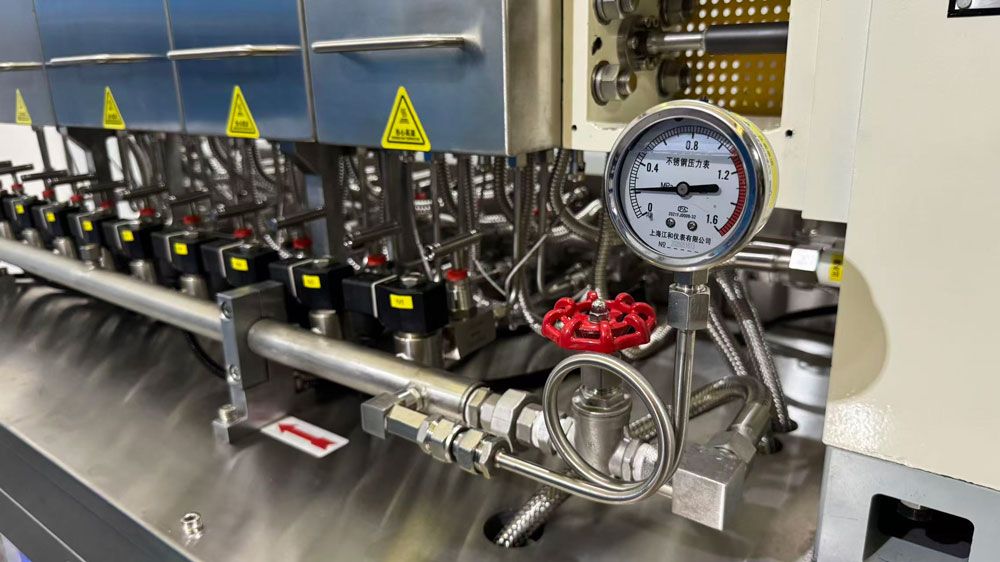
Screw and barrel wear in thermoset compounding is mainly caused by abrasive fillers, corrosive resin systems, premature curing, high friction, poor cooling, wrong screw design, and harsh cleaning methods. High filler loading and local overheating make wear happen faster.
Thermoset compounding often creates more wear than standard thermoplastic processing because the formula can contain a high percentage of hard fillers, fibers, curing agents, and abrasive mineral materials.
Thermoset materials form an irreversible crosslinked structure after curing. The extrusion process must mix the resin, fillers, fibers, additives, and curing agents before this reaction develops too far. This requires a controlled process with low material temperature, mild shear, strong distribution, short residence time, and fast discharge.
The wear problem becomes more serious when the formula contains quartz powder, aluminum hydroxide, glass fiber, carbon fiber, mineral powder, flame retardants, or other inorganic fillers. These materials rub against the screw flights, screw root, barrel liner, and discharge area during continuous conveying and mixing.
In many thermoset lines, wear is not caused by one factor. It comes from the combined effect of abrasive particles, chemical attack, frictional heat, local curing, pressure buildup, and repeated cleaning.
Internal link: Thermoset Application
The materials that cause the most wear are usually hard, sharp, high-loading, or chemically active ingredients.
Common wear-related materials include:
| Material Type | Wear Risk | Main Effect |
|---|---|---|
| Quartz powder | Very high abrasion | Scratches screw and barrel surfaces |
| Aluminum hydroxide | High abrasion at high loading | Increases friction and torque |
| Glass fiber | Abrasion and cutting wear | Damages screw flights and barrel liner |
| Carbon fiber | Abrasion and surface cutting | Accelerates localized wear |
| Mineral fillers | Continuous abrasive wear | Enlarges clearance over time |
| Flame retardants | Abrasion or corrosion | Can attack metal surfaces depending on chemistry |
| Curing agents | Possible corrosion or adhesion | May react and form deposits |
| Pigments and additives | Mild to medium wear | Can build residue in dead zones |
Thermoset formulations often use fillers and reinforcing materials to improve strength, heat resistance, insulation, dimensional stability, flame resistance, and cost control. When filler loading reaches a high level, the screw and barrel are exposed to constant abrasion. This is why wear-resistant screw elements and barrel liners are important in thermoset compounding.
Abrasive wear happens when hard particles move between the rotating screw and the barrel wall. These particles act like small cutting tools. They remove metal from the screw surface and inner barrel surface over time.
The highest wear areas are usually found in sections with strong material compression, high filler concentration, high screw filling, or high friction. Wear may appear near the feeding section, mixing section, kneading section, discharge section, or any location where filler particles are forced against metal surfaces.
In thermoset compounding, abrasive wear can become faster when the process uses too much shear. High shear raises friction and pushes fillers harder against the barrel wall. This can improve dispersion in some materials, but it can also shorten screw and barrel life.
A better thermoset process should use mild shear with strong distributive mixing. This helps spread fillers and fibers without creating unnecessary metal contact, local overheating, or early curing.
Corrosion is another cause of screw and barrel wear. Some thermoset resin systems, curing agents, flame retardants, pigments, fillers, or cleaning residues can react with metal surfaces. Moisture and process temperature may make this problem worse.
Corrosion does not always look like deep mechanical scratches. It may appear as pitting, surface roughness, dark marks, uneven metal loss, or local surface damage. Once the surface becomes rough, material can stick more easily. Stuck material can then cure, carbonize, or create more friction.
Corrosion and abrasion often happen together. Abrasion removes the protective surface layer. Corrosion then attacks the exposed metal. This combined damage can reduce screw and barrel life faster than either problem alone.
For thermoset compounds with corrosive ingredients, screw and barrel materials should be selected carefully. Wear-resistant and corrosion-resistant coatings, high-performance alloys, and suitable barrel liners can reduce long-term damage.
Premature curing is one of the most serious risks in thermoset extrusion. When thermoset material starts crosslinking inside the barrel, it becomes thicker, harder, and more difficult to move. This raises torque, friction, and pressure.
Cured or partly cured material can stick to the screw surface and barrel wall. The screw continues to rotate, so the stuck material creates abnormal friction. This can lead to adhesion wear, surface scoring, shaft sticking, blocked discharge, and sudden machine overload.
Premature curing can be caused by:
Barrel temperature that is too high
Excessive shear from screw elements
Long residence time
Dead zones inside the screw channel
Poor cooling capacity
High discharge pressure
Incorrect feeding sequence
Reactive ingredients added too early
Thermoset compounding should avoid high-shear kneading blocks when the formula is sensitive to frictional heat. A short material path, low-pressure discharge, and strong barrel cooling help reduce curing inside the extruder.
Screw design has a direct effect on wear. A screw configuration that is too aggressive can increase metal stress, frictional heat, filler cutting, and local pressure. This can accelerate both screw wear and barrel wear.
For thermoset materials, the screw design should support distribution rather than heavy kneading. The process needs to blend resin, fillers, curing agents, and fibers evenly, but it should not create strong local shear or long residence time.
A suitable thermoset screw design should provide:
Stable forward conveying
Mild and uniform shear
Strong material distribution
Low frictional heat
No dead corners
Short residence time
Low discharge pressure
Easy cleaning after production
LEMIX thermoset processing guidance emphasizes weak shear with strong distribution, narrow residence time distribution, and rapid discharge. These design points help reduce premature curing and lower unnecessary wear risk.
Internal link: Twin Screw Extruder
Barrel cooling affects wear because temperature controls resin viscosity, reaction speed, and friction. If the cooling system cannot remove heat effectively, the material may become too hot in local areas. This can lead to faster curing, higher torque, and more friction against metal surfaces.
Thermoset compounding often needs a barrel with strong cooling capacity. Channel-type water cooling can help stabilize resin viscosity and reduce high-temperature gel lumps. If cooling channels are scaled, blocked, or uneven, the barrel may show temperature drift even when the control screen looks normal.
Poor cooling can cause:
Local curing inside the barrel
Adhesive buildup on screw surfaces
Higher torque
Higher pressure
Black gel particles
Unstable output
More difficult cleaning
Faster screw and barrel wear
Cooling performance should be checked during maintenance, especially when the same formula begins to show higher torque or more cured deposits than before.
Residence time means how long the material stays inside the extruder. In thermoset compounding, long residence time can be dangerous because the material may begin curing before discharge.
A narrow residence time distribution is important. Most material should pass through the extruder under similar heat and shear conditions. If some material stays in dead corners or low-flow zones, it may cure earlier than the rest of the batch. These cured particles can scrape screw and barrel surfaces when they move again.
Long or uneven residence time can cause:
Local curing
Hardened deposits
Black specks
Adhesion wear
Pressure instability
Shaft sticking
Cleaning difficulty
Short L/D design is often used in thermoset processing to reduce heating time inside the barrel. The exact length should still allow enough distribution, but it should not keep reactive material inside the machine longer than needed.
Feeding sequence affects wear because it controls when fillers, fibers, and curing agents contact the screw and barrel.
If abrasive fillers enter too early, they may travel through the full screw length and wear more barrel zones. If fibers are added too early or under too much shear, they may break and increase abrasive contact. If curing agents enter too early, the material may become reactive before it has been distributed well.
A segmented open-barrel design helps solve this problem. Resin can be added first. Selected fillers, additives, or fibers can be added in the middle or rear sections. This can reduce unnecessary wear, protect fiber length, and improve cleaning access.
A practical feeding layout should consider:
| Feeding Point | Typical Ingredient | Wear Control Purpose |
|---|---|---|
| Front section | Resin and main base material | Build stable conveying |
| Middle section | Selected fillers or additives | Improve distribution without full-length abrasion |
| Rear section | Fibers or sensitive components | Reduce fiber breakage and residence time |
| Open barrel section | High-loading fillers | Improve access and reduce pressure buildup |
Correct feeding sequence can reduce friction, improve premix quality, and extend screw and barrel life.
Screw and barrel wear often appears as process instability before a full machine failure happens.
Common warning signs include:
Lower output at the same screw speed
Higher screw speed needed for the same output
Rising torque
Unstable torque
Pressure fluctuation
Poor filler distribution
More black specks or cured particles
Longer cleaning time
More material residue on the screw
Higher barrel temperature fluctuation
Shaft sticking tendency
More frequent product quality complaints
These signs should not be judged alone. They should be compared with material batch, filler loading, screw configuration, barrel temperature, cooling water condition, and maintenance records.
When the same formula and same process begin to show lower stability, barrel wear inspection should be considered.
Wear changes the clearance between the screw and barrel. When clearance becomes larger, the screw may not convey, distribute, or discharge material in the same way as before.
In thermoset compounding, this can lead to:
Poor filler wetting
Uneven fiber distribution
Unstable premix viscosity
Lower output
Less predictable residence time
More local overheating
More cured particles
Weaker follow-up forming quality
Reduced mechanical property consistency
A worn barrel can also create zones where material stays longer than expected. This is especially risky for thermoset materials because delayed material can cure inside the process section.
Wear control is therefore not only a maintenance issue. It is also a product quality issue.
Barrel wear should be measured by checking inner bore diameter, maximum wear area, circumferential wear, axial wear distribution, and surface condition. Simple visual inspection is not enough because the most serious wear may be inside the bore.
LEMIX PROMAC-S is designed for preventive inner bore inspection of extruder barrels. It uses inside laser equipment and a 360° rotating laser sensor to measure barrel wear, diameter changes, and inner surface condition. The system has ±0.01 mm accuracy, 3–5 mm axial measurement resolution, and automated reporting.
The barrel only needs to be clean, smooth, and below 50°C before inspection. PROMAC-S can help maintenance teams locate the maximum diameter area, identify wear distribution, and decide whether the barrel can continue running, needs closer monitoring, or should be replaced.
Internal link: Barrel Wear Measurement Device PROMAC-S
Wear should be judged by measurement data, production symptoms, and product quality results.
A small measured wear value may still matter if it appears in a critical pressure-building or mixing zone. A larger wear value may be less urgent if it is located in a lower-risk area and the product is still stable. The correct judgment should connect the inspection report with real process behavior.
A practical judgment method:
| Wear Condition | Process Meaning | Action |
|---|---|---|
| Within wear limit | Barrel still works normally | Continue running and monitor |
| Near warning level | Wear may begin to affect stability | Increase inspection frequency |
| Local severe wear | High-risk zone has lost geometry | Plan repair or replacement |
| Fast wear growth | Material or process is too aggressive | Review filler, screw design, cooling, and coating |
| Wear with corrosion | Chemical attack is involved | Check resin, additives, cleaning, and metallurgy |
| Wear with cured deposits | Premature curing or dead zones exist | Review temperature, residence time, and screw design |
This approach helps avoid replacing parts too early or waiting until wear causes unplanned downtime.
Screw cleaning helps reduce wear risk by removing cured residue, carbonized material, filler buildup, and old polymer deposits. If residue stays on the screw surface, it can harden and create abnormal friction during the next production run.
Traditional cleaning methods, such as flame burning, aggressive brushing, or mechanical grinding, can damage the screw surface. They may cause oxidation, hardness loss, scratches, or coating damage. A damaged screw surface can hold more material and wear faster in later production.
LEMIX PRO-COOL Screw Cleaning Machine uses a non-destructive high-pressure water cleaning process. It is designed to remove polymer residue and contaminants without flame burning, manual brushing, toxic smoke, or surface damage. It can clean screws, die plates, breaker plates, shafts, nozzles, mandrels, and other extrusion parts.
Internal link: PRO-COOL Screw Cleaning Machine
Screw and barrel wear cannot be fully avoided in high-filler thermoset compounding, but it can be reduced through better process design and maintenance.
Useful methods include:
Select wear-resistant and corrosion-resistant screw and barrel materials.
Use mild shear with strong distribution instead of aggressive kneading.
Add abrasive fillers at the right barrel section.
Use open-barrel feeding for high filler loading when suitable.
Keep material temperature low enough to prevent premature curing.
Maintain strong and stable barrel cooling.
Reduce residence time and avoid dead zones.
Use low-pressure rapid discharge.
Clean screws and tooling without damaging the surface.
Measure barrel wear during routine maintenance.
Compare wear records with material and process data.
Replace or repair parts before severe wear causes production failure.
For thermoset materials, wear reduction and curing control should be treated as one system. Lower curing risk often means lower friction, fewer deposits, easier cleaning, and slower wear.
Before selecting screw elements, barrel liners, coatings, or Spare Parts for thermoset compounding, the following information should be reviewed:
Resin type
Curing agent type
Filler type
Filler loading percentage
Fiber type and length
Corrosive ingredient risk
Maximum material temperature
Screw speed
Residence time target
Discharge pressure
Cleaning method
Current wear location
Current product defects
Required maintenance interval
This information helps match the correct metallurgy, coating, screw design, barrel structure, and inspection plan.
LEMIX supports thermoset wear control through process design, extrusion equipment, spare parts, cleaning equipment, and wear inspection devices.
For thermoset processing, LEMIX focuses on low-temperature compounding, weak shear with strong distribution, narrow residence time distribution, rapid discharge, segmented open-barrel feeding, and wear-resistant or corrosion-resistant coatings. These features help reduce premature curing and control abrasion from high filler loading.
LEMIX also provides PROMAC-S for barrel wear measurement and PRO-COOL for non-destructive screw cleaning. These products help factories move from reactive maintenance to preventive maintenance. Instead of waiting for output loss, quality problems, or sudden shutdown, the maintenance team can inspect, clean, and plan replacement based on actual component condition.
Relevant pages:
Screw and barrel wear in thermoset compounding is mainly caused by abrasive fillers, corrosive ingredients, premature curing, high friction, poor cooling, wrong screw configuration, long residence time, and harsh cleaning methods.
The most important control points are material selection, feeding sequence, low-temperature processing, mild shear, strong distribution, narrow residence time, rapid discharge, wear-resistant parts, proper screw cleaning, and regular barrel wear measurement.
LEMIX thermoset extrusion systems, PROMAC-S barrel wear measurement device, and PRO-COOL Screw Cleaning Machine help factories improve process stability, reduce wear-related downtime, and maintain more reliable thermoset premix quality.