
Search LEMIX Products
Compare co-rotating and counter-rotating twin screw extruders, including mixing, shear, screw design, applications, material processing, and how to select the right extrusion system.
Category:Extruder Technology & Selection
Author:LEMIX Admin
Date:2026-08-14
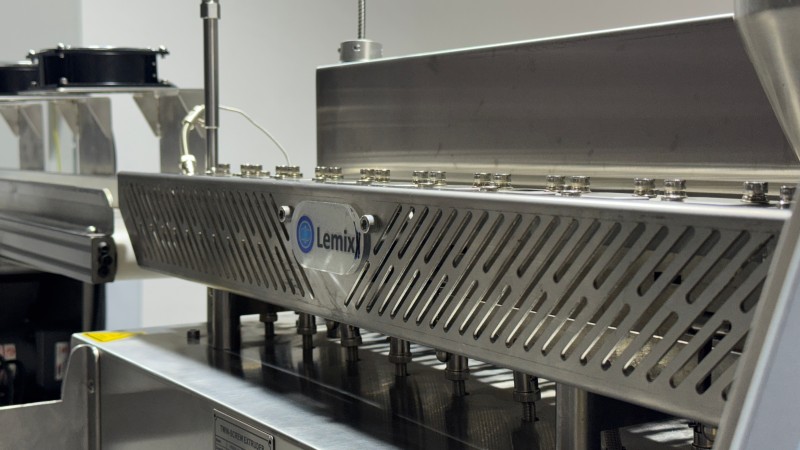
Co-rotating Twin Screw Extruders use two screws rotating in the same direction for strong mixing, compounding, and continuous material processing, while counter-rotating twin screw extruders use opposite screw rotation for controlled conveying and lower shear applications.
Co-rotating and counter-rotating twin screw extruders are two main twin screw extrusion designs differentiated by screw rotation direction.
The screw rotation direction changes how materials move inside the barrel, how much shear energy is generated, how mixing occurs, and which applications the equipment is suitable for.
In twin screw extrusion, two screws work together inside a barrel to transport, melt, mix, react, devolatilize, and discharge materials. The screw design, rotation direction, screw elements, temperature profile, feeding method, and operating parameters determine the final process performance.
The two main types include:
| Type | Screw Rotation Direction | Typical Characteristics |
|---|---|---|
| Co-rotating twin screw extruder | Both screws rotate in the same direction | Strong mixing, high self-cleaning ability, flexible compounding |
| Counter-rotating twin screw extruder | Screws rotate in opposite directions | Controlled conveying, lower shear, suitable for specific profiles and materials |
Choosing between the two depends on material characteristics, required mixing level, output target, and production purpose.
A co-rotating twin screw extruder uses two screws rotating in the same direction. The intermeshing screw design creates continuous material transfer, mixing, and self-cleaning effects.
During operation, materials enter through the feeding section and move through different screw zones:
Feeding and conveying
Polymer melting
Mixing and dispersion
Degassing
Pressure building
Extrusion and pelletizing
The same rotation direction allows the screws to create efficient material exchange between screw flights. This improves:
Distributive mixing
Dispersive mixing
Filler wetting
Additive distribution
Residence time control
Processing stability
Co-rotating twin screw extruders are widely used for polymer compounding because they can process complex formulations containing multiple ingredients.
Common applications include:
Engineering plastics
TPE and TPU compounds
Masterbatch production
Filled polymers
Flame-retardant compounds
Cable compounds
Bio-based materials
Pharmaceutical hot melt extrusion
Battery materials
LEMIX twin screw extrusion systems use modular screw designs that allow process optimization for different materials and applications.
Internal link:
A counter-rotating twin screw extruder uses two screws rotating in opposite directions.
The opposite rotation creates a different material flow pattern. Compared with co-rotating systems, counter-rotating machines generally provide more controlled conveying and lower mixing intensity.
Counter-rotating twin screw extruders are often used when the material requires:
Lower shear processing
Stable conveying
Controlled melting
Reduced heat generation
Gentle material handling
They are commonly associated with profile extrusion and certain PVC processing applications where controlled material flow and thermal protection are important.
The screw design usually focuses on maintaining stable pressure, avoiding excessive shear, and controlling residence time.
The main difference is how the screws interact with the material during processing.
| Feature | Co-Rotating Twin Screw Extruder | Counter-Rotating Twin Screw Extruder |
|---|---|---|
| Rotation direction | Same direction | Opposite direction |
| Mixing ability | Higher | Lower to moderate |
| Shear level | Higher and more adjustable | Generally lower |
| Self-cleaning ability | Strong | More limited |
| Material exchange | Intensive | Controlled |
| Typical use | Compounding and formulation development | Profile extrusion and sensitive processing |
| Processing flexibility | High | More specialized |
Neither design is universally better. The correct choice depends on the material and process objective.
Polymer compounding requires more than melting plastic. It requires uniform distribution of fillers, additives, pigments, fibers, or modifiers throughout the polymer matrix.
Co-rotating twin screw extruders are preferred for many compounding applications because they provide:
Strong mixing capability
Flexible screw configuration
Better additive distribution
Efficient filler dispersion
Stable continuous production
Easy process adjustment
For example, engineering plastic compounds may contain glass fiber, minerals, flame retardants, or impact modifiers. These materials require controlled mixing to achieve consistent mechanical properties.
A co-rotating design allows manufacturers to adjust screw elements according to the formulation.
Internal link:
Counter-rotating twin screw extruders are commonly considered for PVC processing because PVC is sensitive to excessive shear and temperature.
PVC processing requires careful control of:
Melt temperature
Residence time
Shear energy
Pressure stability
Thermal degradation risk
Counter-rotating designs can provide stable conveying and controlled processing conditions, especially for rigid PVC profile applications.
However, the final equipment selection still depends on:
PVC formulation
Stabilizer system
Filler content
Output requirement
Product shape
Production conditions
Mixing performance is one of the biggest differences between co-rotating and counter-rotating systems.
Co-rotating extruders create stronger material exchange between screws. This helps improve:
Filler dispersion
Pigment distribution
Polymer blending
Additive mixing
Fiber wetting
Counter-rotating systems provide more controlled movement but usually generate less intensive mixing.
The required mixing level depends on the material.
For example:
| Material Requirement | Suitable Design Consideration |
|---|---|
| Multiple additives and fillers | Strong mixing capability |
| Polymer blends | High distributive mixing |
| Fiber reinforcement | Controlled shear and feeding |
| Heat-sensitive materials | Lower thermal stress |
| Profile extrusion | Stable conveying |
The screw configuration often has as much influence as the rotation direction itself.
Shear affects melting, dispersion, temperature rise, and material stability.
Co-rotating twin screw extruders generally provide higher adjustable shear because of:
Intermeshing screw movement
Kneading elements
Flexible screw arrangement
Higher mixing intensity
Counter-rotating twin screw extruders usually provide lower shear and more controlled material transport.
The correct shear level depends on the material.
Too little shear may cause:
Poor dispersion
Incomplete melting
Uneven properties
Too much shear may cause:
Material degradation
Excessive temperature
Color change
Reduced mechanical performance
The goal is controlled shear, not maximum shear.
Screw configuration determines the actual processing result after selecting rotation type.
Important screw elements include:
Conveying elements
Kneading blocks
Transition elements
Reverse elements
Degassing elements
Special elements
A co-rotating twin screw extruder can be configured for different purposes by changing the arrangement of these elements.
Examples:
For better dispersion:
Add more mixing sections
Increase controlled kneading
For sensitive materials:
Reduce aggressive shear zones
Shorten residence time
For moisture removal:
Add suitable vacuum zones
For better feeding:
Optimize conveying sections
LEMIX provides modular screw element solutions for different twin screw extrusion applications.
Residence time refers to how long material remains inside the extruder.
Residence time affects:
Mixing quality
Thermal exposure
Degradation risk
Product consistency
Co-rotating systems allow engineers to adjust residence time through:
Screw speed
Screw configuration
Fill level
Kneading sections
Conveying zones
Counter-rotating systems may provide more controlled transport behavior depending on the design.
For heat-sensitive materials, residence time must be carefully balanced with mixing requirements.
Self-cleaning ability affects production changeover, contamination control, and maintenance requirements.
Co-rotating twin screw extruders usually have stronger self-cleaning performance because the screw flights continuously wipe material from each other.
Advantages include:
Reduced material retention
Faster color change
Easier cleaning
Lower contamination risk
This is especially useful for:
Masterbatch production
Multi-color compounds
Engineering plastics
Pharmaceutical materials
Counter-rotating systems may have different cleaning behavior depending on screw design and processing conditions.
Pharmaceutical hot melt extrusion usually requires precise control of:
Mixing
Residence time
Temperature
API dispersion
Vacuum degassing
Batch repeatability
Co-rotating twin screw extruders are widely used in pharmaceutical HME because they provide:
Flexible screw configuration
Controlled mixing
Efficient devolatilization
Process scalability
Better formulation development capability
LEMIX pharmaceutical extrusion solutions focus on:
Thermal stability
Uniform mixing
Amorphous stability
Impurity control
PAT monitoring
GMP verification
Internal link:
TPE and TPU compounding often requires strong but controlled mixing.
A co-rotating twin screw extruder is commonly selected because it can process:
Elastomers
Plasticizers
Pigments
Fillers
Flame retardants
Functional additives
The screw configuration can be adjusted to balance:
Dispersion
Temperature control
Residence time
Material protection
For elastomer processing, excessive shear should be avoided because it may affect material properties.
Internal link:
Output capacity depends on more than rotation direction.
Important factors include:
Screw diameter
Screw speed
Motor power
Torque capacity
Material viscosity
Screw design
Feeding system
Downstream equipment
A larger machine does not always produce better results. The equipment should match the material and production target.
LEMIX provides different twin screw extrusion systems from laboratory development to production scale.
Internal links:
The selection should consider:
| Selection Factor | Key Question |
|---|---|
| Material type | Is the material sensitive or difficult to mix? |
| Application | Is the goal compounding, profile extrusion, or HME? |
| Mixing requirement | How much dispersion is needed? |
| Shear requirement | Does the material tolerate high shear? |
| Output | What production capacity is required? |
| Temperature sensitivity | Is thermal degradation a concern? |
| Additive loading | Are fillers or fibers involved? |
| Scale | Lab, pilot, or production? |
| Maintenance | How easy is cleaning and inspection? |
The best choice is based on process requirements rather than rotation direction alone.
LEMIX provides twin screw extrusion solutions for laboratory research, pilot testing, and industrial production.
Solutions include:
| Application | LEMIX Support |
|---|---|
| Polymer compounding | Twin screw extruder systems |
| Screw optimization | Modular screw elements |
| Pharmaceutical HME | GMP twin screw extrusion systems |
| TPE and TPU processing | Compounding solutions |
| Pellet quality control | in-Line Plastic Pellet Inspection |
| Screw cleaning | PRO-COOL Screw Cleaning Machine |
| Barrel inspection | PROMAC-S Barrel Wear Measurement Device |
Relevant pages:
Co-rotating and counter-rotating twin screw extruders differ mainly in screw rotation direction, mixing behavior, shear level, material flow, and application suitability.
Co-rotating twin screw extruders are widely used for polymer compounding, pharmaceutical hot melt extrusion, TPE/TPU processing, engineering plastics, and complex formulations because of their flexibility and mixing performance.
Counter-rotating twin screw extruders are suitable for applications requiring controlled conveying and lower shear processing.
The right selection depends on material characteristics, processing goals, output requirements, and long-term production stability.