
Search LEMIX Products
Learn how twin screw granulation works, including feeding, mixing, screw design, liquid addition, process control, scale-up, and pharmaceutical production benefits.
Category:Extruder Technology & Selection
Author:LEMIX Admin
Date:2026-08-25
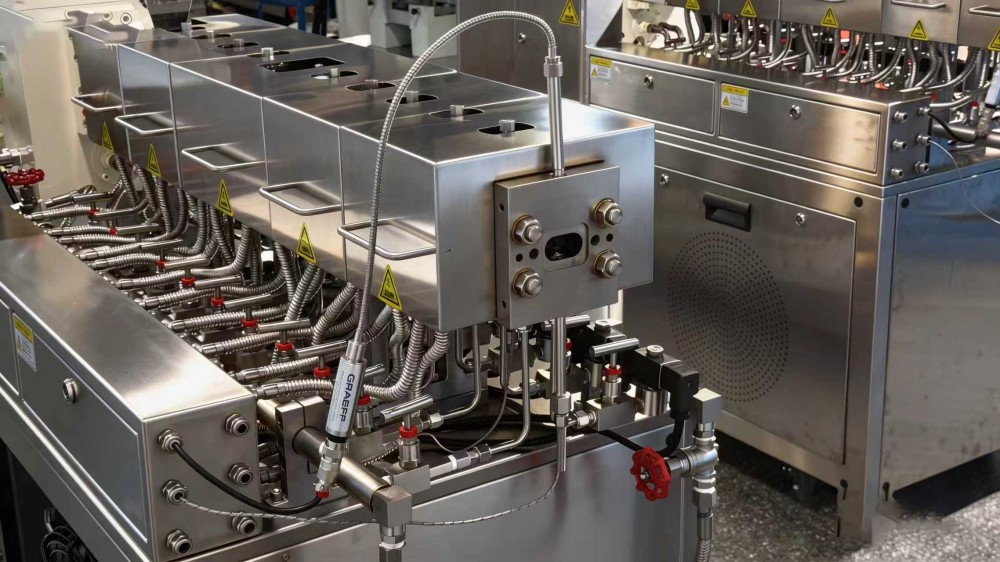
Twin screw granulation is a continuous manufacturing process that uses twin screw extrusion technology to mix powders, binders, and active ingredients into uniform granules through controlled feeding, wetting, mixing, and shaping.
Twin screw granulation is a pharmaceutical processing technology that uses a Twin Screw Extruder to transform powder mixtures into granules with consistent size, density, and composition.
Unlike traditional batch granulation methods, twin screw granulation provides a continuous process where materials are continuously fed, mixed, granulated, and discharged.
A typical formulation may contain:
Active pharmaceutical ingredients
Excipients
Binders
Fillers
Processing aids
Lubricants
The twin screw granulation process controls the interaction between these materials through:
Powder feeding
Liquid addition
Wetting
Mixing
Granule formation
Residence time control
Product discharge
This technology is widely used in pharmaceutical development because it offers consistent processing conditions and better control of critical material properties.
Twin screw granulation is used because it provides continuous and controllable granulation compared with many traditional batch processes.
The main advantages include:
| Advantage | Description |
|---|---|
| Continuous processing | Enables stable and consistent production |
| Better process control | Parameters can be monitored and adjusted during operation |
| Efficient mixing | Provides uniform distribution of ingredients |
| Flexible formulation development | Suitable for different powder systems |
| Reduced processing steps | Combines mixing and granulation in one system |
| Scale-up capability | Supports transition from laboratory to production |
For pharmaceutical applications, consistent granule properties are important because they influence:
Tablet compression
Drug content uniformity
Dissolution performance
Manufacturing repeatability
Twin screw granulation works by transporting powder materials through different processing zones inside the extruder barrel.
The general process includes:
Powder feeding
Liquid binder addition
Wet mixing
Granule growth
Granule shaping
Product discharge
Drying or further processing
Each zone has a specific function.
| Processing Zone | Main Function |
|---|---|
| Feeding zone | Introduces powder materials consistently |
| Mixing zone | Combines powder and binder |
| Granulation zone | Creates uniform granule structure |
| Conveying zone | Controls material movement |
| Discharge zone | Stabilizes output |
The screw configuration determines how much mixing energy, residence time, and shear are applied during granulation.
Screw configuration is one of the most important factors controlling granulation performance.
Twin screw granulators use modular screw elements that can be arranged according to formulation requirements.
Common screw elements include:
Conveying elements
Kneading blocks
Mixing elements
Reverse elements
Transition elements
Different configurations affect:
Powder transport
Binder distribution
Granule size
Density
Residence time
Mixing intensity
For example:
Stronger mixing zones improve ingredient distribution.
Excessive shear may damage sensitive pharmaceutical materials.
Longer residence time may improve granule formation but increase thermal exposure.
A suitable screw configuration creates the right balance between mixing efficiency and product protection.
LEMIX provides modular screw element solutions for twin screw extrusion applications, allowing process optimization for pharmaceutical and material development requirements.
Internal link:
Twin screw granulation can process various pharmaceutical formulations depending on material properties.
Common materials include:
APIs
Excipients
Polymer-based systems
Poor-flowing powders
Low-dose formulations
Moisture-sensitive ingredients
The process is suitable for formulations that require:
Uniform ingredient distribution
Controlled particle size
Improved powder flow
Better compression performance
Material characteristics that influence granulation include:
Particle size
Powder flowability
Binder compatibility
Moisture sensitivity
Thermal stability
Stable feeding is essential because formulation accuracy depends on consistent material input.
Feeding problems may cause:
Variation in API concentration
Uneven granule formation
Output instability
Poor batch consistency
Important feeding factors include:
Powder flow characteristics
Feeder accuracy
Material density
Feed rate
Moisture content
For pharmaceutical granulation, accurate feeding is especially important because small composition changes may affect final product performance.
Liquid addition controls the wetting and binding process during granulation.
The amount and distribution of liquid binder influence:
Granule size
Granule strength
Density
Flowability
Compression behavior
Insufficient liquid addition may result in:
Weak granules
Poor binding
Excessive powder content
Excessive liquid addition may cause:
Over-wetting
Large agglomerates
Unstable processing
Longer drying requirements
A twin screw granulator allows controlled liquid feeding and mixing to improve granule consistency.
Residence time determines how long materials remain inside the granulation system.
It affects:
Mixing quality
Binder distribution
Granule formation
Thermal exposure
Product consistency
A short residence time may lead to:
Incomplete mixing
Poor granule formation
Uneven composition
A long residence time may increase:
Energy exposure
Material degradation risk
Process variation
Residence time is influenced by:
Screw speed
Feed rate
Screw configuration
Barrel filling level
Material properties
Temperature control is important when processing pharmaceutical materials.
Temperature influences:
Material viscosity
Binder behavior
Powder interaction
Granule formation
API stability
Excessive temperature may cause:
API degradation
Polymer changes
Reduced product stability
Low temperature may result in:
Poor mixing
Incomplete processing
Unstable granule formation
A stable temperature profile helps maintain consistent granulation performance.
Twin screw granulation differs from traditional batch granulation in process structure and control.
| Feature | Twin Screw Granulation | Traditional Granulation |
|---|---|---|
| Process type | Continuous | Usually batch |
| Process control | Real-time adjustment | Batch-based control |
| Equipment integration | Mixing and granulation combined | Multiple processing steps |
| Scale-up | Based on process parameters | Often requires additional validation |
| Material exposure | Controlled residence time | Longer batch handling |
The selection depends on formulation requirements, production goals, and quality expectations.
Important process parameters include:
| Parameter | Effect |
|---|---|
| Screw speed | Controls mixing and residence time |
| Feed rate | Determines material loading |
| Liquid addition rate | Controls wetting and granule formation |
| Torque | Indicates processing resistance |
| Temperature | Influences material behavior |
| Residence time | Affects granule development |
| Screw configuration | Controls mixing intensity |
Monitoring these parameters helps maintain consistent granule quality.
Twin screw granulation provides a more predictable path from laboratory development to production because process conditions can be transferred systematically.
Scale-up evaluation includes:
Formulation performance
Screw configuration
Feeding conditions
Residence time
Torque behavior
Granule properties
Production stability
The goal is not only increasing output but maintaining the same material processing behavior.
LEMIX provides laboratory, pilot, and production twin screw extrusion systems to support pharmaceutical process development and scale-up.
Internal links:
Vacuum degassing helps remove unwanted gases and volatile components during processing.
It can remove:
Moisture
Trapped air
Residual solvents
Volatile compounds
Effective degassing helps improve:
Granule consistency
Product appearance
Process stability
The vacuum system must work together with:
Screw configuration
Filling level
Material properties
Process temperature
LEMIX pharmaceutical extrusion systems include vacuum solutions designed to support stable processing conditions.
Internal link:
Granulation defects usually indicate issues with formulation, feeding, or process parameters.
Common problems include:
| Problem | Possible Cause |
|---|---|
| Uneven granule size | Unstable mixing or liquid addition |
| Weak granules | Insufficient binder distribution |
| Over-sized granules | Excessive liquid addition |
| Poor flowability | Incorrect granulation conditions |
| API variation | Feeding instability |
| Process fluctuation | Incorrect screw configuration |
Continuous monitoring helps identify problems before they affect final pharmaceutical performance.
LEMIX provides twin screw extrusion solutions for pharmaceutical development, process optimization, and production.
Solutions include:
| Requirement | LEMIX Support |
|---|---|
| Formulation research | Lab twin screw extruders |
| Scale-up development | Pilot extrusion systems |
| Commercial production | GMP twin screw extruders |
| Screw optimization | Modular screw elements |
| Process stability | Temperature and vacuum control |
| Equipment maintenance | Cleaning and inspection solutions |
Relevant pages:
Twin screw granulation is a continuous pharmaceutical process that combines powder feeding, mixing, binder addition, and granule formation inside a twin screw extrusion system.
The quality of granules depends on controlling screw configuration, feeding stability, liquid addition, temperature, residence time, and process monitoring.
With suitable equipment design and process control, twin screw granulation can improve production consistency, scale-up efficiency, and pharmaceutical manufacturing reliability.