
Search LEMIX Products
Learn how bioplastics are compounded with twin screw extrusion, including feeding, moisture control, screw design, temperature, additives, defects, scale-up, and LEMIX solutions.
Category:Materials & Applications
Author:LEMIX Admin
Date:2026-08-26
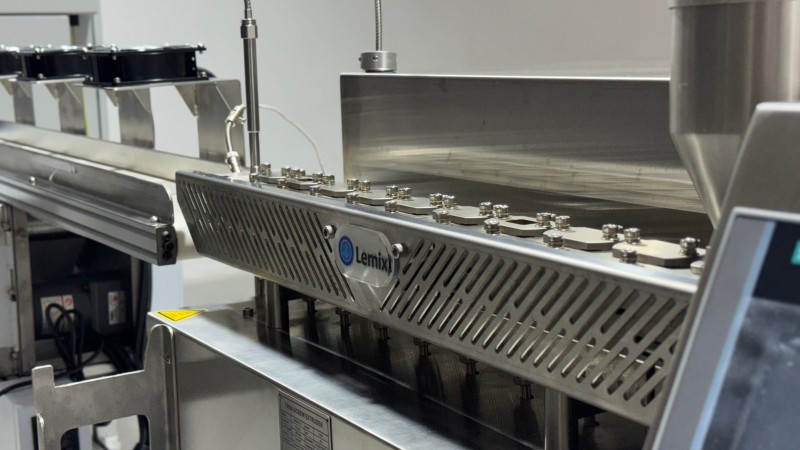
Bioplastics are compounded with twin screw extrusion by combining biodegradable polymers, bio-based materials, additives, and fillers through controlled feeding, melting, mixing, degassing, and pelletizing to achieve stable material performance.
Bioplastics are polymer materials that are produced from renewable resources, biodegradable polymers, or partially bio-based raw materials.
Common bioplastic materials include:
PLA
PBAT
PHA
Starch-based polymers
Bio-based polyamides
Biocomposite materials
Although many bioplastics have environmental advantages, their processing performance often needs improvement before commercial use.
Compounding modifies bioplastics by adding:
Plasticizers
Reinforcing fibers
Mineral fillers
Impact modifiers
Stabilizers
Compatibilizers
Processing aids
Color additives
The purpose of compounding is to improve:
Mechanical strength
Thermal stability
Flexibility
Processability
Moisture resistance
Durability
Application performance
Twin screw extrusion provides a continuous method to combine these materials with controlled processing conditions.
Twin screw extruders are widely used for bioplastic compounding because they provide strong mixing performance, flexible screw configuration, and better control of temperature and residence time.
Bioplastic materials often create unique processing challenges:
Moisture sensitivity
Narrow processing temperature range
Thermal degradation risk
Poor compatibility between polymer and additives
Fiber dispersion difficulties
A twin screw extruder helps manage these challenges through:
Accurate feeding
Efficient melting
Controlled shear
Uniform additive dispersion
Vacuum degassing
Stable pellet production
The equipment allows manufacturers to adjust the process according to different bioplastic formulations.
The bioplastic compounding process usually includes raw material preparation, feeding, melting, mixing, degassing, extrusion, cooling, and pelletizing.
The general process includes:
Raw material preparation
Polymer feeding
Additive or filler feeding
Polymer melting
Mixing and dispersion
Moisture and volatile removal
Melt stabilization
Extrusion
Cooling
Pelletizing
Each stage affects the final material performance.
For example:
Poor moisture control can create bubbles.
Weak mixing can cause additive agglomeration.
Excessive temperature can degrade biodegradable polymers.
Incorrect screw design can reduce dispersion quality.
Stable feeding is essential because bioplastic formulations often contain materials with different flow characteristics.
Examples include:
Lightweight fibers
Powder fillers
Masterbatch additives
Moisture-sensitive polymers
Unstable feeding may cause:
Formulation variation
Output fluctuation
Uneven mechanical properties
Poor color consistency
Unstable pellet quality
Important feeding factors include:
Material flowability
Moisture content
Bulk density
Feeder accuracy
Additive ratio
Side feeder performance
Accurate feeding ensures that each component enters the extrusion process according to the designed formulation.
Moisture control is one of the key challenges in bioplastic processing.
Many biodegradable polymers can absorb moisture, and excessive water content may affect extrusion stability.
Moisture problems may cause:
Hydrolysis
Reduced molecular weight
Surface defects
Bubble formation
Poor mechanical properties
Unstable output
Materials such as PLA, PHA, and starch-based compounds often require careful moisture management.
Twin screw extrusion systems use vacuum degassing sections to remove:
Moisture vapor
Trapped air
Volatile components
A suitable degassing design helps improve pellet quality and process stability.
Screw configuration determines how bioplastic materials are transported, melted, mixed, and discharged.
A typical screw configuration may include:
| Screw Section | Main Function |
|---|---|
| Feeding section | Stable material introduction |
| Conveying section | Material transportation |
| Melting section | Polymer melting |
| Mixing section | Additive and filler dispersion |
| Degassing section | Moisture and volatile removal |
| Metering section | Stable melt output |
For bioplastics, screw design should balance:
Mixing efficiency
Thermal protection
Fiber preservation
Residence time
Melt stability
Excessive shear may increase temperature and damage sensitive biodegradable polymers. Insufficient mixing may result in poor dispersion.
LEMIX provides modular screw elements including conveying elements, kneading blocks, transition elements, special elements, degassing plugs, and side-feeder components for different compounding requirements.
Internal link:
Shear provides the mechanical energy needed for mixing, but the correct level is important for bioplastic processing.
Controlled shear helps:
Improve additive distribution
Disperse fillers
Improve polymer blending
Create uniform compounds
Excessive shear may cause:
Higher melt temperature
Polymer degradation
Reduced molecular weight
Loss of mechanical performance
Insufficient shear may cause:
Poor dispersion
Uneven properties
Visible defects
Inconsistent pellets
The goal is controlled shear that improves material uniformity without damaging the polymer structure.
Temperature control is critical because many biodegradable polymers have limited processing windows.
If temperature is too low:
Polymer melting may be incomplete
Mixing becomes unstable
Output quality decreases
If temperature is too high:
Polymer degradation may occur
Color changes may appear
Mechanical properties may decrease
Odor may increase
The temperature profile should consider:
Polymer type
Additive system
Filler content
Screw speed
Feed rate
Residence time
A stable thermal profile helps maintain consistent bioplastic compound quality.
Many bioplastic compounds use fillers or natural fibers to improve performance.
Common reinforcing materials include:
Wood fiber
Natural fibers
Mineral fillers
Calcium carbonate
Functional additives
These materials can improve:
Stiffness
Strength
Dimensional stability
Cost efficiency
However, filler addition creates challenges:
Poor dispersion
Increased moisture sensitivity
Higher torque
Feeding difficulty
Side feeding is often used when adding large amounts of fillers or fibers because it improves feeding control and protects material flow stability.
Residence time determines how long bioplastic materials remain inside the extruder under heat and shear.
A suitable residence time allows:
Complete melting
Uniform mixing
Effective degassing
Stable pellet formation
Excessive residence time may cause:
Thermal degradation
Color change
Reduced mechanical properties
Short residence time may result in:
Poor dispersion
Incomplete processing
Unstable quality
Residence time is influenced by:
Screw speed
Feed rate
Screw configuration
Barrel filling level
Material viscosity
Bioplastic pellet defects usually indicate problems with materials, process conditions, or equipment settings.
Common defects include:
| Defect | Possible Cause |
|---|---|
| Bubbles | Moisture or poor degassing |
| Uneven color | Poor additive dispersion |
| Weak mechanical properties | Poor compatibility |
| Surface defects | Temperature instability |
| Irregular pellets | Unstable extrusion |
| Dark particles | Thermal degradation |
Continuous pellet inspection helps identify quality problems during production.
LEMIX in-Line Plastic Pellet Inspection systems can detect defects including gels, burnt material, size and cutting problems, cross contamination, yellowing, and color deviation.
Internal link:
in-Line Plastic Pellet Inspection
Long-term extrusion operation can cause screw and barrel wear, especially when processing compounds containing abrasive fillers.
Wear may lead to:
Reduced conveying efficiency
Poor mixing performance
Pressure fluctuation
Lower output
Unstable pellet quality
As the clearance between screw and barrel increases, the extrusion process may no longer perform at its original condition.
LEMIX PROMAC-S Barrel Wear Measurement Device uses laser measurement technology to check barrel internal diameter changes and wear conditions.
Internal link:
Barrel Wear Measurement Device PROMAC-S
Cleaning is important because biodegradable polymers and additives may leave residues inside extrusion components.
Residue can cause:
Contamination
Black specks
Color variation
Material carryover
Longer startup time
Cleaning is especially important during:
Material changes
Color changes
Maintenance shutdowns
LEMIX PRO-COOL Screw Cleaning Machine provides non-destructive cleaning for extrusion screws and components.
Internal link:
PRO-COOL Screw Cleaning Machine
Bioplastic development often starts with laboratory extrusion before moving to pilot and production equipment.
The scale-up process includes:
Formula development
Screw configuration optimization
Feeding verification
Temperature adjustment
Degassing evaluation
Pellet quality testing
Production validation
Important scale-up parameters include:
Torque
Output
Melt temperature
Residence time
Mixing performance
Pellet quality
LEMIX provides laboratory, pilot, and production twin screw extrusion systems to support material development and commercial manufacturing.
Relevant pages:
Improving bioplastic quality requires controlling the complete extrusion process.
Key improvement areas include:
Stable material feeding
Proper drying
Suitable screw configuration
Controlled temperature
Effective degassing
Balanced shear
Regular equipment maintenance
Pellet quality inspection
A successful bioplastic compounding process is not based on maximum mixing intensity. It depends on balancing dispersion, thermal protection, moisture control, and material stability.
LEMIX provides twin screw extrusion solutions for biodegradable polymer processing, polymer compounding, and specialty material development.
Solutions include:
| Application Requirement | LEMIX Support |
|---|---|
| Material research | Lab twin screw extruders |
| Process optimization | Modular screw elements |
| Production compounding | Twin screw extrusion systems |
| Moisture removal | Vacuum degassing systems |
| Pellet quality control | in-Line Plastic Pellet Inspection |
| Equipment maintenance | Cleaning and wear measurement solutions |
Relevant pages:
Bioplastics are compounded with twin screw extrusion by controlling feeding, melting, mixing, moisture removal, temperature, shear, residence time, and pelletizing.
The main challenge is achieving stable dispersion while protecting biodegradable polymers from excessive heat and mechanical stress.
With suitable screw configuration, accurate feeding, effective degassing, and reliable process control,