
Search LEMIX Products
Learn what causes melt pressure fluctuation in twin screw extrusion, including feeding, temperature, screw design, moisture, wear, troubleshooting, and process control.
Category:Process Control & Troubleshooting
Author:LEMIX Admin
Date:2026-08-24
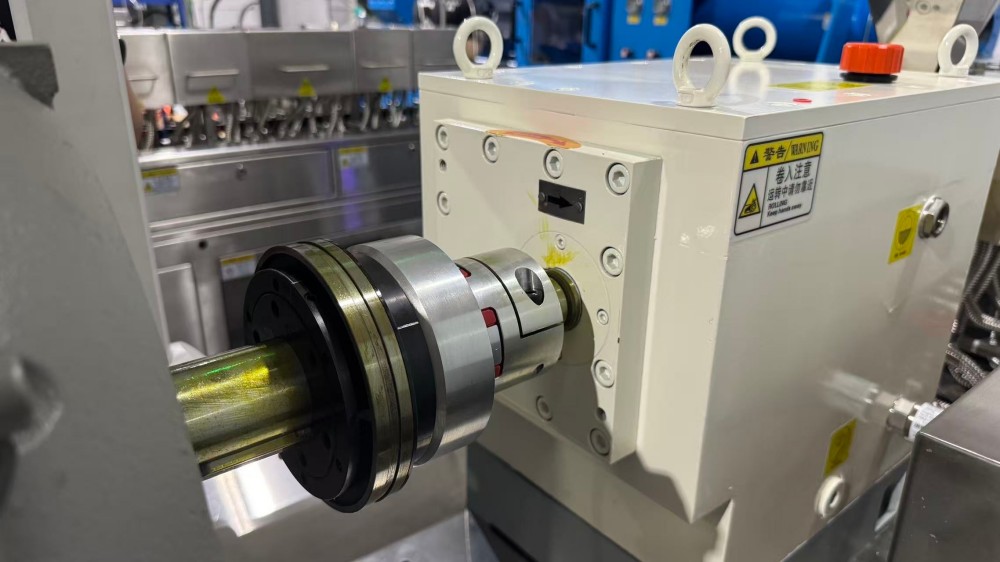
Melt pressure fluctuation in twin screw extrusion is mainly caused by unstable feeding, inconsistent melting, incorrect screw configuration, material variation, temperature changes, or equipment wear that affects melt flow stability.
Melt pressure is the force generated by the polymer melt as it moves through the extruder barrel, screw channels, die head, and downstream equipment.
In twin screw extrusion, melt pressure reflects the overall condition of the extrusion process, including:
Material feeding stability
Polymer melting behavior
Screw conveying performance
Mixing efficiency
Melt viscosity
Die resistance
Equipment condition
A stable melt pressure indicates that the material flow through the extruder is consistent.
Fluctuating melt pressure usually means that one or more process conditions are changing during operation.
Common effects of unstable melt pressure include:
Uneven pellet size
Output variation
Poor surface quality
Unstable product properties
Increased production waste
Difficulty maintaining process parameters
Stable melt pressure is essential for producing consistent extruded materials.
During polymer compounding, pharmaceutical hot melt extrusion, and specialty material processing, the extruder must maintain a controlled melt flow before the material exits through the die.
Pressure stability affects:
Extrudate appearance
Pellet cutting performance
Dimensional accuracy
Material dispersion
Production repeatability
For example, in filled polymer compounds, pressure fluctuation may indicate unstable filler feeding or poor dispersion. In pharmaceutical hot melt extrusion, pressure changes may affect residence time and material history.
A stable process requires coordination between:
Feeding system
Screw configuration
Temperature profile
Vacuum system
Die design
Equipment maintenance
Unstable feeding is one of the most common causes of melt pressure variation.
The extruder depends on a consistent material supply. When the feed rate changes, the amount of material inside the barrel changes, causing pressure fluctuations.
Common feeding problems include:
Material bridging
Poor powder flow
Feeder accuracy issues
Inconsistent bulk density
Improper feeder settings
Side feeder instability
The effects may include:
Sudden pressure increases
Pressure drops
Torque changes
Output variation
Uneven pellet quality
For materials containing fillers, fibers, additives, or pharmaceutical ingredients, accurate feeding becomes even more important because small formulation changes can affect final properties.
Incomplete melting can create unstable flow inside the extruder.
When polymers do not fully melt before reaching mixing or pressure-building zones, the material may contain solid particles that interrupt melt flow.
Possible causes include:
Low barrel temperature
Incorrect screw configuration
Excessive throughput
Insufficient melting zone length
Poor material preparation
Possible results include:
Pressure fluctuation
Increased torque
Poor dispersion
Surface defects
Unstable output
The melting section should provide enough energy to create a uniform melt before intensive mixing and extrusion.
Screw configuration directly influences material movement and pressure development inside the extruder.
A Twin Screw Extruder uses different screw elements for different functions:
| Screw Element | Function |
|---|---|
| Conveying elements | Transport material forward |
| Kneading blocks | Provide mixing and dispersion |
| Reverse elements | Increase filling and residence time |
| Transition elements | Adjust material flow |
| Degassing elements | Remove moisture and volatiles |
Incorrect screw configuration may cause:
Excessive pressure buildup
Poor melting
Unstable residence time
Insufficient mixing
Excessive shear
For example:
Too many restrictive elements may increase pressure.
Insufficient conveying may reduce flow stability.
Poor vent design may affect melt behavior.
LEMIX provides modular screw element solutions that allow process optimization for different materials and applications.
Internal link:
Screw speed influences material transport, shear energy, and residence time.
Increasing screw speed may:
Increase output
Improve conveying
Increase mixing intensity
However, excessive screw speed may also cause:
Higher melt temperature
Increased pressure
Shorter residence time
Unstable flow
Lower screw speed may reduce pressure but can also affect:
Mixing quality
Throughput
Material dispersion
The correct screw speed depends on:
Polymer type
Screw design
Feed rate
Required output
Material sensitivity
Feed rate directly changes the amount of material inside the extruder.
When feed rate increases:
Barrel filling increases
Melt pressure may rise
Torque may increase
Residence time may change
When feed rate decreases:
Output may become unstable
Mixing efficiency may decrease
Pressure may drop
A suitable feed rate should match:
Screw capacity
Melting capability
Die resistance
Material characteristics
Stable feeding is the foundation of stable melt pressure.
Temperature changes affect polymer viscosity, which directly influences melt flow resistance.
When melt temperature decreases:
Viscosity increases
Flow resistance increases
Pressure may rise
When melt temperature increases:
Viscosity decreases
Flow becomes easier
Pressure may decrease
Temperature instability can be caused by:
Incorrect heating settings
Poor cooling performance
Blocked cooling channels
Excessive shear heat
Material variation
A stable temperature profile helps maintain predictable melt pressure.
Internal link:
PRO-CLEAN Water Cooling Channel Cleaning Machine
Raw material variation can create unexpected pressure changes even when machine settings remain unchanged.
Material factors include:
Polymer viscosity
Moisture content
Particle size
Additive concentration
Filler loading
Batch variation
Examples:
Higher viscosity materials may create:
Higher pressure
Higher torque
More heat generation
Higher moisture materials may create:
Gas formation
Unstable flow
Pressure fluctuation
Material consistency is an important factor for stable extrusion.
Moisture can influence melt pressure by creating gas inside the extrusion process.
During processing, moisture may become vapor and cause:
Pressure instability
Bubble formation
Vent problems
Surface defects
This is especially important for materials such as:
TPU
PA
PET
Recycled polymers
Wood plastic composites
Pharmaceutical formulations
Vacuum degassing helps remove:
Moisture
Residual solvents
Volatile components
Trapped air
Internal link:
The die creates resistance against the polymer melt flow.
When die resistance increases:
Melt pressure rises
Motor load increases
Output may become unstable
Possible causes include:
Die blockage
Material degradation
Contamination
Incorrect die design
High-viscosity materials
Regular die inspection and cleaning help maintain stable pressure.
Screw and barrel wear changes the internal clearance of the extrusion system.
As wear increases:
Material backflow may increase
Conveying efficiency decreases
Mixing performance changes
Pressure stability decreases
Wear-related pressure problems may appear as:
Gradual output reduction
Increased pressure variation
Different processing behavior under the same settings
LEMIX PROMAC-S Barrel Wear Measurement Device uses laser measurement technology to check barrel internal diameter changes and wear conditions.
Internal link:
Barrel Wear Measurement Device PROMAC-S
Residual materials inside the extruder can change melt flow conditions.
Contamination may come from:
Previous materials
Degraded polymers
Additives
Carbonized residue
Possible effects include:
Flow restriction
Pressure increase
Black specks
Product contamination
Longer startup time
Regular cleaning helps maintain stable extrusion conditions.
LEMIX PRO-COOL Screw Cleaning Machine provides non-destructive cleaning for extrusion screws and components.
Internal link:
PRO-COOL Screw Cleaning Machine
A systematic approach is required to identify the real cause.
Recommended inspection steps include:
Check feeding stability.
Review screw speed and output changes.
Compare temperature trends.
Check torque variation.
Inspect vacuum performance.
Examine die condition.
Review material moisture.
Measure screw and barrel wear.
Check cleaning condition.
Analyze production history.
Pressure fluctuation is usually the result of multiple factors rather than one single problem.
Melt pressure should be evaluated together with other extrusion data.
Important monitoring parameters include:
| Parameter | Relationship with Pressure |
|---|---|
| Feed rate | Controls material loading |
| Screw speed | Influences flow and shear |
| Torque | Shows processing resistance |
| Melt temperature | Changes viscosity |
| Vacuum level | Affects volatile removal |
| Output rate | Indicates production stability |
| Barrel temperature | Controls melting behavior |
Monitoring these parameters helps determine whether pressure changes come from materials, operation, or equipment.
LEMIX provides twin screw extrusion solutions for polymer compounding, pharmaceutical processing, and specialty material applications.
Solutions include:
| Process Requirement | LEMIX Support |
|---|---|
| Stable extrusion processing | Twin screw extruders |
| Screw optimization | Modular screw elements |
| Moisture and volatile removal | Vacuum degassing systems |
| Pellet quality monitoring | in-Line Plastic Pellet Inspection |
| Screw cleaning | PRO-COOL Screw Cleaning Machine |
| Barrel condition inspection | PROMAC-S Barrel Wear Measurement Device |
Relevant pages:
Melt pressure fluctuation in twin screw extrusion is usually caused by changes in feeding, melting, screw configuration, temperature, material conditions, die resistance, or equipment wear.
Stable melt pressure requires a complete process approach that combines accurate feeding, suitable screw design, controlled temperature, effective degassing, and regular maintenance.
By monitoring key process parameters and maintaining extrusion equipment properly, manufacturers can improve output stability, product consistency, and production efficiency.