
Search LEMIX Products
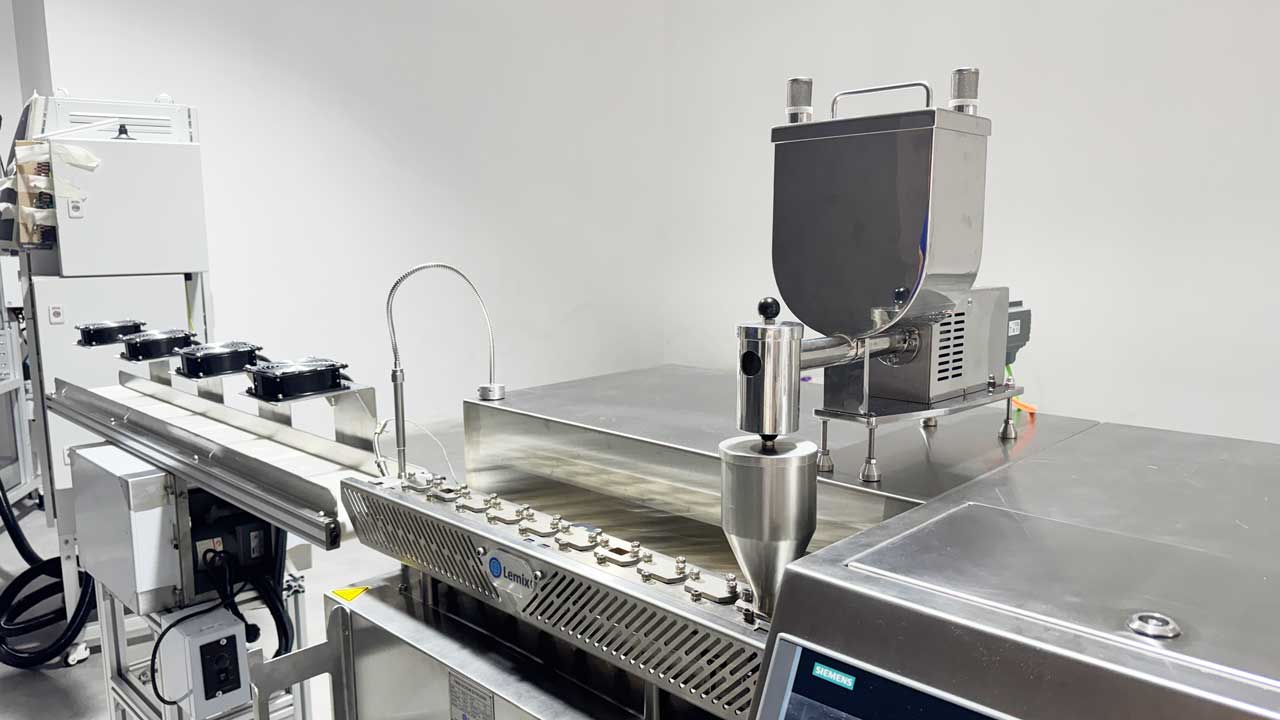
Rigid PVC twin screw extrusion often looks easy on paper. The formula is fixed. The screw speed is set. The barrel temperatures are recorded. The feeder shows a stable number. The die looks normal at the start of production. But after several hours, the output can still drift. The sheet, board, profile, or compound may start to show small thickness changes, pressure movement, surface marks, color shift, or unstable discharge.
The biggest impact on output stability is usually not one single setting. In rigid PVC extrusion, the largest influence often comes from long-run feeding consistency and batch-to-batch material variation. Screw design, temperature control, vacuum, die pressure, and machine wear also matter. But these factors often amplify the first problem. If the dry blend changes slightly, or if the feeding rate moves slightly over time, the whole process window can become unstable.
Rigid PVC is sensitive to heat, shear, lubrication balance, resin absorption, stabilizer performance, and residence time. This means a small upstream change can create a visible downstream change. A stable twin screw extrusion line must control both the material and the machine.
The most important factor is consistent material feeding over long production runs, especially when it is combined with small batch-to-batch changes in PVC resin, stabilizers, lubricants, fillers, and processing aids.
In many rigid PVC lines, the operator first checks screw speed, barrel temperature, or die pressure. These checks are useful. But the real cause may be hidden earlier in the process. A dry blend can look acceptable in routine QC, yet still behave differently during feeding, fusion, and conveying. A stabilizer can remain inside purchase tolerance, yet still change the safe processing window. A lubricant package can pass basic inspection, yet still change wall slip, pressure, and output rate.
This is why unpredictable output stability is often a layered problem. The line does not become unstable because one part fails. The line becomes unstable because small material, feeding, thermal, and mechanical changes build on each other.
Rigid PVC does not behave like many easier-flowing polymers. It needs enough heat and shear to fuse well, but it cannot accept too much heat history. It needs enough lubrication to flow through the screw and die, but too much external lubrication can reduce fusion and create slip. It needs stable conveying, but dry blend bulk density can change with mixing quality, cooling condition, filler ratio, and storage time.
A rigid PVC formula may include PVC resin, stabilizer, lubricant, impact modifier, processing aid, filler, pigment, and other additives. Each material has its own particle size, flow behavior, absorption condition, and heat response. When these materials are mixed into a dry blend, the final blend must feed evenly and fuse in a repeatable way.
For this reason, output stability should not be judged only by the extruder control screen. The control screen shows screw speed, motor load, temperature, and pressure. It does not always show whether the material entering the screw has the same bulk density, same flowability, same fusion behavior, and same lubricant balance as the previous batch.
Feeding stability has a direct effect on output stability. If the feeder delivers material unevenly, the screw filling level changes. When screw filling changes, torque changes. When torque changes, melt temperature and pressure may also change. The die then receives an unstable material flow.
Rigid PVC dry blend can be difficult to feed because it is not a simple pellet. It can contain powders with different densities and different particle shapes. It may bridge inside the hopper. It may pack differently after storage. It may carry heat from mixing. It may also absorb moisture or form small agglomerates if cooling is not enough before storage.
A good feeding check should include more than the feeder display. The production team should check dry blend temperature, hopper flow, bridge risk, feeder screw condition, bulk density, refill cycle, and material level change. A feeder may show a stable set value, but the actual material flow can still fluctuate if the powder is not flowing well.
For long runs, a short test at start-up is not enough. Output may look stable in the first hour, then drift after the hopper level changes, the material temperature changes, or the next batch enters the system. This is why long-run trend data is more useful than one start-up reading.
Batch-to-batch variation is another major reason for output drift. The material may be “within tolerance,” but still not behave the same in extrusion. This is common in rigid PVC because the final process depends on a balance of many ingredients.
PVC resin can vary in apparent density, particle size distribution, K value, absorption behavior, and residual volatile level. Stabilizers can vary in activity and dispersion. Lubricants can vary in melting behavior and interaction with resin. Fillers can vary in moisture, particle size, surface treatment, and oil absorption. These changes may be small on paper, but they can shift fusion and pressure in the extruder.
The problem becomes harder when the factory only checks basic incoming data. The data may confirm that each item is acceptable. But the combined formula may still behave differently. The output may drop slightly. The die pressure may rise slowly. The board thickness may become harder to control. The surface may become dull or rough. The operator may then adjust temperature or screw speed, but the root cause may still be formulation drift.
A better method is to connect raw material batch data with extrusion data. The team should compare resin lot number, additive batch, dry mixing time, hot mixing temperature, cooling temperature, feeder trend, torque trend, melt pressure, output rate, and finished product quality. This makes hidden variation easier to see.
Screw configuration has a strong effect on rigid PVC output stability, but it should be viewed together with material behavior. A screw that works well with one dry blend may not stay stable with another dry blend. The screw must convey powder, build fusion, control shear heat, vent gases when needed, and deliver stable pressure to the die.
A screw with too much shear can overheat rigid PVC and narrow the process window. A screw with weak fusion ability can create poor gelation, unstable pressure, and weak product quality. A screw with poor conveying balance can make output sensitive to feeding changes. A screw with dead zones can increase degradation risk and black specks.
A modular screw system is useful because the screw material and screw combination can be selected according to the formula and process target. LEMIX describes its twin screw extruder with a modular screw system, conveying and mixing elements, kneading elements, intermeshing conveying elements, and a modular barrel system that can be configured for feeding, degassing, and venting. This type of flexibility helps match the process to different PVC compound needs.
For rigid PVC, the screw should not only chase mixing strength. It should support stable powder intake, controlled fusion, short and predictable residence time, and stable discharge pressure.
Temperature setting is not the same as actual material temperature. The barrel temperature display may look stable, but the real material temperature can still change because of shear heat, screw filling, cooling water flow, barrel wear, and formula variation.
Rigid PVC is sensitive to heat history. When the line runs hotter than expected, yellowing, dark specks, odor, surface marks, and degradation risk can increase. When the line runs too cold, fusion can become incomplete, torque can rise, pressure can move, and product strength can become unstable.
Cooling performance becomes important during long production. If the cooling water channel becomes scaled or partly blocked, the barrel may lose heat exchange efficiency. The control system may still try to correct the temperature, but the process response becomes slower. This can make output drift over time.
LEMIX provides a water cooling channel cleaning machine for extruder barrel maintenance. The equipment is designed to inspect water channel volume, flow rate, and leakage without dismantling the barrel, and it helps prevent blockage that can affect barrel temperature control. This type of maintenance is important because stable cooling capacity supports a wider process window in rigid PVC extrusion.
Die pressure is one of the most useful signals in rigid PVC extrusion. But it is often a result rather than the first cause. When pressure moves, the cause may come from feeding, formulation, fusion, screw filling, die temperature, screen condition, or wear.
A slow pressure rise may show material buildup, filter blockage, die restriction, or higher viscosity. A pressure drop may show feeding loss, slip, poor fusion, or lower filling. A pressure wave may show cyclic feeding, unstable refill behavior, or temperature movement.
The correct response is not always to change the die or raise screw speed. The better response is to compare pressure trend with feeder trend, torque trend, zone temperature trend, vacuum trend, and product thickness trend. If the pressure movement follows feeder movement, feeding is the likely first cause. If pressure rises with torque and color shift, heat and degradation may be involved. If pressure changes after a new material batch enters, batch variation should be checked.
A new or well-maintained extruder can absorb small process changes better. A worn extruder is less forgiving. Barrel wear, screw wear, side feeder wear, and die wear can all reduce process stability.
Barrel wear can reduce conveying efficiency and change the way material moves through the screw. Screw wear can reduce compression, mixing, and pressure-building ability. The line may still run, but it becomes more sensitive to material changes. A formula that was stable before may begin to show output drift after long machine use.
LEMIX offers barrel wear measurement devices for preventive inspection. PROMAC-S uses inside laser equipment and a 360° rotating laser sensor to measure barrel wear, diameter changes, and inner surface condition. The system supports accurate inspection and automated reports, which can help plants decide whether instability comes from process settings or mechanical condition.
This matters for rigid PVC because the material is sensitive to residence time, heat, and wall behavior. A worn barrel can turn a small formula drift into a visible output problem.
Output stability should be checked not only by kilograms per hour. It should also be checked by product quality. Rigid PVC board, sheet, profile, or compound may show instability through thickness variation, surface roughness, gel particles, color shift, black specks, pinholes, weak fusion, or cutting problems.
For compound production, pellet inspection can help connect process drift with visible defects. LEMIX provides an in-line plastic pellet inspection system for continuous inspection and sorting. The system is used for compounding lines, cable extruder lines, and high-throughput resin lines. It can detect problems such as burnt material, gels, size and cutting defects, and cross contamination.
This kind of inspection is useful because some defects appear before the output number changes significantly. A line may still produce the target output, but the product quality may already be moving out of the desired range.
| Symptom | Likely Area to Check First | Process Meaning |
|---|---|---|
| Output slowly drops during a long run | Feeding flow, hopper level, bulk density | The screw may not be filled the same way over time |
| Die pressure rises slowly | Fusion, screen pack, die restriction, thermal drift | The melt may be becoming harder to push |
| Torque moves up and down | Feeding consistency, dry blend flow, screw filling | The screw load is not steady |
| Surface becomes rough | Fusion quality, temperature profile, lubricant balance | The material may not be fully or evenly fused |
| Yellowing or dark specks appear | Heat history, dead zones, screw cleaning, stabilizer balance | The material may be degrading |
| Thickness control becomes difficult | Pressure stability, die flow, feeding variation | The die is not receiving a stable melt flow |
| Output changes after a new batch | Resin and additive batch data | The formula may be within tolerance but different in processing |
A stable rigid PVC twin screw extrusion line should be managed as a full system. The material should be checked before the machine is adjusted. The dry blend process should be recorded. The feeding system should be watched over the full run, not only at start-up. The screw and barrel design should match the formula. The temperature system should include both heating and cooling performance. The die pressure should be treated as a signal that needs context. The maintenance team should check wear and cleaning before blaming settings alone.
A practical stability record should include:
PVC resin batch number
Additive and filler batch number
Hot mixing temperature
Cooling temperature before storage
Dry blend storage time
Feeder trend
Screw speed
Torque trend
Barrel temperature trend
Melt pressure trend
Vacuum trend
Output rate
Product thickness or pellet quality
Defect type and defect time
This record helps the team see relationships that are easy to miss during daily production. It also reduces random adjustment. When the data shows the same pattern again, the team can react faster.
The biggest impact on output stability in rigid PVC twin screw extrusion usually comes from material feeding consistency and batch-to-batch formulation behavior. Screw configuration, temperature control, die pressure, cooling performance, and machine wear are also important, but they often make the original material and feeding drift more visible.
Rigid PVC processing needs a narrow and repeatable window. The best result comes from stable dry blend preparation, controlled feeding, suitable screw design, accurate heating and cooling, clean screw surfaces, measured barrel condition, and consistent process data.
For rigid PVC plants, output stability should not be treated as a single machine setting. It should be treated as a linked system between material, feeder, screw, barrel, die, cooling, inspection, and maintenance. A twin screw extrusion system with modular screw design, modular barrel structure, stable torque capacity, pressure and temperature sensing, and long-term maintenance support can help make this process easier to control and repeat.