
Search LEMIX Products
Learn what equipment is needed for a complete twin screw compounding line, including extrusion, feeding, degassing, pelletizing, inspection, and maintenance systems.
Category:Extruder Technology & Selection
Author:LEMIX Admin
Date:2026-09-03
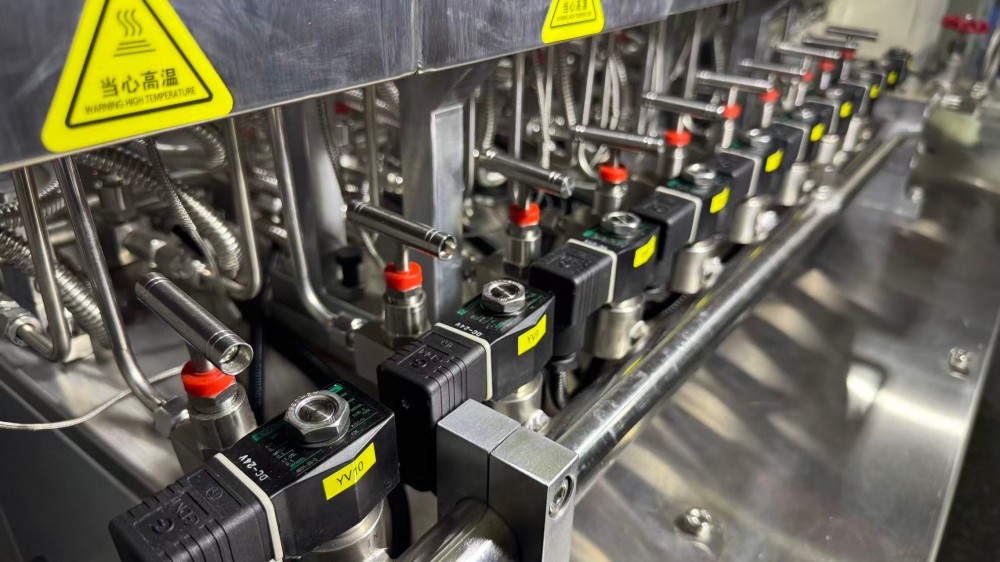
A complete twin screw compounding line requires a Twin Screw Extruder, feeding systems, heating and cooling units, vacuum degassing equipment, pelletizing systems, material handling equipment, and quality control solutions to achieve stable production.
A twin screw compounding line is a complete production system used to mix polymers with additives, fillers, fibers, modifiers, or functional materials to create uniform compound pellets.
The line combines multiple equipment units to complete the entire process:
Raw material feeding
Polymer melting
Mixing and dispersion
Degassing
Extrusion
Cooling
Pelletizing
Quality inspection
Twin screw compounding lines are widely used for:
Engineering plastics
Masterbatch production
Filled polymers
TPE and TPU compounds
Cable compounds
WPC materials
Bioplastics
Battery materials
Specialty polymer applications
A stable production line requires each component to work together because material quality depends on the complete process, not only the extruder itself.
The twin screw extruder is the core equipment of the compounding line.
It performs:
Polymer melting
Material conveying
Additive dispersion
Fiber mixing
Homogenization
Pressure building
A typical twin screw extruder includes:
| Component | Function |
|---|---|
| Twin screws | Transport and mix materials |
| Barrel sections | Provide heating, cooling, and processing zones |
| Drive system | Provides screw rotation power |
| Heating system | Controls material temperature |
| Cooling system | Maintains stable processing conditions |
| Control system | Monitors and adjusts parameters |
The extruder design determines:
Mixing efficiency
Output capacity
Energy consumption
Product consistency
Material processing window
LEMIX provides twin screw extrusion systems for laboratory development, pilot testing, and industrial production.
Internal link:
Feeding systems are essential because accurate material input directly affects compound quality.
A complete line may include:
Main feeder
Side feeder
Liquid feeding system
Additive feeder
Powder feeder
Different materials require different feeding solutions.
Examples:
| Material Type | Suitable Feeding Method |
|---|---|
| Polymer pellets | Main feeder |
| Powder additives | Loss-in-weight feeder |
| Fibers | Side feeder |
| Liquid additives | Liquid feeding system |
| Fillers | Side feeding system |
Stable feeding helps maintain:
Formulation accuracy
Output stability
Consistent mechanical properties
Uniform dispersion
For filled compounds, fibers, and specialty materials, feeding accuracy becomes especially important because small formulation changes can affect final product performance.
A loss-in-weight feeder controls material feeding by continuously measuring weight reduction during operation.
It helps maintain:
Accurate feeding rate
Stable formulation ratio
Continuous production consistency
Loss-in-weight feeding is commonly used for:
Powders
Additives
Fillers
Low-dose components
Without accurate feeding, the extrusion process may experience:
Output fluctuation
Uneven composition
Poor product performance
A side feeder introduces materials that are difficult to feed through the main hopper.
Common side-fed materials include:
Glass fibers
Wood fibers
Mineral fillers
Functional additives
Side feeding helps prevent:
Feeding blockage
Material degradation
Poor dispersion
It is especially useful when processing high filler-content compounds.
A suitable side feeder position and feeding rate help maintain stable mixing and protect sensitive materials.
Vacuum degassing equipment removes unwanted gases and volatile components during extrusion.
It can remove:
Moisture
Residual solvents
Trapped air
Low molecular weight compounds
Vacuum degassing improves:
Pellet appearance
Material density
Surface quality
Process stability
Applications requiring effective degassing include:
Recycled plastics
WPC compounds
Engineering plastics
Pharmaceutical extrusion
Moisture-sensitive materials
The vacuum system must work together with:
Screw configuration
Barrel filling level
Processing temperature
Material characteristics
After the compound exits the die, cooling equipment solidifies the extruded strands before pelletizing.
Common cooling methods include:
Water cooling
Air cooling
Cooling conveyor systems
The cooling system affects:
Pellet shape
Material structure
Surface quality
Production stability
Poor cooling may cause:
Soft strands
Deformation
Uneven pellet cutting
Material sticking
The cooling method should match:
Polymer type
Output rate
Product requirements
Pelletizing equipment converts extruded strands into uniform pellets.
Common pelletizing systems include:
Strand pelletizers
Water ring pelletizers
Underwater pelletizers
The selection depends on:
Material characteristics
Output requirements
Pellet size requirements
Production environment
Uniform pellets are important because they affect:
Packaging
Transportation
Downstream processing
Product consistency
A strand pelletizing system usually includes:
Extrusion through die head
Strand cooling
Strand drying
Pellet cutting
Pellet collection
It is commonly used for:
Engineering plastics
Filled polymers
Masterbatch
General compounding materials
Advantages include:
Simple operation
Easy maintenance
Flexible application range
An underwater pelletizing system cuts molten polymer directly at the die surface under water.
It is suitable for materials requiring:
High output
Stable pellet shape
Continuous operation
Advantages include:
Automated pellet production
Reduced manual handling
Consistent pellet size
The selection depends on production requirements and material behavior.
Temperature control equipment maintains stable processing conditions throughout the extrusion line.
A complete system may include:
Barrel heaters
Cooling channels
Temperature controllers
Cooling water systems
Temperature affects:
Polymer viscosity
Mixing performance
Product quality
Material stability
Incorrect temperature control may cause:
Poor melting
Material degradation
Pressure fluctuation
Uneven output
Modern compounding lines use monitoring equipment to track production stability.
Important monitoring parameters include:
| Parameter | Purpose |
|---|---|
| Torque | Shows processing resistance |
| Pressure | Indicates melt flow stability |
| Temperature | Controls material condition |
| Output | Monitors production consistency |
| Pellet appearance | Evaluates product quality |
Continuous monitoring helps identify problems before they affect large production batches.
Pellet inspection helps detect defects after extrusion and pelletizing.
Common defects include:
Black spots
Burnt particles
Color deviation
Size variation
Contamination
Cutting defects
LEMIX in-Line Plastic Pellet Inspection systems help monitor pellet quality during production.
Internal link:
In-Line Plastic Pellet Inspection
Regular maintenance helps maintain extrusion performance and reduce downtime.
Important maintenance equipment includes:
Screw cleaning systems
Barrel inspection tools
Spare screw elements
Wear measurement devices
Maintenance helps prevent:
Reduced output
Poor mixing
Contamination
Unexpected shutdowns
LEMIX provides extrusion maintenance solutions for screw cleaning, barrel inspection, and component replacement.
Relevant pages:
PRO-COOL Screw Cleaning Machine
Barrel Wear Measurement Device PROMAC-S
Screw configuration determines how materials are processed inside the extruder.
Different screw elements control:
Conveying
Melting
Mixing
Dispersion
Degassing
Pressure development
A complete line should match screw design with:
Material type
Filler content
Output target
Product requirements
LEMIX provides modular screw elements for different compounding applications.
Internal link:
Twin screw compounding lines are used across many industries because they can process a wide range of polymer systems.
Applications include:
| Industry | Typical Materials |
|---|---|
| Automotive | Engineering plastics |
| Packaging | Modified polymers |
| Construction | WPC and filled compounds |
| Electronics | Flame-retardant materials |
| Energy | Battery-related materials |
| Medical | Pharmaceutical materials |
Each application requires different combinations of:
Feeding systems
Screw configuration
Temperature control
Degassing
Pelletizing equipment
Equipment selection should consider:
Material formulation
Required output
Processing temperature
Filler content
Product specifications
Future production expansion
Important questions include:
What materials will be processed?
What output capacity is required?
Are fillers or fibers included?
Is degassing necessary?
What pellet type is required?
A properly designed line improves:
Production efficiency
Product consistency
Equipment reliability
Operating cost control
LEMIX provides twin screw extrusion solutions covering material development, process optimization, production, and maintenance.
Solutions include:
| Requirement | LEMIX Solution |
|---|---|
| Laboratory research | Lab twin screw extruder |
| Production compounding | Twin screw extrusion system |
| Screw optimization | Modular screw elements |
| Quality control | Pellet inspection system |
| Maintenance | Cleaning and wear measurement equipment |
Relevant pages:
A complete twin screw compounding line includes much more than the extruder itself. Feeding systems, screw configuration, vacuum degassing, cooling, pelletizing, monitoring, and maintenance equipment all influence final product quality.
By selecting suitable equipment and optimizing the complete process, manufacturers can achieve stable output, consistent pellets, and reliable long-term production performance.