
Search LEMIX Products
Learn what causes poor dispersion in polymer compounding, including screw design, shear, feeding, temperature, moisture, filler wetting, wear, cleaning, pellet defects, and LEMIX extrusion support.
Category:Process Control & Troubleshooting
Author:LEMIX Admin
Date:2026-08-11
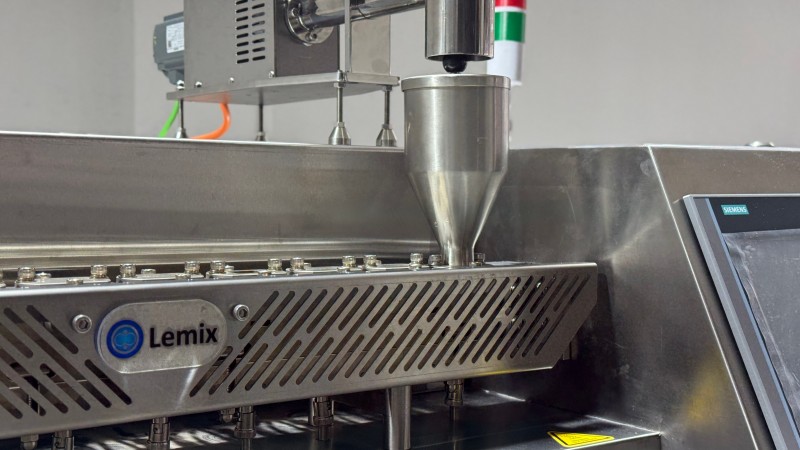
Poor dispersion in polymer compounding is usually caused by weak screw mixing, wrong screw configuration, unstable feeding, poor filler wetting, low melt temperature, excessive throughput, moisture, agglomerated additives, screw wear, barrel wear, or residue left from previous production.
Poor dispersion means fillers, pigments, fibers, flame retardants, additives, APIs, or other ingredients are not evenly distributed or broken down inside the polymer matrix.
In polymer compounding, dispersion has two related meanings:
Distributive mixing: spreading ingredients evenly through the polymer
Dispersive mixing: breaking agglomerates, particles, droplets, or clusters into smaller forms
A compound may look mixed at first glance but still contain filler clusters, pigment streaks, unmelted polymer, gel particles, fiber bundles, API-rich zones, or localized additive concentration. These defects can later affect appearance, mechanical properties, electrical performance, extrusion stability, molding behavior, or customer acceptance.
Dispersion matters because most compounded materials are designed to deliver a specific performance. If the formulation is not dispersed correctly, the material may fail even when the raw material formula is correct.
Poor dispersion can cause:
Color streaks
Filler agglomerates
Gel particles
Weak mechanical strength
Poor impact resistance
Surface defects
Black specks
Unstable pellet quality
Inconsistent hardness
Electrical failure in cable compounds
Poor dissolution or content uniformity in pharmaceutical HME
Weak reinforcement in glass fiber or carbon fiber compounds
A practical production viewpoint is this: poor dispersion is often not one defect. It is the visible result of several small process mismatches happening at the same time.
The most common causes of poor dispersion are related to screw design, feeding, melting, shear, residence time, filler wetting, temperature, venting, wear, and cleaning.
| Cause | What Happens | Typical Result |
|---|---|---|
| Wrong screw configuration | Material is not mixed at the right point | Streaks, gels, agglomerates |
| Insufficient shear | Particles are not broken down | Poor dispersive mixing |
| Excessive shear | Material degrades or fibers break | Black specks, weak strength |
| Low melt temperature | Polymer does not wet fillers well | Filler clusters, high torque |
| Too high throughput | Residence time becomes too short | Incomplete mixing |
| Poor side feeding | Fillers enter unstable zones | Agglomerates, fiber bundles |
| Moisture or volatiles | Gas disturbs melt uniformity | Bubbles, voids, rough pellets |
| Screw or barrel wear | Clearance changes and mixing weakens | Drift, poor repeatability |
| Poor cleaning | Old material enters the new batch | Contamination, black specks |
| Unstable feeding | Formula ratio changes during operation | Color and property variation |
A strong troubleshooting method is to connect each dispersion defect with process data instead of adjusting temperature or screw speed randomly.
Screw configuration affects dispersion because it decides where the material is conveyed, melted, kneaded, mixed, vented, pressurized, and discharged.
If the screw has too few mixing elements, additives and fillers may not be distributed evenly. If the screw has too many aggressive kneading blocks, the compound may overheat, degrade, or break fibers.
Common screw configuration problems include:
Mixing starts before the polymer is properly melted
Fillers are added too early
Kneading blocks are too weak
Kneading blocks are too aggressive
The side-feeding zone is overfilled
The venting section does not open the melt surface
Pressure-building sections are placed too early
Residence time is too short
Dead zones retain old material
LEMIX screw element options include conveying elements, kneading blocks, transition elements, special elements, barrels, degassing plugs, side-feeder plugs, side-feeder adapters, shafts, die plates, and breaker plates.
Internal link: Screw Elements for TSE
Conveying elements mainly move material forward. They create lower shear than kneading blocks and are useful for feeding, transport, venting, and pressure movement.
If a screw has too many conveying elements and too few mixing sections, the material may pass through the barrel too quickly. The result can be weak dispersion, poor filler wetting, unmelted particles, and inconsistent pellet quality.
However, conveying elements are still important. They help control fill level and prevent excessive shear. Heat-sensitive materials, such as PVC, TPE/TPU, bio-plastics, thermoset premixes, and pharmaceutical formulations, often need gentle transport in selected zones.
A suitable screw design does not remove conveying elements. It uses them to place mixing energy at the correct location.
Kneading blocks are used to increase mixing, melting, filler wetting, and dispersion. They can improve both distributive and dispersive mixing.
Kneading blocks help when the compound contains:
Pigments
Carbon black
Mineral fillers
Flame retardants
Glass fiber
Carbon fiber
Lubricants
Stabilizers
APIs and excipients
High-viscosity polymer blends
But kneading blocks can also create problems if used incorrectly. Too much kneading may increase torque, shear heat, polymer degradation, fiber breakage, black specks, and screw wear.
A useful field rule is: the best screw is not the most aggressive screw. It is the screw that gives enough dispersion with the lowest unnecessary heat and shear.
Insufficient shear causes poor dispersion because agglomerates, particles, droplets, or filler clusters are not broken down enough inside the melt.
Signs of insufficient shear include:
Pigment specks
Filler clusters
White spots
Carbon black streaks
Flame-retardant agglomerates
Poor surface finish
Gels from incomplete melting
Weak mechanical performance
Unstable color
Poor electrical performance in cable compounds
When shear is too low, increasing barrel temperature may help melting but may not fully solve dispersion. The process may need a different screw element layout, better kneading position, improved side feeding, higher screw speed, lower feed rate, or better raw material preparation.
Excessive shear can make the compound look well mixed at first, but it may damage the material.
Excessive shear can cause:
Polymer degradation
Black specks
Yellowing
Burnt material
Fiber length loss
High torque
High melt temperature
API degradation in pharmaceutical HME
Premature curing in thermosets
Crosslinking risk in reactive systems
Faster screw and barrel wear
For glass fiber and carbon fiber reinforced compounds, excessive shear can reduce fiber length and weaken reinforcement performance. For pharmaceutical hot melt extrusion, excessive shear can increase impurity risk. For PVC and thermosets, excessive shear can trigger degradation or early reaction.
Good dispersion should be measured by both uniformity and material integrity.
Melt temperature affects dispersion because the polymer must be soft enough to wet fillers, pigments, additives, or APIs.
If melt temperature is too low, the material may show:
High torque
Poor filler wetting
Unmelted particles
Poor color distribution
Strand instability
Rough pellet surface
Filler agglomerates
Weak mechanical properties
If melt temperature is too high, the material may show:
Yellowing
Black specks
Burnt material
Odor
Degradation
Poor molecular weight retention
Excessive melt flow
Unstable pelletizing
The correct temperature is not simply the highest safe temperature. It is the temperature that allows good wetting and mixing while keeping degradation risk under control.
Feed rate affects dispersion because it controls how much material enters the screw per unit time. If feed rate is too high for the screw configuration, the material may not receive enough mixing time or shear energy.
High feed rate can cause:
Short residence time
Poor mixing
High torque
Vent flooding
Poor side feeding
Pressure fluctuation
Irregular pellet size
Incomplete filler wetting
Low feed rate can also cause problems. The screw may become underfilled, reducing mixing efficiency and pressure stability.
The practical target is a stable fill level. Feed rate should be matched with screw speed, screw design, torque, temperature, and downstream capacity.
Side feeding affects dispersion because fillers, fibers, or heat-sensitive additives often need to enter after the base polymer has already melted.
If side feeding is poorly designed, the compound may show:
Filler agglomerates
Fiber bundles
Poor wetting
Feeding surging
Torque fluctuation
Material backflow
Vent contamination
Irregular pellet quality
A good side-feeding section should have:
Stable polymer melt before side feeding
Enough free volume at the side-feeder opening
Controlled fill level
Correct screw speed and feed rate
Enough downstream mixing length
No excessive fiber-damaging shear
Proper venting if moisture or trapped air is present
For reinforced engineering plastics, side feeding should not only add fiber. It should introduce fiber into a melt condition that can wet and distribute it properly.
Moisture causes poor dispersion by disturbing melt flow, filler wetting, venting, and polymer stability. It can also create bubbles, voids, hydrolysis, strand breakage, and inconsistent pellet density.
Moisture-related dispersion problems are common in:
TPU
PA
PET
PLA
Bio-plastics
Wood-plastic compounds
Filled polymers
Pharmaceutical HME formulations
Recycled materials
Powder blends
Drying is not only a material preparation step. It affects the entire compounding process. If moisture remains in the system, screw configuration and temperature adjustment may only hide the problem temporarily.
Internal link: How Does Vacuum Degassing Work in Twin Screw Extrusion?
Vacuum venting affects dispersion by removing moisture, trapped air, residual solvent, low-molecular volatiles, and gas pockets from the melt.
Weak venting can create:
Bubbles
Voids
Strand breakage
Rough pellet surface
Odor
Unstable pressure
Poor pellet density
Defects during downstream extrusion or molding
In pharmaceutical extrusion, LEMIX uses a dedicated large-pitch vacuum section and a multistage high-vacuum system to remove moisture, residual solvents, and low-molecular-weight impurities. The same process logic applies to polymer compounding: a stable vacuum section helps prevent gas-related defects and supports more consistent final material quality.
Internal link: Pharmaceutical Extrusion
Raw material agglomerates can enter the extruder already clustered. If the screw does not have enough dispersive capability, those agglomerates may remain in the final pellets.
Agglomerates may come from:
Pigment clumping
Flame-retardant powder lumps
Filler moisture
Poor premixing
Poor storage
Static buildup
Recycled material contamination
Inconsistent particle size
Low-quality masterbatch
Compacted powder during transport
A Twin Screw Extruder can improve dispersion, but it should not be expected to solve every raw material problem. Good compounding begins with stable raw material quality, controlled feeding, and proper premixing when needed.
Screw and barrel wear can reduce dispersion because wear changes screw-to-barrel clearance, conveying efficiency, pressure building, residence time, and self-cleaning behavior.
When wear develops, the line may show:
Poor filler dispersion
More gels
More black specks
Lower output at the same screw speed
Higher torque fluctuation
Pressure instability
Color variation
More residue retention
Longer cleaning time
Reduced repeatability
A process may look like it has a formula problem when the real problem is mechanical wear. If the same recipe and same settings no longer produce the same pellet quality, screw and barrel condition should be checked.
LEMIX PROMAC-S Barrel Wear Measurement Device uses inside laser equipment and a 360° rotating laser sensor to measure barrel wear, diameter changes, and inner surface condition.
Internal link: Barrel Wear Measurement Device PROMAC-S
Poor screw cleaning affects dispersion because old material, carbonized residue, pigments, gels, degraded polymers, or cross-contamination can stay on screw elements, die plates, breaker plates, shafts, nozzles, and other extrusion components.
Poor cleaning can cause:
Black specks
Burnt particles
Color contamination
Gel defects
Streaks
Odor
Pressure fluctuation
Longer purging time
False dispersion problems
Customer complaints
LEMIX PRO-COOL Screw Cleaning Machine is designed for efficient, non-destructive cleaning of extruder screws and extrusion components. It removes polymer residue and contaminants without flame burning, manual brushing, toxic smoke, or surface damage.
Internal link: PRO-COOL Screw Cleaning Machine
Poor dispersion often appears as visible pellet defects. These defects may be detected manually, but continuous inspection gives better production feedback.
Common signs include:
| Pellet Sign | Possible Dispersion Cause |
|---|---|
| Gels | Poor melting, degradation, unmixed polymer |
| Color deviation | Pigment feeding drift or weak distribution |
| Black specks | Degraded residue or contamination |
| Burnt material | Excessive temperature or dead zones |
| Filler clusters | Poor wetting or insufficient shear |
| Yellowing | Thermal degradation or long residence time |
| Size variation | Pressure fluctuation or unstable melt flow |
| Cross contamination | Poor cleaning or material carryover |
LEMIX in-Line Plastic Pellet Inspection supports real-time continuous pellet inspection and sorting on compounding lines, cable extruder lines, and high-throughput resin lines. It can detect burnt material, gels, size and cutting defects, cross contamination, yellowing, and color deviation.
Internal link: in-Line Plastic Pellet Inspection
In cable compounds, poor dispersion can create serious quality risks because cable materials must maintain stable insulation, sheathing, color, mechanical behavior, and electrical performance.
Poor dispersion may cause:
Filler agglomerates
Flame-retardant instability
Black specks
Gel particles
Bubbles
Color mismatch
Surface roughness
Weak electrical insulation
XLPE contamination risk
PVC degradation defects
For XLPE-insulated cable materials, contamination can be especially serious because one contaminated pellet may create electrical test failure. This makes dispersion, cleaning, pellet inspection, and contamination control especially important.
Internal links:
In pharmaceutical hot melt extrusion, poor dispersion can affect API content uniformity, amorphous solid dispersion quality, dissolution behavior, impurity control, and batch consistency.
A pharmaceutical HME process must balance mixing and material stability. Too little mixing can leave API-rich zones or incomplete dispersion. Too much shear or heat can increase degradation risk.
LEMIX pharmaceutical extrusion guidance focuses on four major goals:
Thermal stability
Uniform mixing
Amorphous stability
Impurity control
For pharmaceutical HME, poor dispersion should be reviewed together with feeding accuracy, screw configuration, temperature, shear, residence time, vacuum devolatilization, cooling, PAT monitoring, and GMP records.
Internal link: Pharmaceutical Extrusion
Poor dispersion should be troubleshot by matching defect type with process data. Randomly increasing temperature or screw speed can create new problems.
A practical troubleshooting sequence:
Identify the defect type: gel, streak, agglomerate, color deviation, black speck, or bubble.
Record when the defect appeared.
Check raw material batch and moisture.
Review feeder stability and feed rate.
Compare screw speed, torque, and pressure trends.
Check melt temperature and barrel temperature response.
Review screw configuration and side-feeding position.
Check vacuum venting and vent flooding.
Inspect downstream pelletizing and cutting.
Review screw cleaning and material changeover history.
Check screw and barrel wear if the defect repeats.
Use pellet inspection data to verify whether the correction worked.
The fastest correction is not always the best correction. The best correction removes the first unstable cause.
Poor dispersion can be fixed by improving raw material preparation, feeding stability, screw configuration, temperature control, shear balance, venting, cleaning, and wear management.
Possible fixes include:
| Problem | Possible Fix |
|---|---|
| Filler agglomerates | Improve side feeding, add proper kneading, adjust feed rate |
| Pigment streaks | Stabilize feeder, improve premix, adjust mixing section |
| Gels | Improve melting, review temperature, check residue and residence time |
| Fiber bundles | Change side feeding position and downstream distribution elements |
| Black specks | Clean screws and die, reduce hot spots, inspect dead zones |
| Bubbles | Improve drying and vacuum venting |
| Poor repeatability | Check barrel wear, screw wear, feeding trend, and process records |
| Color deviation | Check masterbatch dosing, dispersion, and raw material variation |
| API dispersion issue | Review screw shear, temperature, residence time, and PAT data |
A good fix should be verified by pellet quality, process stability, and final material performance, not only by a cleaner visual sample.
A useful dispersion record should connect formula, equipment, process settings, and final quality.
Recommended records include:
Polymer grade
Filler or additive type
Filler loading
Pigment or masterbatch dosage
Material drying condition
Feed rate
Side feeder rate
Screw speed
Torque trend
Melt pressure trend
Barrel temperature trend
Vacuum level
Screw configuration
Residence time estimate
Pellet defect trend
Screw cleaning history
Barrel wear record
Final product test result
The most useful record answers three questions: what changed first, which defect appeared next, and which correction reduced the defect.
LEMIX supports better dispersion through twin screw extrusion systems, screw elements, lab and pilot testing, pellet inspection, screw cleaning, barrel wear measurement, and Spare Parts.
| Dispersion Need | LEMIX Product Support |
|---|---|
| Polymer compounding and mixing | Twin Screw Extruder |
| Screw configuration development | Screw Elements for TSE |
| Lab formulation trials | PROMIX-11 Lab Scale Twin Screw Extruder |
| Pilot process confirmation | PROMIX-16 / PROMIX-26 systems |
| Production compounding | PROMIX-40 / PROMIX-50 systems |
| Pellet defect monitoring | in-Line Plastic Pellet Inspection |
| Screw residue removal | PRO-COOL Screw Cleaning Machine |
| Barrel condition checking | PROMAC-S / PROMAC-X Barrel Wear Measurement Device |
| Long-term reliability | Barrels, shafts, gearboxes, die plates, breaker plates |
| Pharmaceutical process control | GMP Twin Screw Extruder |
Relevant pages:
Poor dispersion in polymer compounding is usually caused by incorrect screw configuration, insufficient or excessive shear, unstable feeding, poor filler wetting, low melt temperature, excessive feed rate, moisture, raw material agglomerates, weak vacuum venting, screw residue, screw wear, or barrel wear.
The best way to solve poor dispersion is to treat it as a process-chain problem. Raw material preparation, feeding, melting, side feeding, screw design, shear, residence time, vacuum, pelletizing, inspection, cleaning, and wear condition should be reviewed together.
LEMIX supports dispersion improvement with twin screw extruders, modular screw elements, pellet inspection, non-destructive screw cleaning, barrel wear measurement, lab and pilot scale testing, GMP extrusion systems, and long-term spare parts support.