
Search LEMIX Products
Learn how WPC compounds are produced with twin screw extrusion, including wood-polymer mixing, moisture control, screw design, temperature, defects, scale-up, and LEMIX solutions.
Category:Extruder Technology & Selection
Author:LEMIX Admin
Date:2026-08-20
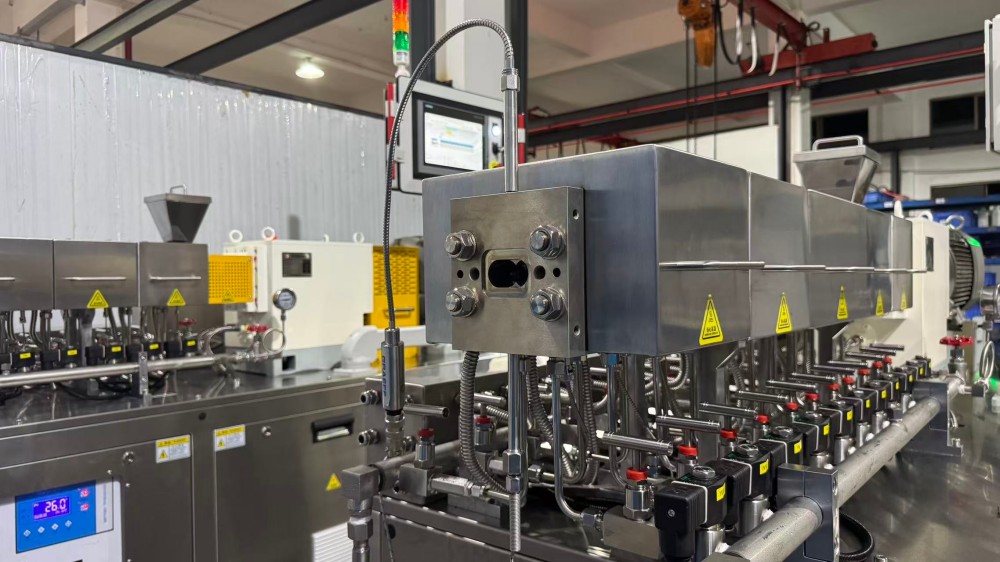
WPC compounds are produced with twin screw extrusion by mixing wood fibers or wood flour with polymers, additives, and modifiers under controlled temperature, shear, feeding, and degassing conditions to create stable composite pellets.
WPC stands for Wood Plastic Composite. WPC compounds combine wood-based materials with thermoplastic polymers to create composite materials with both natural fiber characteristics and plastic processing advantages.
Typical WPC formulations contain:
Wood flour or wood fiber
Thermoplastic polymers
Coupling agents
Lubricants
Stabilizers
Color additives
Processing modifiers
Common polymers used in WPC production include:
Polyethylene
Polypropylene
PVC
Other thermoplastic materials
WPC materials are widely used in:
Outdoor decking
Fencing
Wall panels
Automotive components
Furniture products
Building materials
Decorative profiles
The quality of WPC compounds depends heavily on the dispersion of wood materials, moisture control, polymer wetting, and stable extrusion processing.
Twin screw extruders are widely used for WPC compounding because they provide strong mixing ability, flexible feeding options, and better control over moisture removal.
Wood-based materials create several processing challenges:
High moisture content
Irregular particle size
Poor compatibility with polymers
Risk of thermal degradation
Need for uniform dispersion
A twin screw extruder can handle these challenges through:
Multiple feeding zones
Strong distributive mixing
Controlled shear
Vacuum degassing
Adjustable screw configuration
Continuous pellet production
Compared with simple melting equipment, twin screw extrusion provides better control of the interaction between wood materials and polymer matrix.
The WPC compounding process usually includes material preparation, feeding, mixing, degassing, extrusion, cooling, and pelletizing.
The typical process includes:
Wood material preparation
Polymer feeding
Additive feeding
Polymer melting
Wood fiber or wood flour mixing
Moisture and volatile removal
Melt homogenization
Extrusion
Cooling
Pelletizing
Each stage affects final WPC properties.
For example:
Poor drying can create bubbles.
Poor mixing can create wood agglomerates.
Excessive temperature can damage wood components.
Weak polymer wetting can reduce mechanical strength.
Feeding is one of the most important steps in WPC production because wood materials and polymers usually have very different flow characteristics.
Wood flour is lightweight and can easily cause feeding instability. Moisture, particle size, and bulk density can also affect feeding accuracy.
Common feeding problems include:
Material bridging
Uneven wood content
Fluctuating output
Inconsistent mechanical properties
Color variation
Stable feeding requires control of:
Wood material moisture
Particle size distribution
Feeder design
Feed rate
Side feeding conditions
For high wood content WPC compounds, accurate feeding becomes especially important because small formulation changes can influence product performance.
Moisture control is a major challenge in WPC production.
Wood materials naturally absorb water, and excessive moisture can create extrusion defects.
High moisture may cause:
Bubble formation
Surface defects
Poor bonding between wood and polymer
Lower mechanical strength
Unstable extrusion pressure
Poor pellet quality
Vacuum degassing is commonly used during WPC extrusion to remove:
Water vapor
Trapped air
Volatile components
A properly designed venting section helps maintain stable melt conditions and improve final compound quality.
Internal link:
How Does Vacuum Degassing Work in Twin Screw Extrusion?
Screw configuration determines how wood materials and polymers are transported, melted, mixed, and degassed inside the extruder.
A typical WPC screw configuration may include:
| Screw Section | Main Function |
|---|---|
| Feeding section | Stable material introduction |
| Conveying section | Material transport |
| Melting section | Polymer melting |
| Mixing section | Wood-polymer dispersion |
| Degassing section | Moisture removal |
| Metering section | Stable discharge |
The screw design must balance:
Mixing efficiency
Fiber protection
Temperature control
Residence time
Moisture removal
Too much shear may damage wood fibers and increase temperature. Too little mixing may create poor dispersion and weak bonding.
LEMIX provides modular screw elements including conveying elements, kneading blocks, transition elements, special elements, degassing plugs, and side-feeder components for different compounding requirements.
Internal link:
Shear provides mixing energy during extrusion, but the correct level is important for WPC processing.
Controlled shear helps:
Improve wood dispersion
Increase polymer wetting
Reduce particle clusters
Create uniform compounds
Excessive shear may cause:
Higher melt temperature
Wood degradation
Fiber damage
Darkening
Odor generation
Insufficient shear may cause:
Poor wood distribution
Weak interface bonding
Uneven appearance
Mechanical property variation
The goal is balanced shear that creates good dispersion while protecting wood components.
Temperature control is critical because both polymers and wood materials have processing limitations.
If temperature is too low:
Polymer melting may be incomplete
Mixing becomes unstable
Wood particles may not be properly coated
If temperature is too high:
Wood components may degrade
Color may change
Odor may increase
Mechanical performance may decrease
The temperature profile should consider:
Polymer type
Wood content
Additive system
Screw speed
Feed rate
Residence time
A stable temperature profile helps create consistent WPC compounds.
Different polymers create different processing requirements.
Common polymer systems include:
| Polymer | Typical Characteristics |
|---|---|
| PE | Good moisture resistance and flexibility |
| PP | Higher stiffness and temperature resistance |
| PVC | Requires careful thermal control |
| Other thermoplastics | Depends on application requirements |
The polymer affects:
Processing temperature
Viscosity
Wood compatibility
Final mechanical properties
Extrusion stability
The screw configuration and process parameters should match the selected polymer system.
Additives improve the interaction between wood materials and polymer matrix.
Common additives include:
Coupling agents
Lubricants
Stabilizers
Colorants
Processing aids
Coupling agents are especially important because wood is naturally hydrophilic while most polymers are hydrophobic.
Without proper compatibility improvement, WPC compounds may show:
Poor bonding
Lower strength
Increased moisture sensitivity
Surface defects
A suitable additive system helps improve:
Dispersion
Mechanical properties
Processing stability
Weather resistance
Residence time determines how long WPC materials remain inside the extruder under heat and shear.
Suitable residence time allows:
Complete polymer melting
Good wood wetting
Stable mixing
Effective degassing
Excessive residence time may cause:
Wood degradation
Color change
Odor
Reduced mechanical performance
Short residence time may cause:
Poor dispersion
Incomplete mixing
Unstable pellets
The ideal residence time depends on:
Screw configuration
Screw speed
Feed rate
Material viscosity
Wood loading level
WPC pellet defects usually indicate problems with materials, process conditions, or equipment settings.
Common defects include:
| Defect | Possible Cause |
|---|---|
| Bubbles | Moisture or poor degassing |
| Dark particles | Wood degradation |
| Uneven color | Poor additive dispersion |
| Weak strength | Poor wood-polymer bonding |
| Irregular pellets | Unstable extrusion |
| Wood clusters | Poor mixing |
| Surface defects | Temperature or pressure instability |
Continuous pellet inspection can help identify these issues during production.
LEMIX in-Line Plastic Pellet Inspection systems can detect defects including gels, burnt material, size and cutting problems, cross contamination, yellowing, and color deviation.
Internal link:
in-Line Plastic Pellet Inspection
WPC compounds can contain abrasive wood particles that gradually affect screw and barrel surfaces.
Wear may cause:
Reduced mixing efficiency
Lower output
Pressure fluctuation
Poor dispersion
Unstable product quality
As the clearance between screw and barrel increases, the extruder may lose its original processing performance.
Regular inspection helps identify wear before it affects production.
LEMIX PROMAC-S Barrel Wear Measurement Device uses laser measurement technology to check barrel internal diameter changes and wear conditions.
Internal link:
Barrel Wear Measurement Device PROMAC-S
Cleaning is important because WPC production may leave wood particles, polymer residue, additives, and degraded materials inside extrusion components.
Poor cleaning may cause:
Black specks
Material contamination
Color variation
Startup waste
Unstable production
Cleaning is especially important during:
Material changes
Color changes
Maintenance shutdowns
LEMIX PRO-COOL Screw Cleaning Machine provides non-destructive cleaning for extrusion screws and components.
Internal link:
PRO-COOL Screw Cleaning Machine
WPC production development often starts with laboratory testing before moving to pilot and production equipment.
A typical scale-up process includes:
Testing wood-polymer formulation
Optimizing screw configuration
Confirming feeding stability
Evaluating moisture removal
Testing pellet quality
Selecting production equipment
Scale-up parameters include:
Output
Torque
Temperature profile
Residence time
Mixing performance
Pellet quality
LEMIX provides laboratory, pilot, and production twin screw extrusion systems for material development and commercial production.
Relevant pages:
Improving WPC quality requires controlling the complete extrusion process.
Important improvement areas include:
Better wood material preparation
Stable feeding
Correct screw configuration
Proper temperature control
Effective vacuum degassing
Balanced shear
Regular maintenance
Pellet inspection
The best WPC extrusion process is not based on maximum mixing intensity. It depends on maintaining the correct balance between dispersion, temperature, moisture removal, and material protection.
LEMIX provides twin screw extrusion solutions for WPC and other polymer compounding applications.
Solutions include:
| Application Requirement | LEMIX Support |
|---|---|
| WPC compound development | Lab twin screw extruders |
| Production compounding | Twin screw extrusion systems |
| Screw optimization | Screw Elements for TSE |
| Moisture removal | Vacuum degassing systems |
| Pellet quality control | In-Line Plastic Pellet Inspection |
| Screw maintenance | PRO-COOL Screw Cleaning Machine |
| Wear inspection | PROMAC-S Barrel Wear Measurement Device |
Relevant pages:
WPC compounds are produced with twin screw extrusion by controlling material feeding, polymer melting, wood dispersion, moisture removal, temperature, shear, residence time, and pelletizing.
The main challenge in WPC production is creating a stable connection between wood materials and polymer matrix while preventing moisture and thermal degradation.
With suitable screw configuration, accurate feeding, effective degassing, and regular equipment maintenance, twin screw extrusion can produce consistent WPC compounds for building, automotive, and industrial applications.