
Search LEMIX Products
Learn how in-line plastic pellet inspection works using machine vision, lighting, software, sorting, defect detection, trend monitoring, and LEMIX equipment support for compounding, cable, and resin lines.
Category:Materials & Applications
Author:LEMIX Admin
Date:2026-08-07
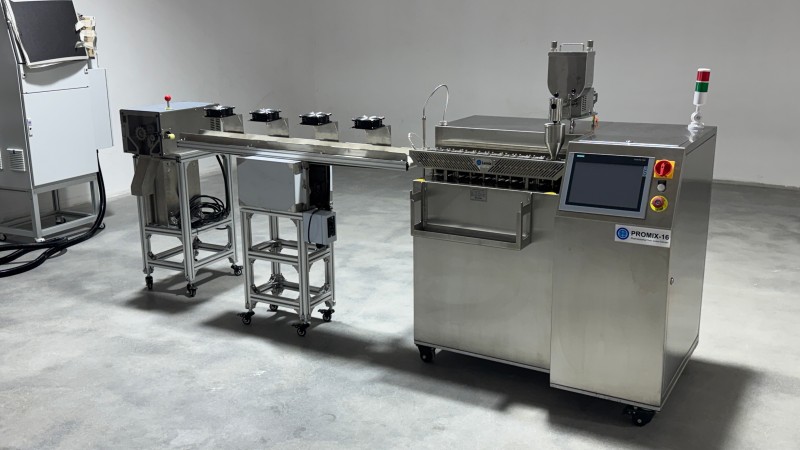
In-line plastic pellet inspection works by using machine vision, specialized lighting, cameras, software algorithms, and automatic sorting to inspect pellets continuously during production. It detects contamination, burnt material, gels, yellowing, color deviation, and size defects before defective pellets enter finished packaging or downstream processing.
In-line plastic pellet inspection is a real-time quality control process that checks plastic pellets directly in the production stream.
Instead of collecting a small sample after production, an in-line system monitors pellets as they flow through the line. It uses cameras, lighting, software, and sorting mechanisms to identify defects and remove or divert nonconforming pellets.
This type of system is especially useful for:
Plastic compounding lines
Cable compound production
High-throughput resin lines
Engineering plastic pellet production
XLPE and PVC cable material lines
Masterbatch production
Recycled plastic processing
High-value specialty materials
Pharmaceutical-related polymer extrusion where visual consistency and contamination control matter
The main value is continuous monitoring. Pellet defects can appear suddenly during feeding fluctuation, screw residue release, color changeover, die instability, cutter wear, or vacuum venting problems. Manual sampling may miss these short defect events, while in-line inspection can capture them during production.
Pellet inspection is important because pellet quality directly affects downstream molding, extrusion, cable production, film production, compounding, and final product performance.
A plastic pellet may look small, but a single contaminated pellet can create a large failure later. In XLPE-insulated cable production, one contaminated pellet may lead to electrical testing failure and disqualify an expensive finished product.
Pellet inspection helps reduce:
Defective finished products
Customer complaints
Material waste
Rework
Downstream processing instability
Cable insulation failure risk
Surface defects
Color complaints
Hidden contamination
Batch rejection
A practical production rule is: pellet defects should not be treated only as appearance problems. They are process signals. Burnt material may indicate degradation or residue. Gels may indicate poor melting or crosslinked material. Color deviation may indicate feeder drift. Size defects may indicate cutting or pressure instability.
An in-line pellet inspection system usually works through material feeding, image capture, defect recognition, sorting, and data recording.
The basic workflow is:
| Step | What Happens | Why It Matters |
|---|---|---|
| Pellet flow enters the inspection unit | Pellets pass through the machine after production or during conveying | Keeps inspection connected with the real production stream |
| Lighting exposes pellet features | Specialized lighting highlights color, size, surface, and contamination differences | Makes small defects easier to detect |
| Cameras capture pellet images | Area scan cameras or other imaging devices inspect moving pellets | Converts physical defects into visual data |
| Software analyzes each image | Algorithms compare pellet images with reference standards | Identifies defects faster than manual inspection |
| Defective pellets are sorted or diverted | Nonconforming pellets can be removed from the acceptable product stream | Reduces contamination of finished material |
| Trends and reports are recorded | Software shows live view, reference comparison, and defect trends | Helps connect quality events with process conditions |
The goal is not only to find bad pellets. The goal is to understand when, where, and why defects appear during production.
In-line plastic pellet inspection can detect visible defects related to contamination, degradation, color, size, cutting, and material consistency.
Common monitored defects include:
| Defect | What It Usually Indicates |
|---|---|
| Burnt material | Degraded polymer, hot spots, dead zones, old residue |
| Gel | Poor melting, crosslinked particles, unmixed material |
| Size defects | Cutting instability, die flow fluctuation, pelletizer issues |
| Cutting defects | Worn cutter, wrong cutter speed, strand instability |
| Cross contamination | Previous material, foreign polymer, dust, or handling contamination |
| Yellowing | Thermal degradation, oxidation, long residence time |
| Color deviation | Pigment feeder drift, poor dispersion, batch difference |
| Black specks | Carbonized material, contamination, screw or die residue |
| Foreign particles | Metal, dust, packaging fragments, or external contamination |
| Irregular shape | Cooling, cutting, pressure, or strand stability problems |
A strong inspection system should not stop at defect naming. It should help process teams connect each defect with upstream causes.
Machine vision inspects plastic pellets by capturing images of pellets as they pass through the inspection area. The system uses cameras, lighting, image processing, and algorithms to compare each pellet against defined quality standards.
The inspection can check:
Pellet color
Pellet brightness
Pellet size
Pellet shape
Surface defects
Dark spots
Yellowing
Cross contamination
Gel-like inclusions
Burnt particles
Foreign matter
LEMIX in-Line Plastic Pellet Inspection uses machine vision technology with specialized lighting solutions. Its approach uses area scan camera technology, dark and white backgrounds, and multiple images of each pellet to improve detection performance.
This is important because different defects become visible under different background and lighting conditions. A dark particle may be easier to see on a light background, while a pale or yellow defect may need a different contrast condition.
Lighting and background are important because pellet defects are often small, low-contrast, or hidden inside the material. Without proper lighting, a camera may miss contamination, gels, color drift, or subtle yellowing.
Specialized lighting helps reveal:
Surface marks
Color differences
Dark contamination
Yellowing
Transparent or translucent gels
Shape irregularity
Cutting defects
Foreign particles
Using both dark and white backgrounds increases the chance of detecting different defect types. This is especially useful for transparent, semi-transparent, white, colored, or highly reflective pellets.
A practical inspection viewpoint is this: camera resolution matters, but defect visibility depends just as much on lighting geometry, background contrast, pellet movement, and software thresholds.
Software is the decision center of an in-line pellet inspection system. It receives image data, compares it with reference standards, identifies defects, calculates trends, and supports production decisions.
Useful software functions include:
Live view of production
Reference comparison
Defect classification
Combined histogram display
Thumbnail review
Trend tracking
Production status monitoring
Alarm support
Quality history review
Data export for process analysis
LEMIX system software includes live view versus reference, combined histogram and thumbnails, and trend views that help operators know production status at every minute.
This matters because the best inspection value comes from trend behavior. A single defect image shows what failed. A trend shows when the process started to drift.
Automatic sorting removes or diverts defective pellets from the acceptable material stream. After the vision system identifies a defect, the sorting mechanism separates the nonconforming pellet or contaminated fraction.
Sorting can help reduce:
Contamination in final bags
Customer rejection risk
Downstream failures
Costly cable compound defects
Reprocessing volume
Quality uncertainty
Sorting performance depends on throughput, pellet size, defect size, material flow stability, air response or diverter response, and detection accuracy.
A practical rule is: production monitoring throughput and sorting throughput are not always the same. Monitoring can often run at higher capacity, while precise sorting of small specks may require lower throughput to maintain accuracy.
Throughput depends on system size, inspection purpose, sorting requirement, pellet type, and defect sensitivity.
LEMIX in-Line Plastic Pellet Inspection lists a basic system throughput of 1,000 kg/h. Standard systems are available up to 9,000 kg/h.
The page also lists three system sizes:
| System Size | Hopper Width | Production Monitoring Throughput | Recommended Sorting Throughput for Small Specks |
|---|---|---|---|
| Large | 810 mm | 6–9 T/h | 3 T/h |
| Medium | 540 mm | 4–6 T/h | 2 T/h |
| Small | 270 mm | 2–3 T/h | 1 T/h |
This distinction is important for equipment selection. A line that only needs production monitoring may use a different operating condition than a line that needs accurate small-speck sorting.
Inspection resolution depends on defect size and product risk. For high-value compounds, cable materials, high-purity resin, or contamination-sensitive products, smaller visible defects can create larger downstream failures.
LEMIX in-Line Plastic Pellet Inspection lists 80 microns resolution with two-side inspection, with 50 microns available as an option.
Higher resolution helps detect smaller defects such as:
Tiny burnt particles
Small gels
Specks
Cross contamination
Yellow spots
Fine color defects
Small foreign particles
However, resolution alone is not enough. Real detection depends on the full system: lighting, camera technology, background contrast, pellet flow, software algorithms, sorting response, and material transparency.
A contamination-free design is important because the inspection equipment itself should not become a contamination source.
If a pellet inspection system has exposed screws, painted surfaces, rubber seals, or difficult-to-clean internal parts inside the material flow area, it may create contamination risk. This is especially serious for high-purity resin, cable compounds, specialty engineering plastics, and pharmaceutical-related polymer processing.
LEMIX inspection system design includes:
Polished AISI 316 internal parts
UHMWPE parts
No painted surface inside material flow area
No screws inside the material flow area
Reduced hinges and latches in external parts
Pneumatic pistons enclosed in a chamber
Lip seals and bearing covers made from UHMWPE and similar materials
The inspection machine should protect material quality while inspecting it. It should not solve one quality risk while creating another.
In-line pellet inspection can be installed in several positions depending on the production line layout.
Common installation options include:
| Installation Method | Typical Use |
|---|---|
| Inline gravity | Pellets fall through the inspection system by gravity |
| Inline vacuum loader | Pellets are inspected during conveying through a vacuum loader setup |
| Inline mobile | A movable inspection unit supports flexible use between lines |
LEMIX lists inline gravity, inline vacuum loader, and inline mobile installation methods.
The best installation position depends on whether the line needs monitoring after pelletizing, before packaging, during conveying, or before material enters downstream use.
In-line inspection checks production continuously. Manual sampling checks only a small portion of the production lot.
Manual sampling is still useful, but it has limitations:
It may miss short defect events.
It depends on sampling timing.
It may not represent the full production stream.
It may delay defect discovery.
It may not show defect trends.
It cannot sort defective pellets in real time.
In-line inspection is stronger when defects appear in pulses. For example, old residue may break loose from a screw for only a few minutes. A feeder may drift briefly. A cutter may become unstable before visible manual checks catch it. A vacuum vent may fluctuate and create only one short period of bubbles.
The strongest quality system uses both: in-line inspection for continuous monitoring and laboratory testing for deeper material property confirmation.
Pellet inspection helps troubleshooting by showing which defect appeared and when it appeared. The time sequence can be compared with extrusion process data.
A practical troubleshooting sequence is:
Identify the defect type.
Record the defect time.
Check feeder trend at the same time.
Compare screw speed and feed rate.
Review torque trend.
Review melt pressure.
Check barrel temperature trend.
Check vacuum level.
Check cutter speed and blade condition.
Review screw cleaning history.
Check raw material batch and moisture.
Compare defect rate before and after process adjustment.
This avoids random troubleshooting. If defects start after torque rises, the cause may be melting, pressure, residue, or wear. If defects start after color feeding changes, the feeder or dispersion should be checked. If defects appear after material changeover, cleaning and cross contamination should be reviewed first.
Compounding lines often process polymers with fillers, fibers, pigments, flame retardants, stabilizers, plasticizers, and other additives. These materials can create visible pellet defects when mixing, feeding, venting, or temperature control becomes unstable.
In-line inspection can help compounding lines monitor:
Filler agglomerates
Pigment dispersion defects
Burnt material
Gels
Size variation
Color deviation
Cross contamination
Yellowing
Strand cutting defects
Foreign particles
For twin screw compounding, pellet defects can reveal problems in screw configuration, side feeding, vacuum degassing, cooling, pelletizing, and screw cleaning.
Internal link: Twin Screw Extruder
Cable compounds often require high pellet cleanliness because defects may affect insulation, sheathing, electrical testing, or final cable surface quality.
In-line inspection is useful for:
XLPE cable compounds
PVC cable compounds
Insulation materials
Sheathing compounds
Flame-retardant compounds
Color cable materials
High-purity cable resins
Defects that matter in cable compounds include:
| Defect | Cable Production Risk |
|---|---|
| Cross contamination | Electrical failure or visible surface defects |
| Burnt material | Black specks, poor appearance, degraded material |
| Bubbles | Voids in insulation or sheathing |
| Gels | Weak points or surface defects |
| Color deviation | Batch mismatch or visible complaint |
| Size defects | Feeding instability in downstream cable extrusion |
| Yellowing | Thermal degradation or storage risk |
For cable materials, inspection should not be viewed as a final step only. It is part of process risk control before the material enters wire and cable extrusion.
High-throughput resin lines produce large volumes of pellets. Even a very low defect rate can create a large number of defective pellets when output is high.
In-line inspection supports high-throughput resin production by:
Monitoring the entire production stream
Detecting defects quickly
Supporting continuous quality records
Reducing reliance on delayed manual checks
Identifying short-time process drift
Diverting defective material when sorting is needed
Helping compare quality between lines or sites
LEMIX inspection software includes live view versus reference and trends, which supports constant quality management across different runs and different production lines or sites.
Pharmaceutical hot melt extrusion and pharmaceutical-related polymer processing require strong process control, reproducibility, and traceability. Visible defects can indicate deeper issues in feeding, mixing, temperature control, residence time, moisture, or impurity risk.
LEMIX Pharmaceutical Extrusion guidance emphasizes thermal stability, uniform mixing, amorphous stability, impurity control, vacuum devolatilization, PAT online monitoring, and GMP verification.
Although in-line plastic pellet inspection is not a substitute for pharmaceutical analytical testing, the same process control logic applies: visible product changes should be connected with process data.
In pharmaceutical-related extrusion, pellet or extrudate inspection can help reveal:
Bubbles
Voids
Color drift
Surface defects
Poor discharge stability
Contamination risk
Process drift during continuous operation
Internal link: Pharmaceutical Extrusion
Pellet inspection can reveal several upstream process problems.
| Pellet Defect | Possible Process Source |
|---|---|
| Burnt material | Overheating, dead zones, residue, long residence time |
| Gel | Poor melting, crosslinking, unmixed material |
| Yellowing | Thermal degradation, oxidation, poor cooling |
| Color deviation | Feeder drift, pigment dispersion issue, raw material variation |
| Cross contamination | Poor cleaning, old material, dirty conveying path |
| Size defects | Cutter wear, strand instability, pressure fluctuation |
| Bubbles | Moisture, weak vacuum degassing, volatile release |
| Foreign particles | Handling, storage, equipment contamination |
| Fines | Brittle strands, overcutting, poor pelletizing |
| Irregular shape | Cooling or cutting instability |
A useful production habit is to treat the inspection result as a process map. Each defect points to a likely area for checking instead of forcing operators to guess.
A useful pellet inspection record should connect defect data with process conditions.
Recommended data includes:
Material name
Material batch
Formula
Production line
Feed rate
Screw speed
Torque trend
Melt pressure trend
Barrel temperature trend
Vacuum level
Cutter speed
Cooling condition
Defect type
Defect rate
Defect timing
Sorting status
Reference image setting
Cleaning history
Raw material change time
Color changeover time
Packaging lot
Operator action record
The most valuable record is time-based. It should show what changed first, what defect appeared next, and which corrective action reduced the defect rate.
Inspection thresholds should be set according to product risk, downstream application, pellet color, material transparency, customer specification, and defect size.
A cable insulation compound may need stricter contamination control than a general filler compound. A transparent engineering plastic may need stricter color and gel detection than an opaque black compound. A high-value specialty material may need tighter sorting thresholds than a low-risk recycled blend.
Threshold setting should consider:
Material color
Pellet size
Pellet transparency
Critical defect type
Downstream application
Customer rejection criteria
Acceptable false reject rate
Sorting throughput
Production speed
Reference sample quality
The practical target is balance. Thresholds should be strict enough to protect downstream quality, but stable enough to avoid excessive false rejection.
Common mistakes include treating the system as only a defect counter instead of a process control tool.
Avoid these mistakes:
Inspecting pellets without recording process data
Setting one threshold for all materials
Ignoring lighting and reference setup
Comparing different pellet colors with the same inspection standard
Using high monitoring throughput when precise sorting is needed
Ignoring cleaning of the inspection path
Ignoring false reject analysis
Not reviewing trend data
Not connecting defects with feeder, torque, pressure, vacuum, and cutter data
Assuming in-line inspection replaces material testing
In-line inspection is most effective when it is connected with extrusion process control, cleaning records, maintenance, and downstream quality feedback.
Pellet defects can indicate extruder maintenance problems. If the same defects repeat after process adjustment, the cause may be screw residue, barrel wear, blocked cooling channels, die deposits, or cutter problems.
Relevant maintenance checks include:
Screw cleaning
Die and breaker plate cleaning
Barrel wear measurement
Vent port cleaning
Cooling channel inspection
Cutter blade inspection
Conveyor and hopper cleaning
Feeder maintenance
LEMIX provides related equipment such as PRO-COOL Screw Cleaning Machine, PROMAC-S and PROMAC-X Barrel Wear Measurement Devices, PRO-CLEAN Water Cooling Channel Cleaning Machine, and Spare Parts for extrusion systems.
Internal links:
LEMIX supports pellet quality control through inspection equipment, twin screw extrusion systems, maintenance devices, and spare parts.
| Quality Control Need | LEMIX Product Support |
|---|---|
| Real-time pellet inspection and sorting | in-Line Plastic Pellet Inspection |
| Stable compounding and pellet production | Twin Screw Extruder |
| Lab formula and process trials | PROMIX-11 Lab Scale Twin Screw Extruder |
| Pilot process confirmation | PROMIX-16 / PROMIX-26 systems |
| Commercial compounding | PROMIX-40 / PROMIX-50 systems |
| Screw and component cleaning | PRO-COOL Screw Cleaning Machine |
| Barrel wear inspection | PROMAC-S / PROMAC-X Barrel Wear Measurement Device |
| Cooling channel maintenance | PRO-CLEAN Water Cooling Channel Cleaning Machine |
| Screw design and replacement | Screw Elements for TSE |
| Long-term repair and upgrade | Barrels, shafts, gearboxes, die plates, breaker plates |
Relevant pages:
In-line plastic pellet inspection works by combining controlled pellet flow, specialized lighting, machine vision cameras, image-processing software, defect recognition, trend monitoring, and sorting. It helps detect burnt material, gels, size and cutting defects, cross contamination, yellowing, color deviation, foreign particles, bubbles, and irregular pellet shape during production.
Its strongest value is continuous feedback. Manual sampling may find a defect after production, but in-line inspection can show when the defect appears, how often it appears, and whether it matches feed rate, screw speed, torque, pressure, temperature, vacuum, cutter condition, or cleaning history.
LEMIX supports pellet inspection and quality control with in-Line Plastic Pellet Inspection, twin screw extrusion systems, lab and pilot equipment, maintenance devices, screw cleaning, barrel wear measurement, cooling channel maintenance, spare parts, and extrusion process support.