
Search LEMIX Products
Learn how TPE and TPU are compounded with twin screw extrusion, covering feeding, screw design, shear, temperature, moisture control, pellet defects, scale-up, and LEMIX solutions.
Category:Materials & Applications
Author:LEMIX Admin
Date:2026-08-13
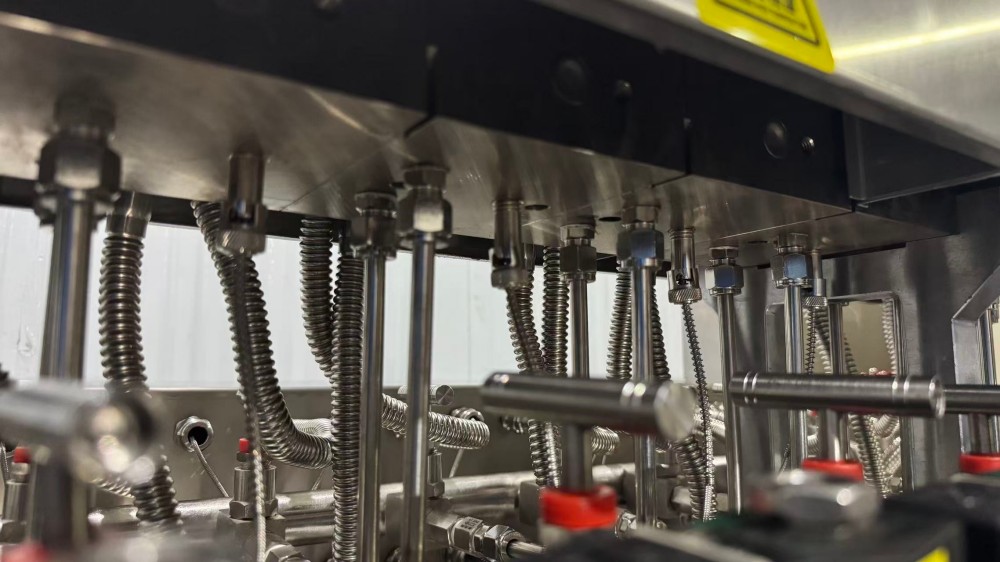
TPE and TPU are compounded with twin screw extrusion by melting polymers, adding modifiers through controlled feeding, applying balanced mixing energy, removing moisture or volatiles, and pelletizing the final compound with stable quality.
TPE and TPU compounding is the process of modifying thermoplastic elastomers with additives, fillers, pigments, reinforcing materials, or performance modifiers to achieve specific properties.
TPE and TPU are widely used because they combine elastic behavior with thermoplastic processing advantages. However, different applications require different performance characteristics, including:
Soft touch feeling
Elastic recovery
Wear resistance
Oil resistance
Weather resistance
Mechanical strength
Color stability
Flame resistance
Processing stability
A Twin Screw Extruder provides continuous mixing and processing capability for TPE and TPU compounds. It can combine feeding, melting, mixing, devolatilization, and pelletizing in one production system.
Typical TPE and TPU compound applications include:
Automotive components
Cable insulation and jackets
Medical products
Consumer goods
Sealing materials
Flexible tubing
Footwear materials
Industrial parts
Soft-touch surfaces
Internal link:
Twin screw extruders are used for TPE and TPU compounding because they provide better mixing control, feeding flexibility, and process stability compared with many conventional extrusion methods.
TPE and TPU formulations often contain multiple components, such as:
Base polymer
Plasticizers
Stabilizers
Pigments
Fillers
Flame retardants
Reinforcing materials
Processing additives
These materials need uniform distribution throughout the polymer matrix. Poor mixing can create color variation, hard spots, unstable mechanical properties, and inconsistent pellet quality.
A twin screw extruder provides:
| Process Requirement | Twin Screw Extrusion Advantage |
|---|---|
| Multiple ingredient feeding | Separate feeding zones for different materials |
| Uniform mixing | Intermeshing screw design with controlled shear |
| Temperature control | Multiple barrel heating and cooling zones |
| Moisture removal | Vacuum degassing section |
| Flexible formulation development | Modular screw configuration |
| Stable output | Continuous process monitoring |
The key advantage is not only stronger mixing. It is the ability to control where and how mixing happens inside the barrel.
The TPE and TPU compounding process usually includes material preparation, feeding, melting, mixing, devolatilization, extrusion, cooling, and pelletizing.
The general process flow includes:
Raw material preparation
Main polymer feeding
Polymer melting
Additive or filler feeding
Dispersive and distributive mixing
Vacuum removal of moisture or volatiles
Melt pressure stabilization
Strand extrusion
Cooling
Pellet cutting
Quality inspection
Each step affects the final compound performance.
For example, unstable feeding can change formulation ratios. Poor temperature control can affect polymer viscosity. Excessive shear can damage elastomer properties. Insufficient mixing can create additive agglomeration.
Screw configuration determines how TPE and TPU materials are transported, melted, mixed, and discharged.
A typical TPE or TPU screw configuration may include:
| Screw Section | Main Function |
|---|---|
| Feeding section | Stable polymer and additive feeding |
| Conveying section | Material transport and filling control |
| Melting section | Creates uniform polymer melt |
| Mixing section | Distributes additives and modifiers |
| Kneading section | Improves dispersion |
| Degassing section | Removes moisture and volatile components |
| Pressure-building section | Stabilizes die pressure |
The screw design should balance mixing performance and material protection.
TPE and TPU are sensitive to processing conditions. Excessive shear may increase temperature and reduce material performance. Insufficient shear may create poor additive distribution.
LEMIX provides modular screw element solutions including conveying elements, kneading blocks, transition elements, special elements, degassing plugs, side-feeder plugs, shafts, barrels, die plates, and breaker plates for different compounding requirements.
Internal link:
Temperature control is critical because TPE and TPU require a stable processing window.
If temperature is too low:
Polymer melting may be incomplete
Torque may increase
Mixing may become unstable
Pellet quality may decrease
Surface defects may appear
If temperature is too high:
Polymer degradation may occur
Color may change
Mechanical properties may decrease
Volatile release may increase
Residence time risk may increase
A stable temperature profile should consider:
Polymer grade
Hardness requirement
Additive type
Filler loading
Screw speed
Feed rate
Residence time
Cooling capacity
For TPE and TPU, actual melt temperature is often more important than barrel setting temperature because mechanical energy from screw rotation also generates heat.
Moisture control is especially important for TPU because moisture can affect polymer stability and final material performance.
Moisture-related problems may include:
Hydrolysis
Reduced mechanical strength
Surface defects
Bubbles
Unstable extrusion
Poor pellet quality
Processing variation
Before compounding, TPU materials may require proper drying according to material requirements.
During extrusion, vacuum degassing can help remove:
Moisture
Trapped air
Volatile components
Low-molecular substances
A properly designed vacuum section improves compound stability and reduces defects caused by gas release.
Internal link:
How Does Vacuum Degassing Work in Twin Screw Extrusion?
Feeding stability directly affects the formulation ratio and final compound performance.
TPE and TPU compounds often contain several ingredients with different densities, particle sizes, and flow characteristics. Unstable feeding may cause:
Hardness variation
Color inconsistency
Mechanical property changes
Filler distribution problems
Batch variation
Important feeding considerations include:
Material flowability
Feeder accuracy
Powder bridging
Additive loading ratio
Side feeder stability
Feed rate consistency
Loss-in-weight feeding systems are commonly used when accurate ingredient control is required.
Stable feeding creates a stable starting point for mixing.
Fillers and additives are usually added through controlled feeding points depending on their function and material behavior.
Common additives include:
Flame retardants
Mineral fillers
Color masterbatch
UV stabilizers
Lubricants
Processing aids
Reinforcing materials
The feeding position affects dispersion quality.
For example:
Adding fillers after polymer melting can improve wetting.
Adding sensitive additives later can reduce thermal exposure.
Adding pigments in the correct mixing zone can improve color consistency.
Side feeding is often used for materials that require controlled addition after the polymer has reached a suitable melt condition.
Shear provides mixing energy, but the correct amount depends on the formulation.
Controlled shear helps:
Improve additive dispersion
Break agglomerates
Improve polymer uniformity
Stabilize compound quality
Excessive shear may cause:
Higher melt temperature
Polymer degradation
Color change
Mechanical property reduction
Increased wear
Insufficient shear may cause:
Poor filler distribution
Uneven hardness
Color variation
Surface defects
The goal of TPE and TPU compounding is not maximum shear. The goal is controlled shear that creates uniform material without damaging the polymer structure.
Residence time determines how long the material remains inside the extruder under heat and mechanical energy.
A suitable residence time allows:
Complete melting
Proper mixing
Stable additive distribution
Controlled devolatilization
A residence time that is too short may cause:
Poor dispersion
Incomplete melting
Unstable output
A residence time that is too long may cause:
Thermal degradation
Color change
Material aging
Higher energy consumption
Residence time is affected by:
Screw speed
Feed rate
Screw configuration
Fill level
Material viscosity
Barrel volume
During scale-up, residence time should be reviewed carefully because larger extruders may create different material history.
TPE and TPU compound defects usually indicate problems with materials, process settings, equipment condition, or maintenance.
Common defects include:
| Defect | Possible Cause |
|---|---|
| Color variation | Poor pigment dispersion or unstable feeding |
| Gel particles | Poor melting, contamination, degradation |
| Bubbles | Moisture or insufficient vacuum |
| Hard spots | Poor additive distribution |
| Surface defects | Temperature or pressure instability |
| Black specks | Residue, overheating, contamination |
| Unstable hardness | Formula variation or poor mixing |
| Pellet size variation | Pelletizing instability |
Continuous pellet inspection can help identify these problems earlier.
LEMIX in-Line Plastic Pellet Inspection uses machine vision technology to detect defects such as burnt material, gels, size and cutting problems, cross contamination, yellowing, and color deviation.
Internal link:
in-Line Plastic Pellet Inspection
Screw and barrel wear can gradually reduce extrusion stability.
As the clearance between screw and barrel increases, the extruder may experience:
Lower conveying efficiency
Poor mixing performance
Pressure fluctuation
Output reduction
Longer residence time
More unstable pellet quality
For abrasive TPE or TPU compounds containing fillers, wear can happen faster.
Regular inspection helps identify problems before they create major quality issues.
LEMIX PROMAC-S Barrel Wear Measurement Device uses laser measurement technology and a 360° rotating sensor to measure barrel wear, diameter changes, and internal surface condition.
Internal link:
Barrel Wear Measurement Device PROMAC-S
Cleaning is important during TPE and TPU production because residue from previous materials can create contamination and color problems.
Poor cleaning may cause:
Black specks
Color contamination
Gel defects
Material carryover
Longer startup time
Unstable first batches
This is especially important during:
Color change
Material change
Formula change
Maintenance shutdown
LEMIX PRO-COOL Screw Cleaning Machine provides non-destructive cleaning for extrusion screws and components. It removes polymer residue without flame burning, manual scraping damage, or harmful smoke generation.
Internal link:
PRO-COOL Screw Cleaning Machine
TPE and TPU scale-up should transfer process behavior from laboratory trials to commercial production.
The scale-up process usually includes:
Formula testing at lab scale
Screw configuration optimization
Feeding stability verification
Temperature window confirmation
Pilot production testing
Pellet quality evaluation
Production equipment selection
Continuous manufacturing validation
Important scale-up parameters include:
Screw speed
Feed rate
Torque
Residence time
Specific mechanical energy
Melt temperature
Vacuum performance
Pellet quality
LEMIX provides lab, pilot, and production twin screw extruders to support material development and commercial production.
Relevant pages:
LEMIX supports TPE and TPU compounding through twin screw extrusion systems, modular screw elements, pellet inspection equipment, and extrusion maintenance solutions.
| Application Need | LEMIX Support |
|---|---|
| Formula development | Lab Type Twin Screw Extruder |
| Pilot testing | PROMIX series pilot systems |
| Commercial production | Production Twin Screw Extruder |
| Screw optimization | Screw Elements for TSE |
| Pellet quality control | In-Line Plastic Pellet Inspection |
| Screw cleaning | PRO-COOL Screw Cleaning Machine |
| Barrel inspection | PROMAC-S Barrel Wear Measurement Device |
| Spare Parts support | Barrels, shafts, die plates, breaker plates |
Relevant pages:
TPE and TPU are compounded with twin screw extrusion by controlling feeding, melting, screw configuration, shear, temperature, moisture removal, residence time, pelletizing, and quality inspection.
The most reliable compounding process is not based on maximum mixing intensity. It depends on balancing dispersion performance with polymer protection.
LEMIX supports TPE and TPU compounding with twin screw extrusion systems, modular screw elements, pellet inspection, maintenance equipment, and process support for laboratory development, pilot testing, and commercial production.