
Search LEMIX Products
Learn what a twin screw extruder machine is, how it works, where it is used, and how LEMIX products support compounding, pharmaceutical extrusion, inspection, and maintenance.
Category:Extruder Technology & Selection
Author:LEMIX Admin
Date:2026-07-31
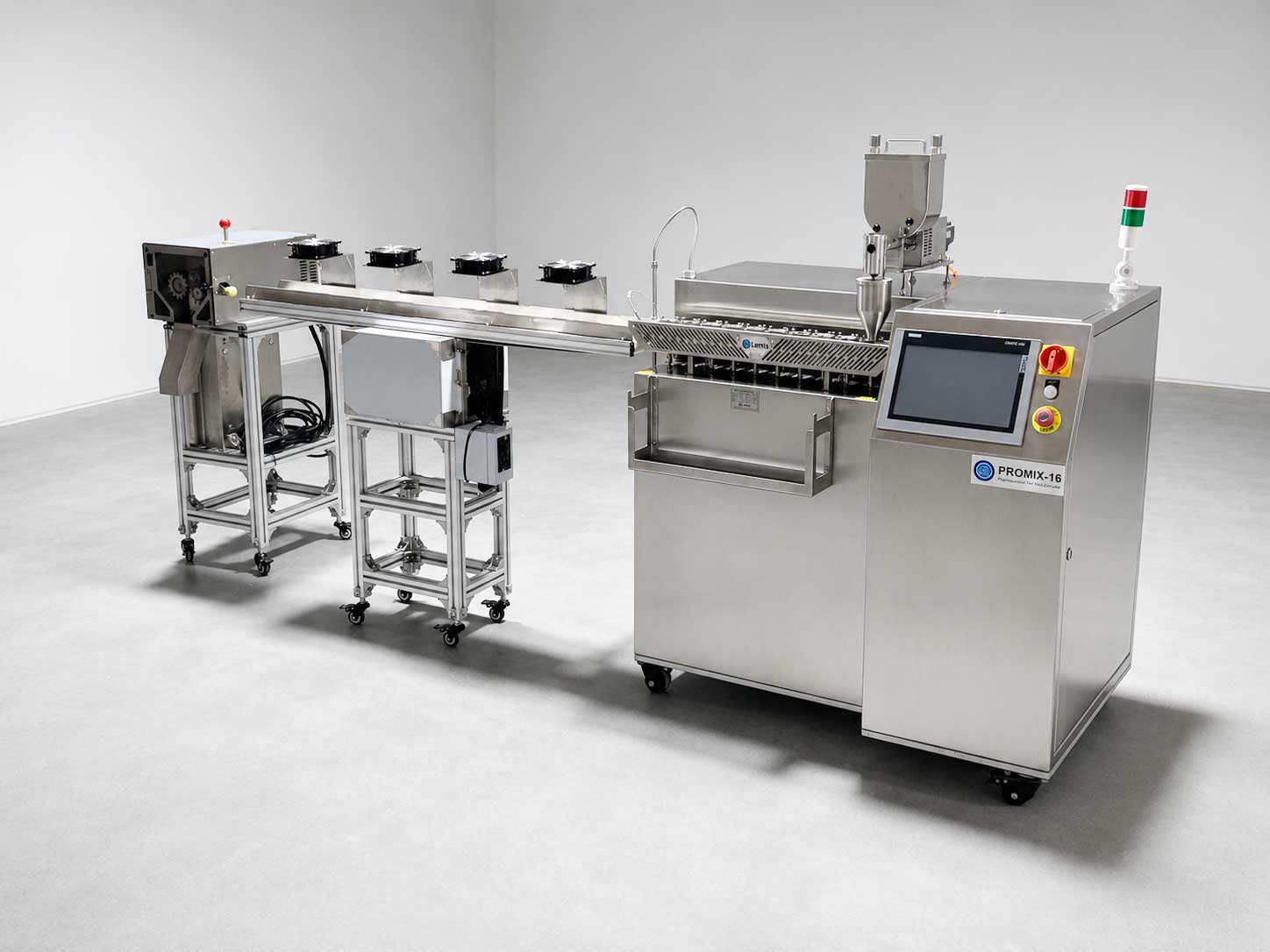
A Twin Screw Extruder machine is continuous processing equipment that uses two rotating screws inside a heated barrel to feed, melt, mix, vent, pressurize, and discharge materials for compounding, granulation, pharmaceutical extrusion, food extrusion, and specialty material production.
A twin screw extruder machine converts raw materials into a more uniform, usable, and process-ready form. It can process pellets, powders, flakes, fillers, fibers, additives, liquids, active ingredients, and mixed formulations.
The main process usually includes feeding, conveying, melting, wetting, mixing, devolatilization, pressure building, discharge, cooling, and cutting. In polymer compounding, the machine can produce plastic pellets with improved strength, color, flame resistance, flexibility, conductivity, or heat resistance. In pharmaceutical hot melt extrusion, it can disperse APIs into polymer carriers. In food extrusion, it can create structured plant-based protein products.
A twin screw extruder is not only a melting machine. It is a controlled process system. The final result depends on screw design, barrel configuration, temperature control, torque, residence time, feeding accuracy, venting, and downstream equipment.
Internal link: Twin Screw Extruder
A twin screw extruder works by rotating two screws inside a barrel. The screws move material forward while also applying heat, shear, pressure, and mixing action.
The material first enters through the main feeder. It is then conveyed into heated barrel zones. As the material moves forward, it begins to soften or melt. Screw elements then mix the material with fillers, pigments, fibers, additives, oils, or active ingredients. If moisture or volatile substances are present, a vacuum venting section can remove them before discharge.
At the end of the process, the material leaves through a die head or discharge system. It can then be cooled, pelletized, shaped, cut, collected, or sent into another downstream process.
The basic working sequence is:
| Process Stage | Main Function |
|---|---|
| Feeding | Introduces raw materials into the barrel |
| Conveying | Moves material forward through screw channels |
| Melting or softening | Uses heat and shear to create processable flow |
| Mixing | Disperses fillers, fibers, pigments, additives, or APIs |
| Venting | Removes moisture, air, solvent, odor, or volatiles |
| Pressurizing | Builds stable flow before discharge |
| Discharge | Sends material to die, cooling, pelletizing, or shaping |
| Cooling and cutting | Forms pellets, strips, films, sheets, or intermediates |
Two screws provide stronger mixing, better feeding control, more process flexibility, and better material renewal than many single screw systems.
In a twin screw extruder, the two screws can intermesh and clean each other during rotation. This helps reduce material buildup on screw surfaces. It also improves material exchange between screw channels. For compounding, this is useful because additives, fillers, fibers, and polymers must be distributed evenly.
Twin screw systems are especially useful when the process needs:
High filler loading
Strong pigment dispersion
Glass fiber or carbon fiber feeding
Vacuum devolatilization
Reactive extrusion
Heat-sensitive material control
Multi-point feeding
Continuous pharmaceutical processing
Stable batch-to-batch quality
A single screw extruder can be suitable for simple melting and shaping. A twin screw extruder is more suitable when the material must be modified, mixed, degassed, compounded, or processed with more control.
A twin screw extruder is built from several connected systems. Each part affects process stability and product quality.
| Main Part | Function |
|---|---|
| Gearbox | Transfers torque to the two screws |
| Motor and drive | Controls screw rotation and output |
| Screws | Convey, mix, shear, melt, and discharge material |
| Screw elements | Allow modular process design |
| Barrel | Provides the heated and cooled process chamber |
| Side feeder | Adds fillers, fibers, or additives at a later stage |
| Heating system | Controls melting and wetting |
| Cooling system | Removes excess heat and protects the process window |
| Pressure and temperature sensors | Monitor process safety and stability |
| Vacuum venting section | Removes moisture and volatiles |
| HMI control system | Supports operation, recipes, monitoring, and alarms |
| Die and downstream system | Shapes, cools, cuts, or collects the final product |
LEMIX twin screw extruders include important process modules such as gearbox, barrel, side feeder, cooling system, heating system, pressure and temperature sensors, HMI, modular screw system, and modular barrel system.
Twin screw extruders are used across many material groups. The same machine platform can be configured differently depending on the formula, temperature, screw design, feeding method, and downstream system.
Common material groups include:
| Material Group | Typical Processing Purpose |
|---|---|
| PP, PE, ABS, PA, PC | Plastic modification and compounding |
| TPE, TPU, TPR | Elastomer compounding and pelletizing |
| PVC and XLPE | Cable compounds and granulation |
| PEEK and special engineering plastics | High-temperature reinforcement and modification |
| Bio-plastics | Starch, bamboo powder, straw, or biodegradable blends |
| Thermoset materials | Low-temperature premixing before curing |
| Pharmaceutical polymers and APIs | Hot melt extrusion and solid dispersion |
| Battery materials | Separator, cathode, or anode-related compounding |
| Food materials | Plant-based meat and high-moisture extrusion |
| Pigments and fillers | Masterbatch and additive concentrates |
The key is not only whether the extruder can process the material. The real question is whether the screw, barrel, torque, temperature range, venting, feeding, metallurgy, and downstream system are matched to the material.
Internal link: Industry Applications
In plastic and elastomer compounding, the twin screw extruder blends base resin with fillers, pigments, fibers, oils, flame retardants, compatibilizers, and other additives.
For TPE and TPU, the process focuses on uniform dispersion, temperature control, drying, oil absorption, vacuum venting, and continuous production. TPE/TPU compounding often needs good shear distribution, but the process must also avoid material degradation, bubbles, oil bleeding, and poor surface quality.
For PEEK and other high-performance engineering plastics, the extruder must handle high melt viscosity, high processing temperature, high torque demand, fiber feeding, and strong devolatilization. For thermoset materials, the process is different. It needs low material temperature, weak shear with strong distribution, narrow residence time, rapid discharge, and immediate cooling to avoid premature curing.
Internal links:
In pharmaceutical hot melt extrusion, a twin screw extruder mixes APIs, polymers, and excipients under controlled temperature, pressure, and screw design. The goal is often to improve drug dispersion, dissolution behavior, content uniformity, and continuous manufacturing control.
A GMP twin screw extruder may be used for hot melt extrusion, granulation, lipid extrusion, transdermal preparations, implantable preparations, and pharmaceutical 3D printing extrusion. In this field, the machine must support not only mixing performance, but also GMP design, cleaning, validation, data recording, audit trail, recipe management, batch records, and traceability.
LEMIX GMP Twin Screw Extruder is designed for pharmaceutical processing and continuous extrusion. It supports applications such as HME, solid lipid extrusion, granulation, transdermal preparations, and pharmaceutical 3D printing.
Internal links:
A lab type twin screw extruder is designed for research, testing, formulation development, and small-batch trials. It uses less raw material and helps engineers test formulas before pilot or production investment.
A production twin screw extruder is designed for higher output, long-term operation, stable throughput, and stronger industrial duty. It must support production targets, maintenance planning, downstream equipment, and continuous quality control.
LEMIX provides 11mm and 16mm lab type twin screw extruders for R&D and trial applications. These models are used for pharmaceutical industry trials and for rubber and plastics compounding research, development, and testing.
A lab machine is suitable when the goal is:
Formula screening
Small sample preparation
Material behavior testing
Screw configuration study
Temperature window development
Scale-up data collection
University or R&D center use
Pharmaceutical HME trials
Internal link: Lab Type Twin Screw Extruder
The right twin screw extruder should be selected according to material behavior, output target, process difficulty, and final quality requirements.
Important selection points include:
| Selection Point | Why It Matters |
|---|---|
| Material type | Decides temperature, torque, metallurgy, and screw design |
| Output range | Determines screw diameter and motor power |
| L/D ratio | Affects mixing length, residence time, venting, and discharge |
| Torque capacity | Supports high-viscosity, high-filler, or high-load processing |
| Screw speed | Affects shear, output, residence time, and dispersion |
| Temperature range | Must match normal, heat-sensitive, or high-temperature materials |
| Screw configuration | Controls feeding, melting, mixing, venting, and pressure |
| Barrel openings | Allow side feeding, liquid injection, venting, or degassing |
| Cooling capacity | Protects process stability and heat-sensitive materials |
| Downstream system | Decides pelletizing, sheet, strand, film, or special forming |
| Maintenance support | Affects long-term reliability and operating cost |
A good selection should start from the material and process goal, not only from screw diameter or price.
A modular screw and barrel system allows the extruder to be adapted for different materials and formulas.
Screw elements can be combined for conveying, melting, kneading, mixing, venting, and pressure building. Barrel sections can be designed with openings or inserts for feeding, degassing, venting, and process matching.
This flexibility matters because different industries need different process actions. A TPE formula may need oil injection and vacuum venting. A glass fiber compound may need side feeding to reduce fiber breakage. A thermoset formula may need low shear and short residence time. A pharmaceutical formulation may need controlled mixing and cleanability.
LEMIX twin screw extruders use modular screw and barrel systems so screw material, screw combination, barrel openings, and process sections can be customized according to materials and formulas.
If the extruder is not matched to the process, common problems include unstable output, poor dispersion, high torque, overheating, material degradation, pressure fluctuation, bubbles, black specks, fiber breakage, poor pellet shape, and difficult cleaning.
Examples include:
| Problem | Possible Reason |
|---|---|
| Poor dispersion | Weak screw design or insufficient mixing zone |
| High torque | Low temperature, high viscosity, high filler loading, or undersized drive |
| Bubbles | Moisture, poor drying, weak venting, or volatile release |
| Black specks | Dead zones, residue, overheating, or poor cleaning |
| Fiber breakage | Excessive shear or wrong side feeding position |
| Oil bleeding | Poor absorption, wrong feeding point, or weak compatibility |
| Pressure fluctuation | Unstable feeding, die blockage, or viscosity drift |
| Product contamination | Old residue, cross contamination, or poor maintenance |
For high-value materials, product inspection and maintenance systems become important. LEMIX provides in-line plastic pellet inspection, screw cleaning, screw dismantling, cooling channel cleaning, and barrel wear measurement devices to support long-term production reliability.
Internal links:
A factory should consider a twin screw extruder when the process needs continuous production, accurate feeding, strong mixing, staged material addition, devolatilization, stable temperature control, and repeatable product quality.
It is especially useful when batch mixing cannot provide enough consistency or when the process needs to connect feeding, compounding, venting, pelletizing, inspection, and downstream equipment into one production line.
A twin screw extruder is often a better fit when the process involves:
High filler or fiber loading
Color masterbatch
Additive concentrates
Heat-sensitive compounds
High-temperature engineering plastics
PVC and cable compounds
Elastomer modification
Pharmaceutical hot melt extrusion
Bio-based material compounding
Recycling granulation
Specialty material development
The best machine is not the strongest machine in every case. It is the machine that gives the correct balance of mixing, temperature, torque, residence time, venting, and output for the actual material.
LEMIX provides twin screw extrusion systems, lab type twin screw extruders, GMP twin screw extruders, Process Particle Monitoring And Sorting Systems, Extruder Maintenance Devices, and Spare Parts.
The product range covers:
Twin screw extruders for industrial compounding
Lab type twin screw extruders for R&D and trials
GMP twin screw extruders for pharmaceutical extrusion
Screw elements for twin screw extruders
Barrels, shafts, and gearboxes
In-line plastic pellet inspection systems
Barrel wear measurement devices
Screw cleaning machines
Screw dismantling machines
Water cooling channel cleaning machines
This product structure supports both new extrusion line selection and long-term equipment maintenance. For buyers, this is useful because extrusion performance depends on the full system: machine design, screw configuration, spare parts, inspection, cleaning, wear control, and technical service.
Internal link: LEMIX Products
Before selecting a twin screw extruder, the buyer should prepare clear process information. This helps the supplier recommend the correct screw diameter, torque level, L/D ratio, screw configuration, barrel layout, feeding system, venting method, and downstream equipment.
Useful information includes:
Material name and material form
Formula structure and additive type
Filler or fiber loading
Moisture or volatile content
Processing temperature range
Target output
Final product form
Pellet, sheet, strip, film, or special product requirement
Need for side feeding or liquid injection
Need for vacuum venting
Downstream cooling and cutting method
Cleaning and maintenance expectations
Lab, pilot, or production scale
Industry requirements, such as GMP or high-temperature processing
Clear technical data leads to better equipment selection and fewer process risks after installation.
A twin screw extruder machine is a continuous processing system used to feed, melt, mix, vent, pressurize, discharge, cool, and shape materials. It is widely used in plastic modification, elastomer compounding, PVC and cable compounds, engineering plastics, bio-plastics, pharmaceutical extrusion, battery materials, food extrusion, and specialty material production.
The value of a twin screw extruder comes from its process flexibility. The screws, barrels, feeding points, venting sections, torque level, temperature control, and downstream equipment can be configured for different formulas and industries.
LEMIX supports this process with twin screw extruders, lab type machines, GMP extrusion systems, pellet inspection equipment, screw and barrel spare parts, and maintenance devices. For factories and R&D teams, the right twin screw extrusion system helps improve dispersion, output stability, process control, product quality, and long-term equipment reliability.